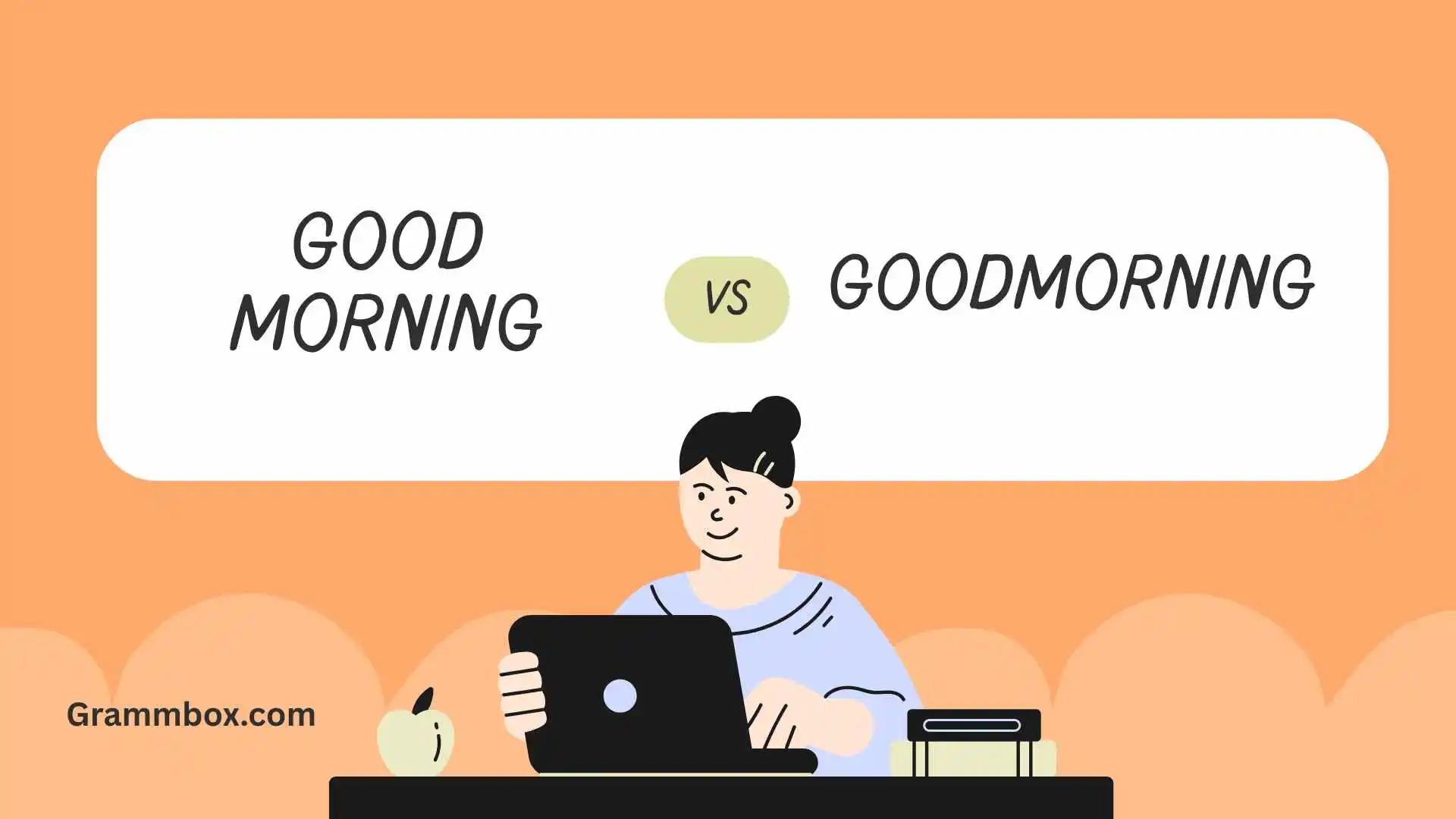
Have you ever wondered whether it’s correct to write “good morning” as two words or “goodmorning” as a single word? This question is surprisingly common, especially among English learners and writers trying to send a friendly greeting in emails, messages, or social media. People often mix them up, creating confusion in both formal and casual contexts.
Understanding the correct usage is important for clear communication. Using the wrong form may make your writing seem informal or even incorrect in professional settings. Additionally, knowing the subtle differences between British English and American English practices can help you avoid mistakes when addressing audiences from different regions.
In this article, we’ll explore the correct and incorrect forms, compare their usage, and provide practical examples for both UK and US readers. By the end, you’ll confidently know which one to use and why.
Quick Answer
The correct form is “good morning” always written as two separate words. Writing it as “goodmorning” is considered incorrect in standard English.
Whether in emails, texts, or spoken greetings, always use “good morning”. This rule applies to both British and American English, although some casual digital messaging may occasionally ignore it.
Meaning of the Correct Form
What Does “Good Morning” Mean?
“Good morning” is a polite greeting used to wish someone well at the start of the day, usually until noon. It is friendly, professional, and universally understood in English-speaking countries.
- Example (US English):
“Good morning, Sarah! How was your weekend?” - Example (UK English):
“Good morning, Mr. Thompson. Hope you slept well.”
It is not only a greeting but also a way to start conversations positively, showing respect and courtesy.
Key Points:
- Always capitalise both words at the start of a sentence.
- Used in spoken and written English.
- Common in both formal (work emails, meetings) and informal (texts, casual chats) contexts.
Meaning of the Incorrect Form
Why “Goodmorning” is Wrong
Writing “goodmorning” as a single word is a common mistake, often seen in casual texting or social media posts. However, in standard English grammar, this is incorrect.
- Incorrect Example:
“Goodmorning, everyone!” ✅ ❌ (wrong) - Correct Example:
“Good morning, everyone!” ✅
Some people merge the words for speed or stylistic reasons in informal digital writing, but this is not accepted in formal writing.
Keyword Comparison / Key Differences
| Feature | Good Morning | Goodmorning |
| Correctness | ✅ Correct | ❌ Incorrect |
| Usage | Both UK & US English | Informal, often social media only |
| Formality | Formal and informal | Informal, not standard |
| Example (Email) | “Good morning, team. Let’s start the meeting.” | “Goodmorning, team. Let’s start the meeting.” ❌ |
| Pronunciation | /ɡʊd ˈmɔːrnɪŋ/ | Same, but visually incorrect |
UK vs US: Both regions follow the same rule. The only difference is style preferences:
- US English: Capitalisation is often strict in emails.
- UK English: Slightly more relaxed in casual writing, but still two words.
Common Mistakes People Make
- Merging words in writing:
- ❌ “Goodmorning, John!”
- ✅ “Good morning, John!”
- Using it at the wrong time:
- ❌ “Good morning! It’s 5 PM.”
- ✅ “Good evening! It’s 5 PM.”
- Incorrect punctuation in emails:
- ❌ “Good morning John” (missing comma)
- ✅ “Good morning, John.”
- Forgetting formal tone in professional emails:
- ❌ “good morning guys”
- ✅ “Good morning, team.”
- Assuming “goodmorning” is acceptable in formal writing:
- ❌ Using in business letters or academic texts.
Correct Usage in Sentences
For British English
- Formal:
“Good morning, Ms. Clarke. I hope you had a pleasant journey.” - Informal:
“Good morning, mate! Fancy a cup of tea?” - Email:
“Good morning, everyone. Please find the attached report.”
For American English
- Formal:
“Good morning, Dr. Smith. Looking forward to our meeting today.” - Informal:
“Good morning, buddy! Ready for the game?” - Email:
“Good morning, team. Here are the updates for today’s project.”
Tips: Always use a comma after the greeting when addressing someone directly.
Tips to Remember the Correct Usage
- Think of it as two separate words: “Good” + “Morning” = polite greeting.
- Visual mnemonic: Imagine “Good” is your wish, “Morning” is the time they need space.
- Digital shortcut warning: Even if texting feels fast, avoid merging. It looks sloppy.
- Set a grammar check tool: Most word processors automatically flag “goodmorning” as incorrect.
- Consistency: Always use the same format in professional communications.
FAQs About [good morning or goodmorning]
Q1: Can I use “goodmorning” in text messages?
- Yes, informally among friends, but it’s not standard English. Always use “good morning” in formal writing.
Q2: Is “Good morning” the same in UK and US English?
- Absolutely. Both regions write it as two separate words, though punctuation style may vary slightly.
Q3: Can I say “Good morning” in the afternoon?
- No. It is traditionally used before noon. Use “good afternoon” after 12 PM.
Q4: Do I capitalise both words in a sentence?
- Capitalise the first word in a sentence: “Good morning, everyone.”
- Capitalising both is optional in informal messaging, but standard in headers.
Q5: Is “morning” alone acceptable as a greeting?
- Informally, yes: “Morning, Sam!” But avoid in formal writing.
Q6: Can emojis replace “good morning”?
- Emojis can supplement, e.g., ☀️👋, but don’t replace words in professional contexts.
Q7: How do I make “good morning” sound more friendly in emails?
- Add the person’s name and a cheerful tone: “Good morning, Emma! Hope your day is off to a great start.”
Conclusion
In summary, the correct form is always “good morning” two separate words. Writing “goodmorning” as one word is considered a mistake in standard English, whether in British or American English. By following proper usage, you can ensure your greetings are professional, polite, and easy to understand.
Remember, the key points are:
- Use two words for clarity.
- Capitalise appropriately depending on context.
- Include a comma when addressing someone directly.
- Avoid using the incorrect form in emails, business writing, or formal communication.
Start your day right by sending a proper good morning greeting, and watch how it positively impacts conversations, emails, and social interactions!