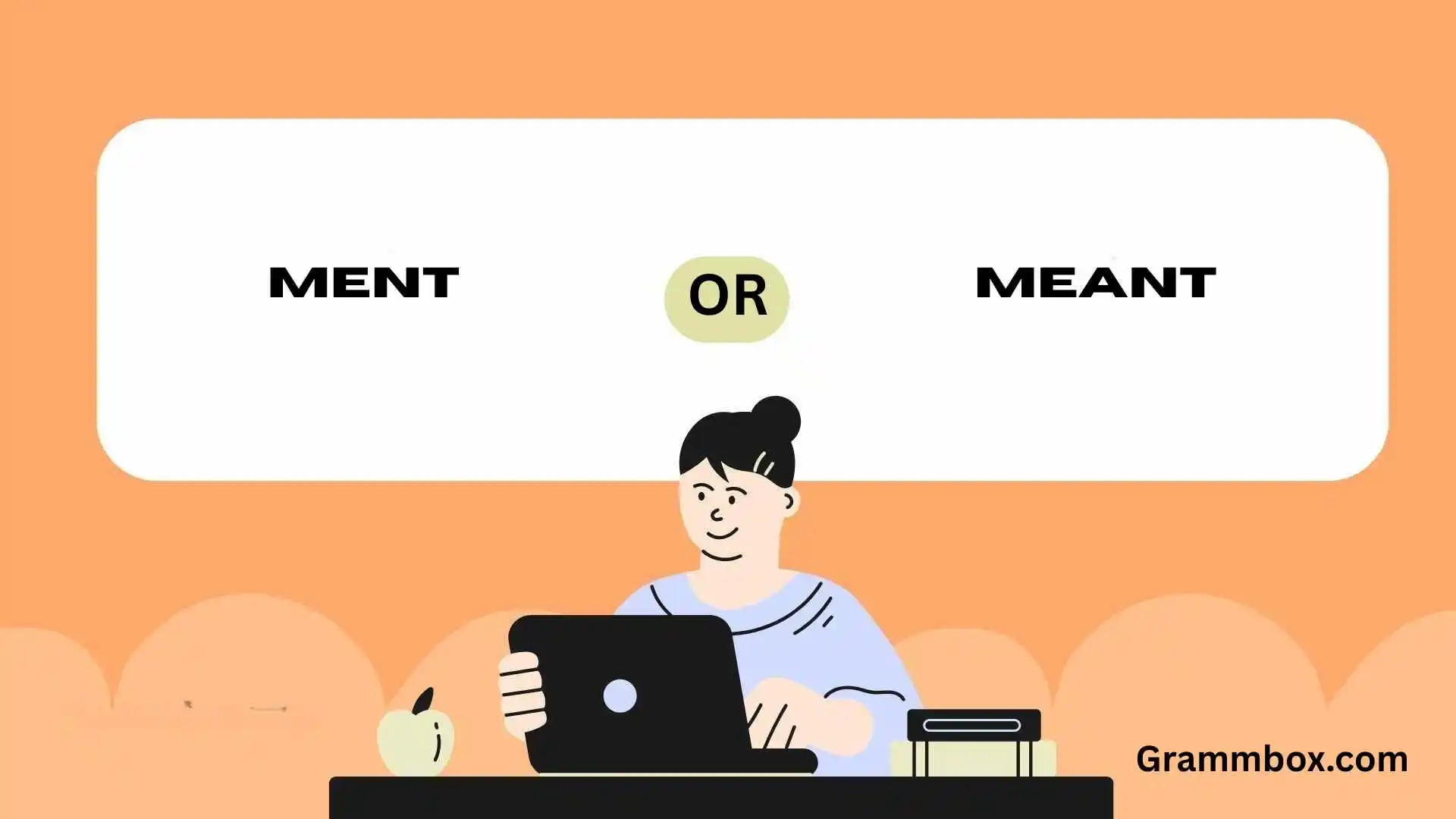
Many English learners and even native speakers often get confused between “ment” and “meant.” At first glance, these words look similar, and their pronunciation can sound alike in fast speech. However, their meanings and usage are very different. This confusion is common in both British English (UK) and American English (US).
Understanding the difference between “ment” and “meant” is important because using the wrong form can make your writing unclear or incorrect. Whether you’re writing emails, essays, blog posts, or social media captions, choosing the right word helps you communicate more effectively.
In this detailed guide, you will learn the correct meaning, usage, and differences between “ment” and “meant,” along with real-life examples from both UK and US English. By the end, you’ll never confuse them again.
Quick Answer
“Meant” is the correct word when you want to express intention or purpose. It is the past tense and past participle of the verb “mean.”
👉 Example:
- I meant to call you yesterday.
On the other hand, “ment” is not a standalone English word. It is a suffix used at the end of words like “development” or “agreement,” but it cannot be used alone.
👉 Incorrect:
- I ment to help you ❌
👉 Correct:
- I meant to help you ✔️
Meaning of the Correct Form (“Meant”)
The word “meant” is the past tense of the verb “mean.” It is used to describe something you intended, planned, or wanted to express in the past.
Key Meanings of “Meant”
- To express intention
- To indicate purpose
- To explain what someone wanted to say
Examples in British English (UK)
- I meant to finish the report, but I got busy.
- She meant no harm by her comment.
- We meant to visit London last summer.
Examples in American English (US)
- I meant to text you earlier.
- He meant what he said.
- They meant to arrive on time but got stuck in traffic.
Additional Notes
- “Meant” is used in both formal and informal writing.
- There is no spelling difference between UK and US English for this word.
- It is commonly used in everyday conversation.
Meaning of the Incorrect Form (“Ment”)
The word “ment” is often mistaken as a standalone word, but in reality, it is not a valid English word by itself.
What is “ment” actually?
“Ment” is a suffix, not a complete word. A suffix is a group of letters added to the end of a word to form a new word.
Examples of “-ment” as a suffix:
- Develop → Development
- Agree → Agreement
- Enjoy → Enjoyment
- Move → Movement
Why People Confuse It
People often write “ment” instead of “meant” because:
- They sound similar when spoken quickly.
- Spell-check may not always catch the error.
- Learners may not know that “ment” cannot stand alone.
Incorrect Usage Examples
- I ment to help you ❌
- She ment to call me ❌
- We ment no offence ❌
All of these should use “meant.”
Keyword Comparison / Key Differences
Let’s clearly compare “ment” vs “meant” so you can easily understand the difference.
| Feature | Meant | Ment |
| Part of Speech | Verb (past tense of “mean”) | Not a word (suffix only) |
| Usage | Correct in sentences | Incorrect alone |
| Meaning | Intended, planned, expressed | No standalone meaning |
| UK/US Difference | Same in both | Same (incorrect in both) |
| Example | I meant to call you | ❌ I ment to call you |
Key Takeaway
- ✅ Always use “meant” in sentences.
- ❌ Never use “ment” alone.
Common Mistakes People Make
Even experienced writers sometimes make mistakes with “ment” and “meant.” Let’s look at common errors and how to fix them.
1. Spelling Mistake
❌ I ment to send the email.
✔️ I meant to send the email.
2. Phonetic Confusion
Because “meant” sounds like “ment,” people often spell it incorrectly.
3. Fast Typing Errors
Typing quickly can lead to dropping the “ea” in “meant.”
4. Misunderstanding Grammar
Some learners think “ment” is a shorter version of “meant,” which is incorrect.
5. Confusion in Both UK & US Contexts
This mistake happens equally in:
- British writing: “I ment to apologise.” ❌
- American writing: “I ment to apologize.” ❌
Correct versions:
- UK: I meant to apologise. ✔️
- US: I meant to apologize. ✔️
Correct Usage in Sentences
Here are multiple real-life examples to help you understand how to use “meant” correctly.
Everyday Conversation
- I meant to call you yesterday.
- She meant to help, not hurt you.
- We meant to leave early.
Professional Context
- I meant to include that information in the report.
- The manager meant to schedule the meeting earlier.
- I meant no disrespect in my email.
British English Examples
- I meant to organise the files.
- He meant to apologise for the delay.
- They meant to travel across Europe.
American English Examples
- I meant to organize the files.
- He meant to apologize for the delay.
- They meant to travel across the country.
Emotional Context
- I never meant to hurt you.
- She meant every word she said.
- He meant well, even if it didn’t seem like it.
Tips to Remember the Correct Usage
Here are some easy tips and tricks to help you remember:
1. Think of the Base Word
“Meant” comes from mean → past tense = meant
👉 If you can replace it with “mean,” then “meant” is correct.
2. Remember the “EA”
The letters “ea” are important.
- Mean → Meant
- Not: Ment ❌
3. Use a Simple Rule
👉 “If it shows intention, use ‘meant’.”
4. Mnemonic Trick
Think:
“I MEAN it, so I MEANT it.”
5. Check the Sentence
If “ment” appears alone, it’s almost always wrong.
FAQs
1. Is “ment” ever a correct word?
No, “ment” is not a standalone word. It only works as a suffix in words like “agreement” or “development.”
2. What does “meant” mean?
“Meant” is the past tense of “mean.” It shows intention, purpose, or what someone wanted to say.
3. Is there any difference between UK and US usage?
No, both British English and American English use “meant” in the same way. There is no spelling difference.
4. Why do people confuse “ment” and “meant”?
Because they sound similar in pronunciation, especially in fast speech.
5. Can I use “ment” in informal writing?
No, even in informal writing, “ment” is incorrect when used alone.
6. What is the correct sentence?
- ❌ I ment to help you
- ✔️ I meant to help you
7. Is “meant” used in formal writing?
Yes, “meant” is perfectly acceptable in both formal and informal writing.
Conclusion
In summary, the difference between “ment” and “meant” is simple but very important. “Meant” is the correct word used to express intention or purpose in the past, while “ment” is not a valid standalone word in English.
To avoid mistakes, always remember that “meant” comes from the verb “mean.” Whether you are writing in UK or US English, the rule stays the same use “meant” when talking about intentions.
READ MORE ARTICLES..
Calve or Calf: What’s the difference & usage?
a historic or an historic: What’s the difference & usage? 2026
high school or highschool: What’s the difference & usage?
Sneek or Sneak: What’s the difference & usage? 2026