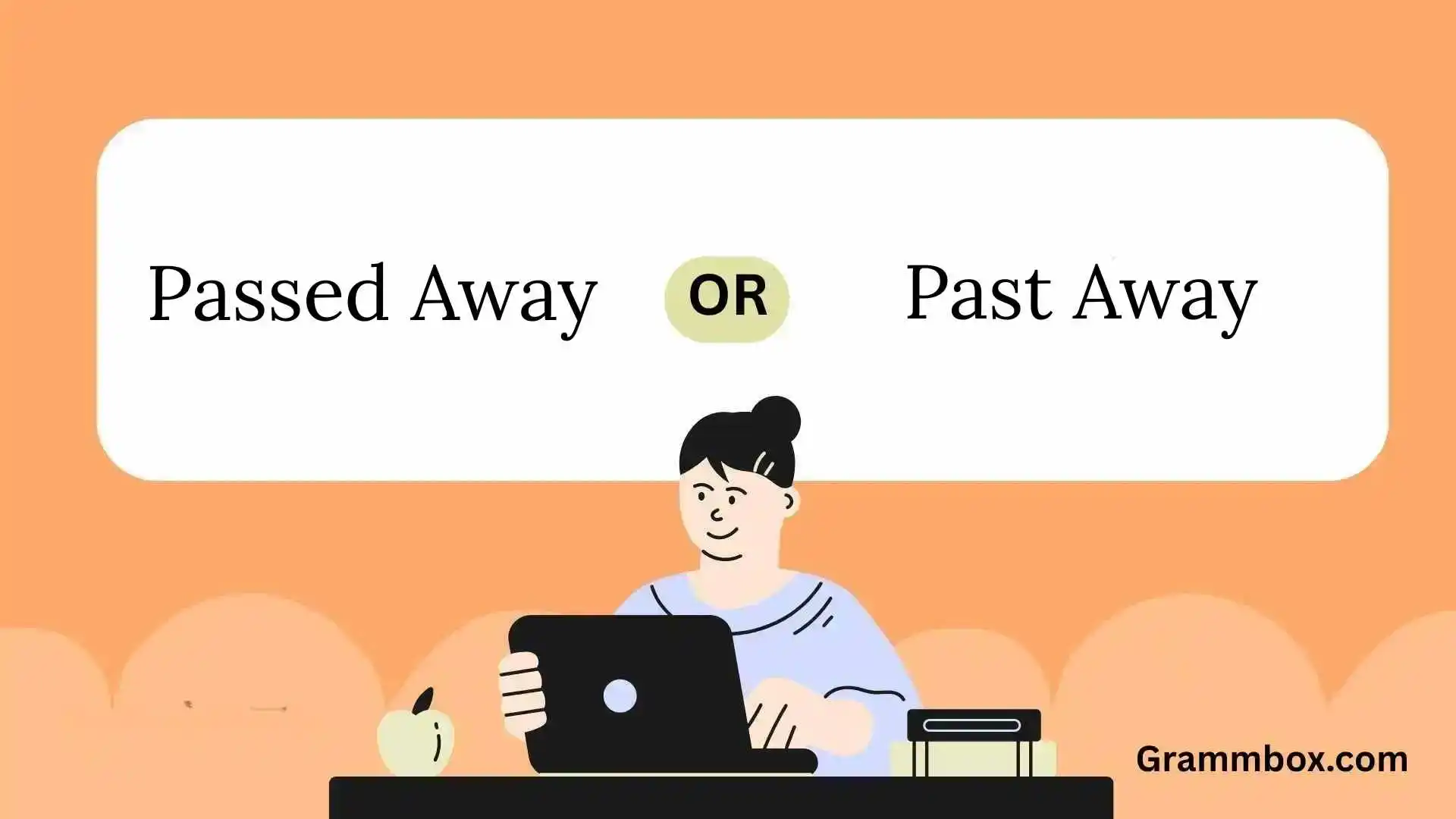
Many English learners and even native speakers often get confused between “passed away” and “past away.” At first glance, both phrases may look similar, but they have very different meanings and only one of them is correct in standard English.
This confusion usually happens because the words “passed” and “past” sound alike. However, their meanings and grammatical roles are completely different. Therefore, using the wrong one can lead to misunderstandings, especially in sensitive situations like talking about someone’s death.
Understanding the difference is important for both UK (British English) and US (American English) audiences. Whether you are writing an email, a formal message, or even a condolence note, choosing the correct phrase shows respect and clarity.
Quick Answer
The correct phrase is “passed away.” It is a polite and respectful way to say that someone has died.
❌ “Past away” is incorrect and should not be used in standard English.
In simple terms:
- Passed away = correct (means died)
- Past away = incorrect (no real meaning)
Meaning of the Correct Form
What Does “Passed Away” Mean?
The phrase “passed away” is a euphemism. A euphemism is a softer or more polite way to say something that might be uncomfortable. In this case, it is used instead of the word “died.”
It is commonly used in both British English and American English, especially in formal or respectful contexts.
Why Do We Use “Passed Away”?
People prefer this phrase because it sounds gentler and more compassionate. Talking about death directly can feel harsh, so softer expressions help maintain sensitivity.
Examples in British English
- “Her grandmother passed away peacefully last night.”
- “We were saddened to hear that he passed away in London.”
- “The Queen’s beloved corgi passed away at an old age.”
Examples in American English
- “My neighbor passed away after a long illness.”
- “He passed away surrounded by his family.”
- “The famous actor passed away yesterday.”
👉 As you can see, the usage is the same in both UK and US English. There is no difference in meaning or spelling.
Meaning of the Incorrect Form
What Does “Past Away” Mean?
The phrase “past away” is incorrect and does not have a proper meaning in English.
Let’s break it down:
- Past = refers to time (before now) or position (beyond something)
- Away = means at a distance or not present
When combined as “past away,” the phrase becomes meaningless in standard grammar.
Why Do People Make This Mistake?
The confusion happens because:
- “Passed” and “past” sound the same (they are homophones)
- People may not understand the verb “pass” in its past tense form
Incorrect Examples
❌ “He past away last year.”
❌ “She past away in her sleep.”
These are grammatically wrong and should always be corrected.
Keyword Comparison / Key Differences
Let’s clearly compare “passed away” and “past away”:
| Feature | Passed Away | Past Away |
| Correctness | ✅ Correct | ❌ Incorrect |
| Meaning | To die (polite expression) | No valid meaning |
| Grammar | Verb phrase | Incorrect structure |
| Usage in UK | Common | Not used |
| Usage in US | Common | Not used |
Key Difference Explained
- Passed = past tense of the verb “pass”
- Past = a noun, adjective, or preposition (not a verb)
👉 Therefore, only “passed away” works because it uses the correct verb form.
Common Mistakes People Make
Even fluent English speakers sometimes make mistakes with these words. Let’s look at some common errors.
1. Confusing “Passed” with “Past”
❌ “My uncle past away.”
✔ “My uncle passed away.”
👉 Tip: If you need a verb, use passed, not past.
2. Using Informal Speech in Formal Writing
In casual conversation, mistakes may go unnoticed. However, in writing—especially formal writing—accuracy is important.
❌ “He past away peacefully.”
✔ “He passed away peacefully.”
3. Mixing Up Similar Words
People often confuse:
- Passed vs Past
- There vs Their
- Your vs You’re
👉 This happens because of similar pronunciation.
4. Incorrect Condolence Messages
Using the wrong phrase in a condolence message can seem careless.
❌ “Sorry to hear your father past away.”
✔ “Sorry to hear your father passed away.”
Correct Usage in Sentences
Here are more examples to help you understand how to use “passed away” correctly.
General Examples
- “She passed away after a brave battle with cancer.”
- “He passed away at the age of 90.”
- “Their pet dog passed away last week.”
British English Examples
- “He passed away in Manchester.”
- “She passed away quietly at home.”
- “The author passed away, leaving behind a great legacy.”
American English Examples
- “He passed away in New York.”
- “She passed away early this morning.”
- “The singer passed away unexpectedly.”
Formal Context
- “We regret to inform you that Mr. Smith has passed away.”
- “She passed away surrounded by loved ones.”
Informal Context
- “I heard he passed away last night.”
- “Her cat passed away, and she’s very upset.”
Tips to Remember the Correct Usage
Here are some simple tricks to avoid confusion:
1. Think of “Passed” as a Verb
👉 If the sentence needs an action, use passed.
Example:
- “He passed the ball.”
- “He passed away.”
2. Remember: “Past” is Not a Verb
👉 “Past” cannot replace a verb like “passed.”
3. Use This Simple Rule
- Passed = action (correct)
- Past = time/place (not correct here)
4. Mnemonic Trick
👉 “He passed away” = He moved on (action)
This helps you remember that passed is the correct form.
5. Double-Check Emotional Writing
Whenever you write about serious topics like death, take a moment to check your spelling carefully.
FAQs
1. Is “past away” ever correct?
No, “past away” is never correct in standard English. It has no proper meaning.
2. Why do people say “passed away” instead of “died”?
Because it is more polite and gentle. It shows respect and sensitivity.
3. Is “passed away” used in both UK and US English?
Yes, it is widely used in both British English and American English with the same meaning.
4. Can I use “died” instead of “passed away”?
Yes, but “died” is more direct, while “passed away” is softer and more respectful.
5. What part of speech is “passed” in “passed away”?
“Passed” is a verb (past tense of “pass”).
6. What does “past” mean on its own?
“Past” refers to time before now or movement beyond something.
Example:
- “In the past”
- “Walk past the door”
7. Is it okay to use “passed away” in formal writing?
Yes, it is appropriate for both formal and informal contexts, especially when showing respect.
Conclusion
To sum up, the difference between “passed away” and “past away” is simple but important.
- ✅ “Passed away” is correct and means someone has died in a polite way.
- ❌ “Past away” is incorrect and should never be used.
Although the words “passed” and “past” sound the same, their meanings are very different. Therefore, choosing the correct one is essential especially in sensitive situations.
READ MORE ARTICLES..
Bellow or Below: What’s the difference & usage? 2026
in depth or in-depth: What’s the difference & usage?
In Tact or Intact: What’s the difference & usage? 2026
to soon or too soon: What’s the difference & usage? 2026