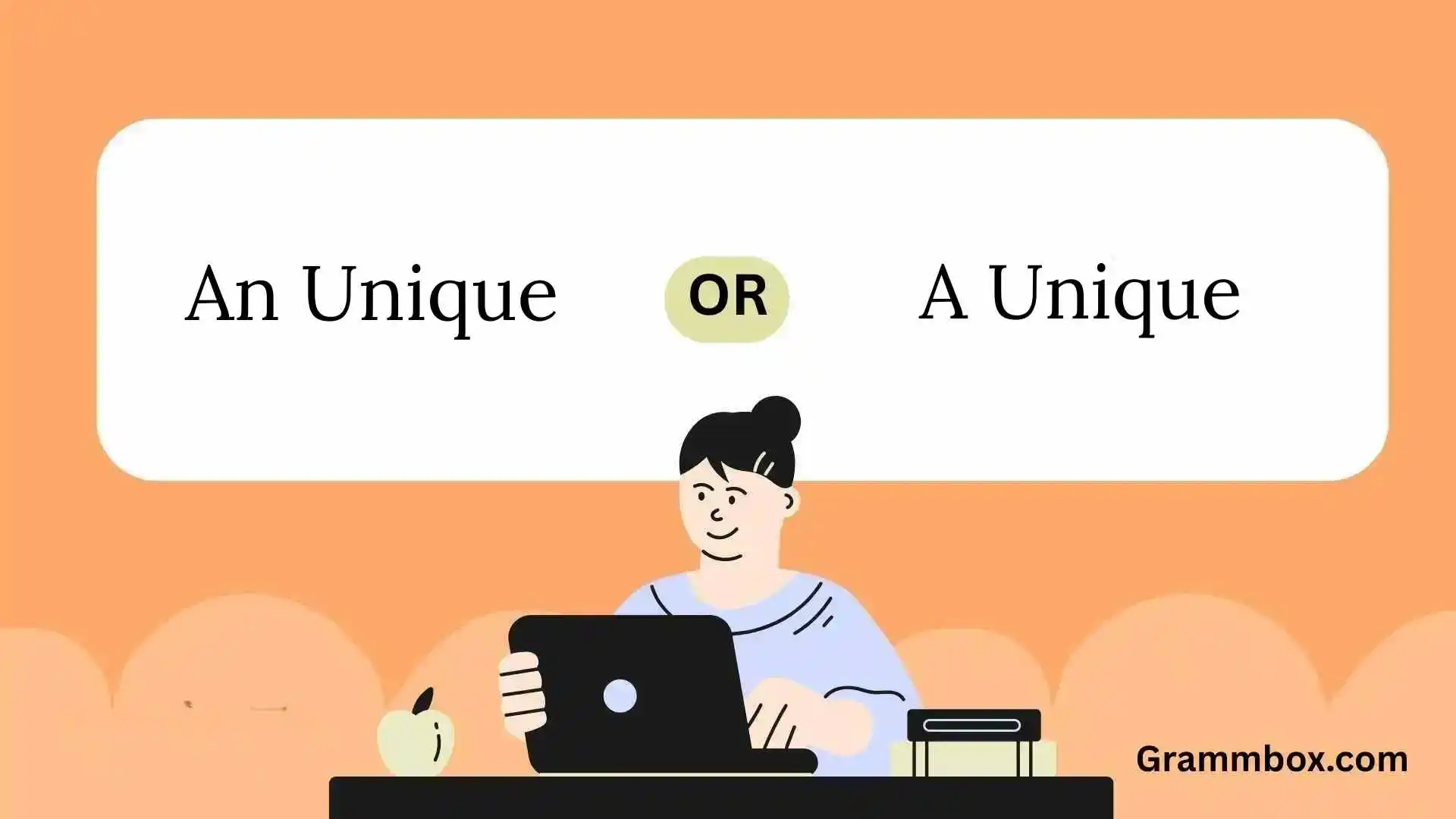
Have you ever paused while writing and wondered whether to use “an unique” or “a unique”? You’re not alone. This is a very common confusion in English, especially for learners and even native speakers. At first glance, the word unique starts with a vowel (u), so many people assume that “an” should come before it. However, English pronunciation rules are not always that simple.
In both British English (UK) and American English (US), articles like a and an depend on sound, not just spelling. Therefore, understanding how words are pronounced becomes essential. This small mistake can affect your writing quality, whether you’re preparing an academic essay, writing content, or sending professional emails.
Moreover, mastering such grammar rules helps improve clarity, confidence, and correctness in communication. So, if you want to avoid mistakes and sound more natural in English whether in the UK or the US this guide will help you understand everything clearly.
Quick Answer
The correct phrase is: “a unique”
✔ Example: She has a unique style.
❌ Incorrect: She has an unique style.
Why? Because the word unique starts with a “yoo” sound (/juː/), which is a consonant sound. Therefore, we use “a” instead of “an.”
Meaning of the Correct Form
What Does “A Unique” Mean?
The phrase “a unique” is used to describe something that is one of a kind, special, or unlike anything else.
- Unique = something rare, different, or original
Examples (UK & US English)
- She has a unique way of speaking.
- This painting is a unique masterpiece.
- He came up with a unique solution to the problem.
In both British and American English, the meaning and usage of unique remain exactly the same. There is no spelling difference between UK and US here.
Pronunciation Matters
The word unique is pronounced as:
👉 /juːˈniːk/ (sounds like “yoo-neek”)
Because it starts with a “y” sound, we use “a” instead of “an.”
Meaning of the Incorrect Form
What About “An Unique”?
The phrase “an unique” is incorrect in standard English.
Why Is It Wrong?
Even though unique starts with the vowel letter “u,” it does not begin with a vowel sound. Instead, it begins with a consonant sound (/y/).
- ❌ an unique idea → Incorrect
- ✔ a unique idea → Correct
Common Misunderstanding
Many learners follow this rule:
“Use ‘an’ before vowels (a, e, i, o, u)”
However, the correct rule is:
Use “an” before vowel sounds, not just vowel letters.
Keyword Comparison / Key Differences
Let’s clearly compare “a unique” and “an unique”:
| Feature | A Unique | An Unique |
| Correctness | ✔ Correct | ❌ Incorrect |
| Rule Applied | Based on consonant sound | Misapplied vowel rule |
| Pronunciation | “yoo-neek” (starts with /y/) | Incorrect assumption |
| UK Usage | ✔ Standard | ❌ Not used |
| US Usage | ✔ Standard | ❌ Not used |
Key Takeaway
- Use “a” before words that sound like they begin with a consonant
- Use “an” before words that sound like they begin with a vowel
Common Mistakes People Make
Even experienced writers sometimes make mistakes with articles. Here are some common ones related to this topic:
1. Focusing on Spelling Instead of Sound
- ❌ an university
- ✔ a university
👉 University starts with “yoo,” just like unique.
2. Assuming All “U” Words Use “An”
- ❌ an useful tool
- ✔ a useful tool
3. Mixing Up Silent Letters
Some words do use “an” because the first letter is silent:
- ✔ an hour (silent “h”)
- ✔ an honest person
But:
- ✔ a unique idea (pronounced “yoo”)
4. Overthinking Grammar Rules
Sometimes, learners try to apply rules too strictly without considering pronunciation.
5. Confusion in Formal Writing
Both UK and US writers may accidentally write:
- ❌ an unique opportunity
However, this is incorrect in all forms of English.
Correct Usage in Sentences
Let’s look at practical examples to help you understand better.
Everyday Sentences
- She has a unique personality.
- That was a unique experience.
- He designed a unique logo.
Professional Context (UK & US)
- This company offers a unique approach to marketing.
- We provide a unique solution for businesses.
- The product has a unique feature that stands out.
Academic Writing
- The research presents a unique perspective.
- This study explores a unique method.
Creative Writing
- It was a unique story that touched everyone’s heart.
Comparison with Similar Words
| Word | Correct Usage |
| Unique | a unique |
| University | a university |
| Unicorn | a unicorn |
| Umbrella | an umbrella |
| Apple | an apple |
👉 Notice the difference:
- Umbrella → “uh” sound → an
- Unique → “yoo” sound → a
Tips to Remember the Correct Usage
Here are some easy tricks to help you never forget:
1. Focus on Sound, Not Letter
Ask yourself:
👉 Does it sound like it starts with a vowel?
- If YES → use an
- If NO → use a
2. Think of the “Y” Sound
If the word starts with “u” but sounds like “yoo,” use a:
- a unique
- a university
- a unicorn
3. Use the “Yoo Rule”
👉 Words that sound like “yoo” always take “a”
4. Say It Out Loud
If you’re unsure, pronounce the word:
- a yoo-neek ✔ sounds natural
- an yoo-neek ❌ sounds awkward
5. Practice with Similar Words
Try practicing with:
- useful
- uniform
- union
All take “a”
FAQs Section
1. Is it “a unique” or “an unique”?
The correct phrase is “a unique” because unique starts with a consonant sound (/y/).
2. Why don’t we use “an” before unique?
Because unique is pronounced “yoo-neek,” and “yoo” is a consonant sound, not a vowel sound.
3. Does this rule differ in UK and US English?
No. Both British and American English follow the same rule based on pronunciation.
4. Are there exceptions to this rule?
Yes, but they depend on pronunciation:
- an hour (silent “h”)
- a university (pronounced “yoo”)
5. Can I ever say “an unique” in informal English?
No. It is considered grammatically incorrect in both formal and informal English.
6. How can I quickly decide between “a” and “an”?
Just listen to the first sound of the word:
- Vowel sound → an
- Consonant sound → a
7. What are other examples like “unique”?
Words like:
- university
- unicorn
- uniform
All use “a” because they start with a “yoo” sound.
Conclusion
Understanding whether to use “an unique” or “a unique” becomes simple once you learn the key rule: focus on sound, not spelling. Even though unique begins with the vowel letter “u,” it actually starts with a consonant sound (/y/), which makes “a unique” the correct choice.
In both UK and US English, this rule remains consistent. Therefore, you don’t need to worry about regional differences in this case. By paying attention to pronunciation and practicing similar examples, you can avoid this common mistake easily.
To sum up:
- ✔ Always say “a unique”
- ❌ Never say “an unique”
- 🎯 Remember the “yoo” sound rule
READ MORE ARTICLES..
tries or trys: What’s the difference & usage? 2026
heroes or heros: What’s the difference & usage?
adapter or adaptor: What’s the difference & usage? 2026
wifes or wives: What’s the difference & usage? 2026