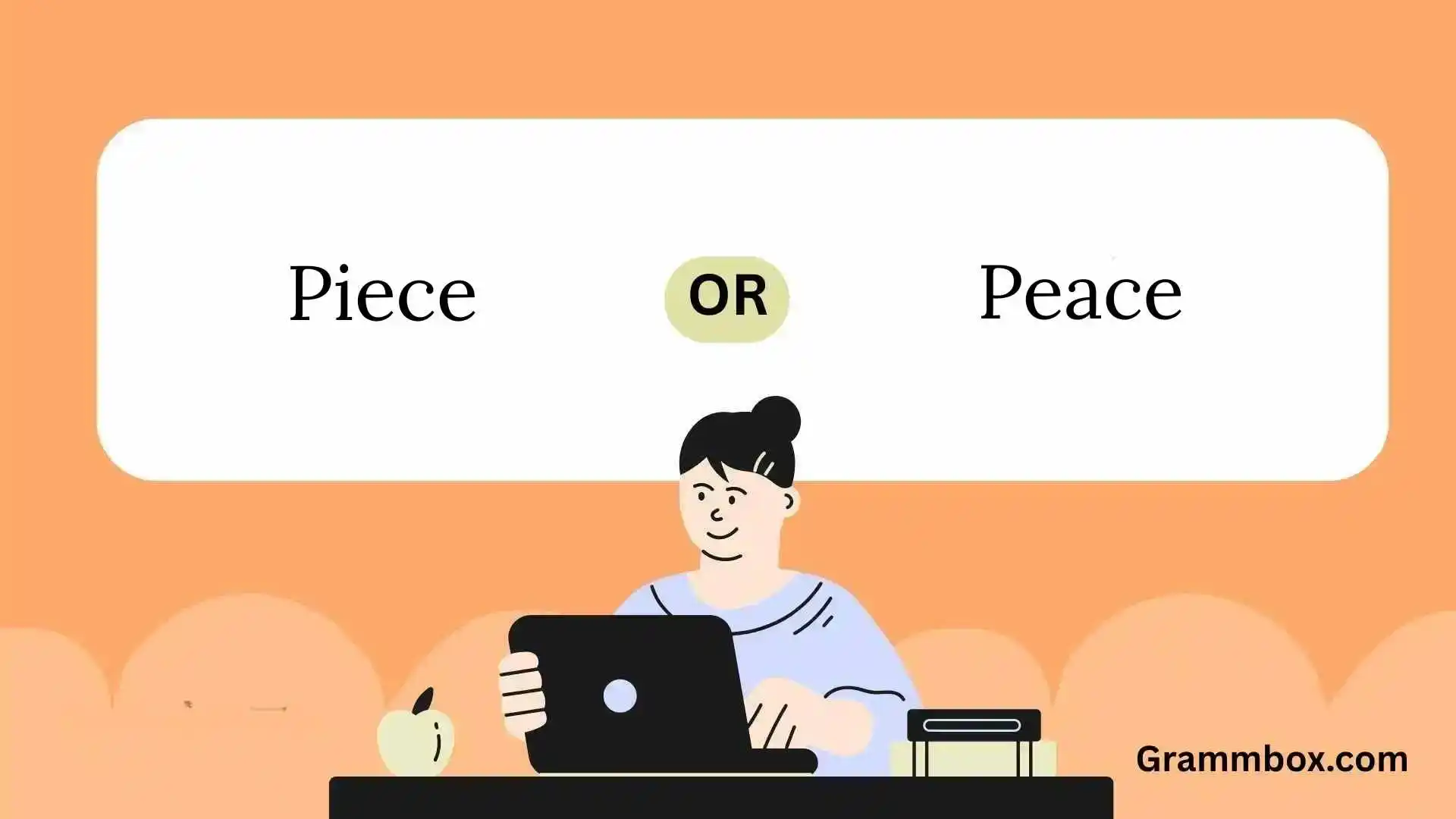
English is full of phrases that sound alike but have very different meanings. One of the most common examples is “say your piece” vs “say your peace.” Many people use these expressions in everyday conversation, yet not everyone understands which one is correct.
This confusion happens because both piece and peace are pronounced the same way. As a result, even native speakers in both the UK (British English) and the US (American English) sometimes mix them up. However, only one version is correct in most contexts.
Understanding the difference is important because using the wrong phrase can change the meaning of your sentence or make your writing look less polished. Whether you’re writing emails, essays, or social media posts, using the correct expression shows clarity and confidence.
Quick Answer
The correct phrase is “say your piece.” It means to express your opinion or share what you want to say.
❌ “Say your peace” is usually incorrect in this context.
✔️ “Say your piece” is the proper form in both UK and US English.
However, peace is a real word with its own meaning, so confusion often occurs. But when you want someone to speak their mind, always use “piece.”
Meaning of the Correct Form
What Does “Say Your Piece” Mean?
The phrase “say your piece” means:
- To express your thoughts or opinions
- To speak openly about something
- To say what you need to say before ending a conversation
It is commonly used when someone is encouraged to speak honestly, especially during discussions, arguments, or emotional moments.
Examples in Sentences
British English (UK)
- “Go on, say your piece, and then we’ll decide what to do next.”
- “She finally said her piece during the meeting.”
- “Before we move on, I’d like to say my piece.”
American English (US)
- “Just say your piece and let’s move forward.”
- “He said his piece and left the room.”
- “Everyone should get a chance to say their piece.”
Where Did It Come From?
The phrase comes from older English, where piece referred to a portion of speech or a part of a discussion. Over time, it evolved to mean expressing one’s opinion fully.
Meaning of the Incorrect Form (If Any)
What Does “Say Your Peace” Mean?
Technically, “say your peace” is not correct in this context. However, let’s break it down:
- Peace means calmness, harmony, or the absence of conflict.
- Saying “peace” would imply expressing calm or resolution but this is not how the phrase is used in standard English.
Why Do People Use It?
People often write “peace” instead of “piece” because:
- Both words sound identical (homophones)
- “Peace” is a more familiar word emotionally
- It feels logical in emotional contexts (like resolving conflict)
Is It Ever Acceptable?
In very rare creative or poetic contexts, someone might intentionally use “say your peace” to suggest expressing calm or making peace. However:
👉 In standard grammar (UK & US), it is considered incorrect.
Keyword Comparison / Key Differences
Let’s clearly compare “say your piece” and “say your peace”:
| Aspect | Say Your Piece | Say Your Peace |
| Correct Usage | ✅ Yes | ❌ No (in standard usage) |
| Meaning | Express your opinion | Literal meaning doesn’t fit |
| Common Usage | UK & US English | Mistaken usage |
| Word Meaning | Piece = part of speech | Peace = calm/harmony |
| Professional Writing | Recommended | Avoid |
Key Takeaway
- “Piece” = something you say
- “Peace” = a feeling or state
Therefore, if you’re talking about speaking, always choose piece.
Common Mistakes People Make
Even experienced writers sometimes confuse these two words. Let’s look at common mistakes in both UK and US contexts.
1. Writing “Peace” Instead of “Piece”
❌ “Let him say his peace.”
✔️ “Let him say his piece.”
2. Assuming Emotional Context Requires “Peace”
People often think arguments or emotional talks involve peace, so they use that word.
❌ “She said her peace during the argument.”
✔️ “She said her piece during the argument.”
3. Mixing Them in Formal Writing
In professional emails or academic work, this mistake can stand out.
❌ “Please say your peace before the meeting ends.”
✔️ “Please say your piece before the meeting ends.”
4. Autocorrect Errors
Sometimes, devices automatically replace piece with peace.
👉 Always double-check your writing.
5. Mislearning from Others
If someone learns the phrase incorrectly, they may continue using it that way.
Correct Usage in Sentences
Here are more examples to help you master the phrase.
Everyday Conversations
- “Just say your piece, and we’ll move on.”
- “I’ve said my piece, so I’m done.”
- “Everyone deserves to say their piece.”
Workplace Examples
UK
- “Before we close the meeting, does anyone want to say their piece?”
- “He said his piece about the project delays.”
US
- “Let her say her piece before you respond.”
- “The manager allowed everyone to say their piece.”
Emotional Situations
- “I needed to say my piece before I could forgive him.”
- “She finally said her piece after years of silence.”
Informal Use
- “Alright, say your piece already!”
- “He said his piece and walked away.”
Tips to Remember the Correct Usage
Learning the difference is easier with a few simple tricks.
1. Think of “Piece” as a Part
👉 Piece = a part of speech
If you’re sharing a part of your thoughts, use piece.
2. Link It to Speaking
- “Say your piece” = say your words
- “Piece” relates to something spoken
3. Remember “Peace” Is a Feeling
- Peace = calm, quiet, harmony
- Not related to speaking your opinion
4. Use This Simple Sentence
👉 “Say your piece of mind.”
This helps you connect piece with speech.
5. Visual Trick
Imagine:
- Piece = a slice of conversation
- Peace = a calm lake
Only one fits the situation!
FAQs
1. Is “say your peace” ever correct?
In standard English, no. It is considered incorrect. However, it might appear in creative writing with a different intended meaning.
2. Do UK and US English differ in this phrase?
No. Both British English and American English use “say your piece” as the correct form.
3. Why do people confuse “piece” and “peace”?
Because they are homophones they sound exactly the same but have different meanings and spellings.
4. Can I use “say your piece” in formal writing?
Yes. It is acceptable in both formal and informal contexts, especially when discussing opinions or discussions.
5. What is a similar phrase to “say your piece”?
Some alternatives include:
- Speak your mind
- Express your opinion
- Have your say (more common in UK English)
- Get something off your chest
6. Is “have your say” the same as “say your piece”?
Yes, they are very similar. However:
- “Have your say” is more common in British English
- “Say your piece” is widely used in both UK and US English
7. How can I avoid this mistake in writing?
- Double-check spelling
- Remember the meaning difference
- Practice using the correct phrase
- Use grammar tools if needed
Conclusion
The confusion between “say your piece” and “say your peace” is common, but the solution is simple once you understand the meanings.
- ✅ “Say your piece” is the correct phrase
- ❌ “Say your peace” is usually incorrect
The key difference lies in the words themselves:
- Piece relates to speech or expression
- Peace relates to calmness and harmony
READ MORE ARTICLES..
Calve or Calf: What’s the difference & usage? 2026
a historic or an historic: What’s the difference & usage?
high school or highschool: What’s the difference & usage? 2026
Sneek or Sneak: What’s the difference & usage? 2026