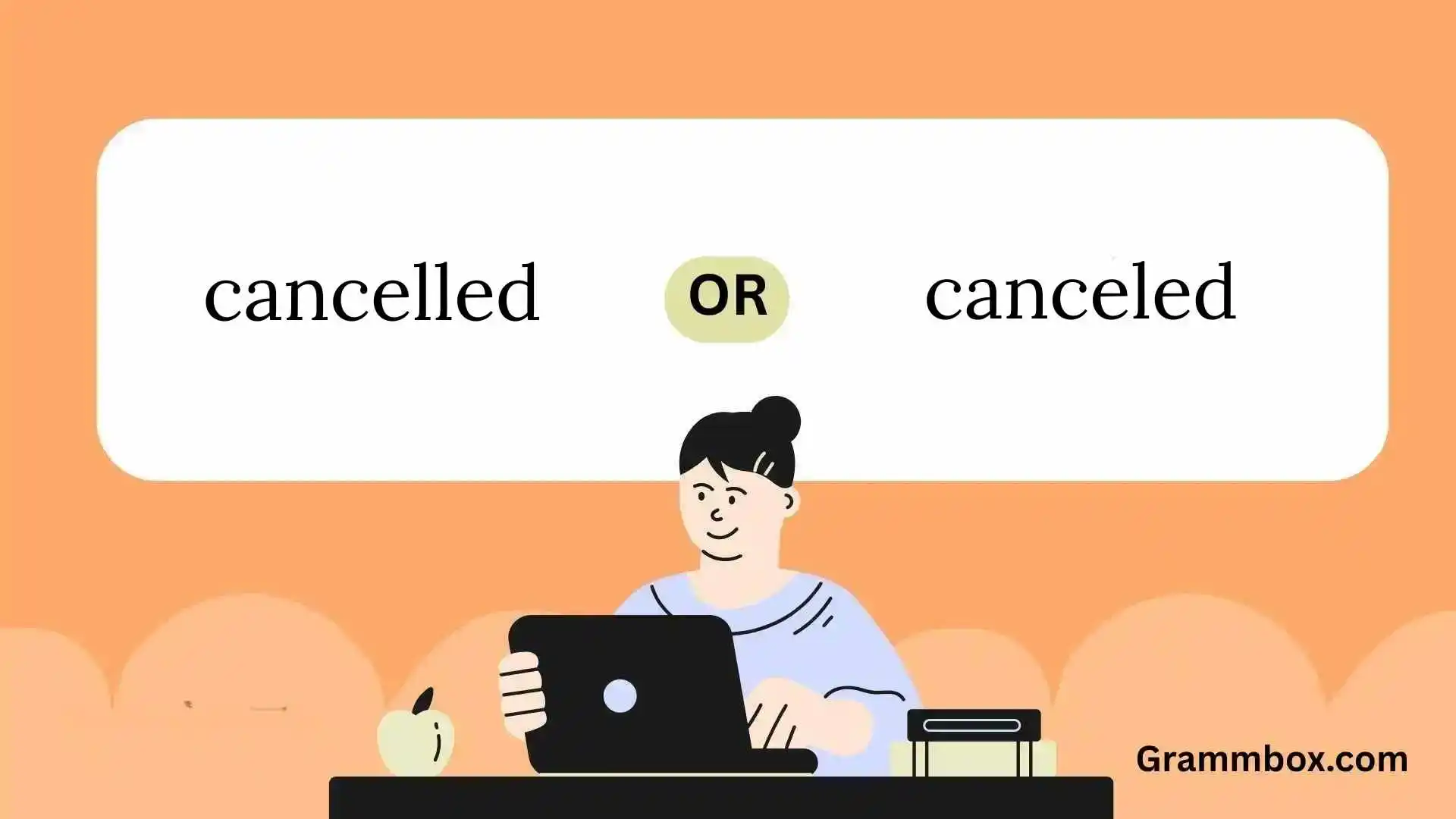
Many English learners and even native speakers often pause when writing phrases like “is cancelled or canceled.” Which one is correct? Is one wrong? Or do both forms work depending on where you live?
This confusion is completely normal. English spelling varies between regions, especially between British English (UK) and American English (US). Words like colour/color, travelling/traveling, and cancelled/canceled follow different patterns depending on the version of English you use.
Understanding the difference is important because it helps you write clearly and professionally. Whether you are writing emails, academic papers, blog posts, or social media content, using the correct spelling for your audience makes your writing more polished and trustworthy.
Quick Answer
Both “is cancelled” and “is canceled” are correct—but they are used in different regions.
- “Is cancelled” is the preferred spelling in British English (UK).
- “Is canceled” is the preferred spelling in American English (US).
In simple terms, neither is wrong. The correct choice depends on your audience and the style of English you are using.
Meaning of the Correct Form
The phrase “is cancelled” or “is canceled” means that something has been stopped, called off, or no longer going to happen.
Definition
To cancel something means:
- To decide that an event, plan, or arrangement will not happen
- To officially stop something
Examples in British English (UK)
- The meeting is cancelled due to bad weather.
- Our train is cancelled this morning.
Examples in American English (US)
- The meeting is canceled due to bad weather.
- Our flight is canceled today.
👉 As you can see, the meaning stays exactly the same. Only the spelling changes.
Meaning of the Incorrect Form (if any)
Here’s the important point:
👉 Neither “cancelled” nor “canceled” is incorrect.
However, problems occur when:
- You mix UK and US spellings in the same document
- You use the wrong version for your audience
Examples of inconsistent usage (avoid this):
- The event is cancelled, and tickets were canceled yesterday. ❌
👉 These sentences look confusing because they mix styles.
Correct approach:
- UK style: The event is cancelled, and tickets were cancelled. ✅
Keyword Comparison / Key Differences
Let’s clearly compare “cancelled” vs “canceled”.
| Feature | Cancelled (UK) | Canceled (US) |
| Spelling Style | British English | American English |
| Double “L”? | Yes | No |
| Usage Region | UK, Australia, Canada | United States |
| Meaning | Same | Same |
Why the Difference Exists
The difference comes from spelling rules:
- In British English, verbs often double the final “L” when adding endings like -ed or -ing.
- travel → travelling
- cancel → cancelled
- travel → travelling
- In American English, the final “L” is usually not doubled unless the stress is on the last syllable.
- travel → traveling
- cancel → canceled
- travel → traveling
👉 Therefore, the difference is not random it follows consistent spelling patterns.
Common Mistakes People Make
Even though the rule is simple, many people still make mistakes. Let’s look at the most common ones.
1. Mixing UK and US spelling
❌ The flight is cancelled, and we already canceled the hotel.
✔ The flight is cancelled, and we already cancelled the hotel. (UK)
2. Thinking one form is wrong
Some people believe:
- “Canceled” is incorrect ❌
- “Cancelled” is incorrect ❌
👉 Both beliefs are wrong. Both spellings are correct depending on location.
3. Ignoring your audience
If you are writing for:
- A UK company → use cancelled
- A US company → use canceled
👉 Using the wrong version may look unprofessional.
4. Inconsistent formal writing
In formal writing (emails, reports, blogs), consistency matters.
❌ The event is cancelled. It was canceled yesterday.
✔ Choose one style and stick to it.
5. Confusion with other “L” words
Words like:
- travelling/traveling
- labelling/labeling
👉 follow the same pattern as cancelled/canceled.
Correct Usage in Sentences
Let’s explore more real-life examples.
British English (UK) Examples
- The football match is cancelled due to heavy rain.
- Our appointment is cancelled for today.
American English (US) Examples
- The football game is canceled due to rain.
- Our meeting is canceled this afternoon.
Mixed Context Example (Global Audience)
If your audience is international:
- Choose one style and stay consistent
- OR follow your organization’s style guide
Example:
- Our webinar is canceled (US company writing globally)
- Our webinar is cancelled (UK company writing globally)
Tips to Remember the Correct Usage
Here are some simple tricks to help you remember:
1. Think of Location
- UK → Cancelled (double “L”)
- US → Canceled (single “L”)
👉 Tip: “UK loves double letters.”
2. Match Other Words
If you use:
- travelling → use cancelled
- traveling → use canceled
👉 Keep your spelling style consistent.
3. Follow Style Guides
If you write professionally:
- Check company guidelines
- Follow academic rules (APA, MLA, etc.)
4. Use Spell Check Settings
Set your device to:
- British English → “cancelled”
- American English → “canceled”
5. Keep It Consistent
👉 The most important rule:
Never mix both spellings in the same document.
FAQs
1. Is “cancelled” or “canceled” correct?
Both are correct. “Cancelled” is British English, while “canceled” is American English.
2. Which spelling should I use?
Use the spelling that matches your audience:
- UK audience → cancelled
- US audience → canceled
3. Why does British English use double “L”?
British English often doubles the final “L” when adding suffixes like -ed or -ing.
4. Is “is cancelled” grammatically correct?
Yes, “is cancelled” is grammatically correct in British English.
5. Is “is canceled” grammatically correct?
Yes, “is canceled” is grammatically correct in American English.
6. Can I use both spellings in one document?
No. It is best to choose one style and stay consistent throughout your writing.
7. Which spelling is more common worldwide?
Both are widely used. However:
- “Canceled” is more common in the US
- “Cancelled” is more common in the UK and many other countries
Conclusion
The debate between “is cancelled or canceled” is not about right or wrong it’s about where and how you use English.
To summarize:
- “Is cancelled” → British English (UK)
- “Is canceled” → American English (US)
- Both mean the same thing
- Consistency is the key to good writing
READ MORE ARTICLES..
Job Aid or Job Aide: What’s the difference & usage? 2026
realized or realised: What’s the difference & usage?
no later than or then: What’s the difference & usage? 2026
glueing or gluing: What’s the difference & usage? 2026