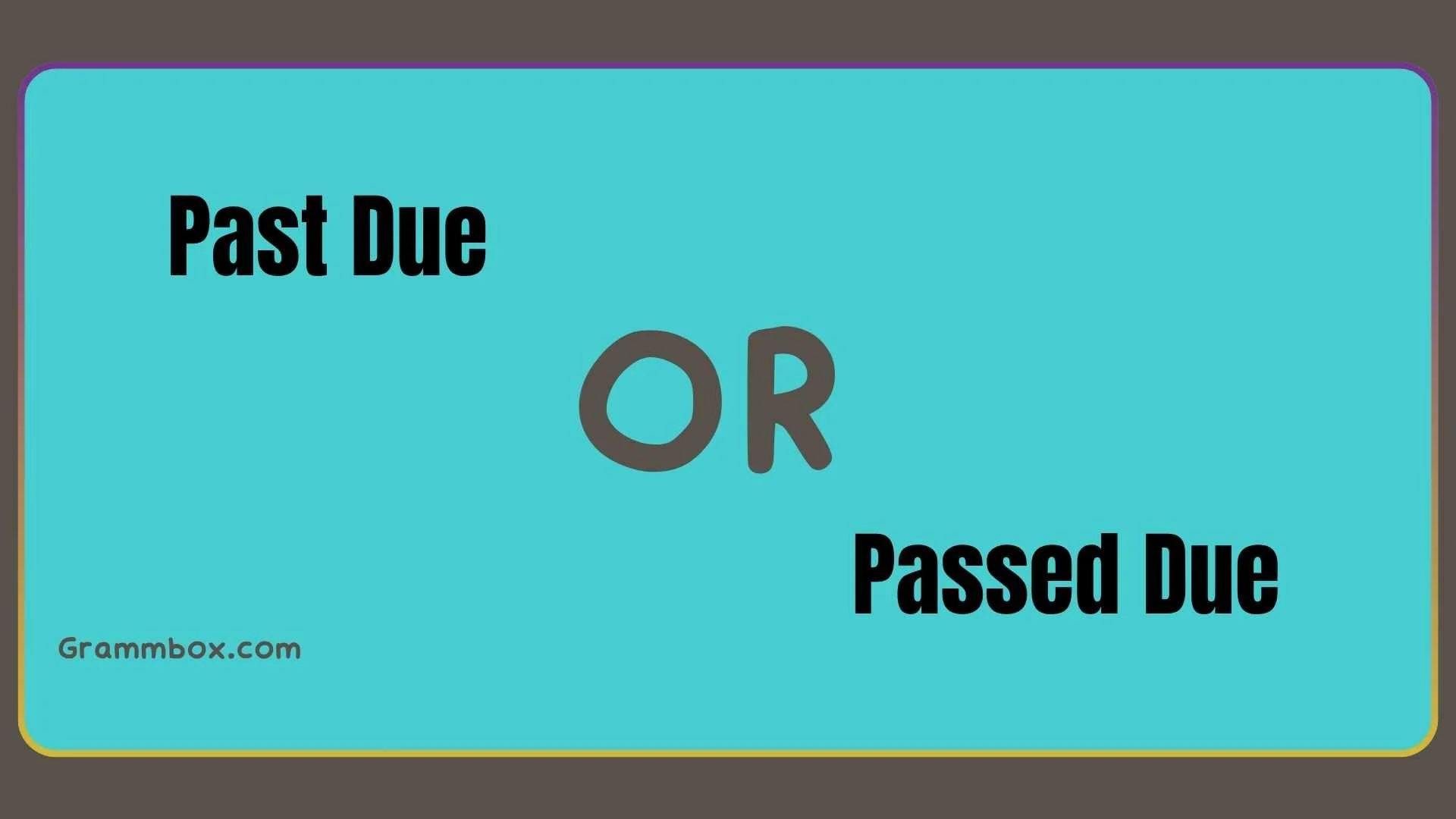
If you’ve ever received a bill or statement that mentioned something was “past due,” you might have paused to ask yourself: should it be “past due” or “passed due”? This is a common question for English speakers, especially for those navigating financial documents, emails, or invoices.
The confusion often arises because both “past” and “passed” sound similar, yet they serve very different grammatical roles in a sentence. Understanding the correct usage is important not just for writing professionally, but also for clear communication in both the UK and the US.
While English spelling and grammar can vary slightly across these regions, the distinction between “past due” and “passed due” remains critical for anyone dealing with deadlines, payments, or overdue notices. Using the wrong term may lead to misunderstandings or even convey unprofessionalism in formal documents.
Quick Answer (Passed Due VS Past Due)
The correct form is “past due.”
“Past due” is an adjective describing something that has not been paid or completed by its deadline. For example, an unpaid bill that is beyond its due date is referred to as “past due.”
On the other hand, “passed due” is incorrect in this context. While “passed” is the past tense of “pass,” it is not used to describe overdue items in English. Always use “past due” when referring to bills, invoices, or deadlines.
Meaning of the Correct Form: Past Due
Definition
“Past due” is an adjective phrase used primarily in financial or deadline contexts. It indicates that a payment, assignment, or task has not been completed by its due date.
- Past: functions as an adjective here, indicating “beyond” or “after.”
- Due: indicates the date or time by which something should be completed.
So, when combined, “past due” literally means “beyond the due date.”
Examples in US English
- Your credit card payment is past due; please make a payment immediately.
- The invoice is past due by 10 days.
- Late fees may apply if your rent is past due.
Examples in UK English
In British English, “past due” is also understood, but you may sometimes see “overdue” used instead. Both terms convey the same meaning.
- Your council tax payment is past due.
- The utility bill is past due, so prompt payment is required.
- The library book is past due; please return it to avoid fines.
Tip: In the UK, “overdue” is slightly more common in everyday speech, while “past due” is often found in formal or financial contexts.
Meaning of the Incorrect Form: Passed Due
Why “Passed Due” is Wrong
Many people mistakenly write “passed due,” thinking it’s the past tense of “past.” However, this is grammatically incorrect in this context.
- Passed: the past tense of the verb “pass.”
- Due: adjective indicating a deadline.
When combined as “passed due,” it incorrectly suggests that something actively passed the due date, which is not how English phrases about overdue items are structured.
Example of Incorrect Usage
- ❌ Your credit card payment is passed due.
- ❌ The invoice has passed due by a week.
- ❌ Rent is passed due; please pay.
Using “passed due” may confuse readers and appear unprofessional, especially in formal communications like invoices, bank statements, or official letters.
Keyword Comparison / Key Differences
| Feature | Past Due | Passed Due |
| Part of speech | Adjective phrase | Incorrect; verb + adjective mismatch |
| Meaning | Beyond the due date; overdue | Grammatically incorrect in this context |
| Usage | Correct in bills, deadlines, invoices | Avoid; not standard English |
| Examples | “The invoice is past due.” | ❌ “The invoice is passed due.” |
| UK vs US | Used in both; “overdue” also common in UK | Incorrect everywhere |
Key takeaway: Always use “past due” when referring to payments or deadlines. Think of it as “beyond due” rather than something that has “passed.”
Past Due Synonym
| Topic | Explanation |
|---|---|
| Past Due Meaning | Past due means that a payment, task, bill, or obligation has not been completed by its required deadline. It refers to something that is overdue and should have been paid or finished already. |
| Past Due or Passed Due Invoice | The correct phrase is past due invoice. An invoice becomes past due when the payment deadline has passed and the customer has not yet paid. Passed due invoice is incorrect and rarely used in standard English. |
| Past Due or Passed Due Examples | Correct examples: Your electricity bill is past due. • The invoice became past due on June 1. • Several accounts are now past due. Incorrect example: The invoice is passed due. |
| Past Due Synonym | Common synonyms for past due include overdue, late, outstanding, unpaid, delinquent, and behind schedule. The best synonym depends on the context, such as payments, bills, assignments, or projects. |
| Past Due vs Passed Due | Past due is the correct expression because past functions as an adjective meaning “beyond a deadline.” Passed due is grammatically incorrect in most situations because passed is the past tense of the verb pass and does not convey the idea of being overdue. |
Common Mistakes: Passed Due or Past Due

Here are some of the most frequent errors and misunderstandings related to this phrase:
1. Confusing “past” with “passed”
- ❌ The payment is passed due.
- ✅ The payment is past due.
Tip: “Past” is often used to indicate “beyond,” while “passed” indicates an action that happened in the past.
2. Using “passed due” in emails or invoices
Incorrect phrasing can make business communications appear unprofessional:
- ❌ “Your payment is passed due. Please settle immediately.”
- ✅ “Your payment is past due. Please settle immediately.”
3. Mixing British and American English unnecessarily
While the UK often uses “overdue,” some writers incorrectly combine “passed” with “due” thinking it sounds British:
- ❌ “Your council tax is passed due.”
- ✅ “Your council tax is past due.” or “Your council tax is overdue.”
4. Misplacing “past” or using it as a verb
- ❌ “The due date has past due.”
- ✅ “The due date is past due.”
Remember: “Past due” functions as an adjective describing the status of the bill or task.
Usage in Sentences: Past Due or Passed Due
US Examples
- The electricity bill is past due, so please pay it today.
- If your rent becomes past due, late fees may be applied.
- This invoice is past due by 15 days, kindly settle it.
- Credit card companies send reminders when accounts are past due.
- The school library fines are past due and must be cleared.
UK Examples
- Your water bill is past due, or in common UK parlance, overdue.
- Council tax payments that are past due may incur interest.
- Late fees apply if the invoice is past due beyond 30 days.
- The rent is past due, so please contact the landlord immediately.
- Library books that are past due will attract a fine.
Pro Tip: If you’re writing for a UK audience, “overdue” may sound more natural, but “past due” is perfectly correct in formal writing.
Tips to Remember Usage: Past Due vs Passed Due
Here are some practical tricks to ensure you use “past due” correctly every time:
- Think “beyond due” – Past = beyond; Due = deadline.
- Never use “passed” – Remember, “passed” implies an action happened, not a status.
- Swap with “overdue” in UK English for naturalness.
- Check your context – Only use for payments, bills, assignments, or deadlines.
- Use in sentences like an adjective – “The invoice is past due,” not “has past due.”
Mnemonic: “Bills go past their due, they don’t pass.”
FAQs About Past Due or Passed Due
1. Is “past due” correct in both British and American English?
Yes. In the US, “past due” is standard for invoices and bills. In the UK, it’s also correct, but “overdue” is slightly more common in everyday use.
2. Can I use “passed due” in any context?
No. “Passed due” is considered incorrect when referring to overdue items. Always use “past due.”
3. What’s the difference between “overdue” and “past due”?
They mean the same thing. “Past due” is more formal and often used in financial contexts, while “overdue” is commonly used in both formal and informal UK English.
4. How do I use “past due” in a sentence?
- Correct: “The rent is past due, so please pay immediately.”
- Incorrect: “The rent is passed due.”
5. Is “past due” only used for bills?
No. While commonly used for payments, it can also refer to assignments, tasks, or any deadlines. For example: “The project report is past due.”
6. Can “past due” be hyphenated?
No, it is typically written as two separate words. Hyphenation is not standard.
7. What if I want to sound more formal in UK English?
You can use “overdue” interchangeably: “The invoice is overdue” is just as correct and formal.
Conclusion
Understanding the difference between “past due” and “passed due” is simple once you know that “past due” is the correct form for describing overdue bills, payments, or deadlines. While “passed due” may appear in casual writing or misunderstandings, it is grammatically incorrect and should be avoided in professional contexts.
For both UK and US audiences, using “past due” ensures clarity, professionalism, and proper communication. Remember the easy tip: “Bills go past their due, they don’t pass.”
Next time you write an invoice, email, or statement, check your phrasing. If you’re in the UK and want a natural alternative, “overdue” works perfectly. Correct usage not only avoids confusion but also reflects attention to detail and credibility in both business and personal writing.
RAED MORE ARTICLES..
dived or dove: What’s the difference & usage? 2026
Anyway or Anyways: Correct Usage in English.
wont or won’t: What’s the difference & usage? 2026
Beside or Besides: What’s the Real Difference?