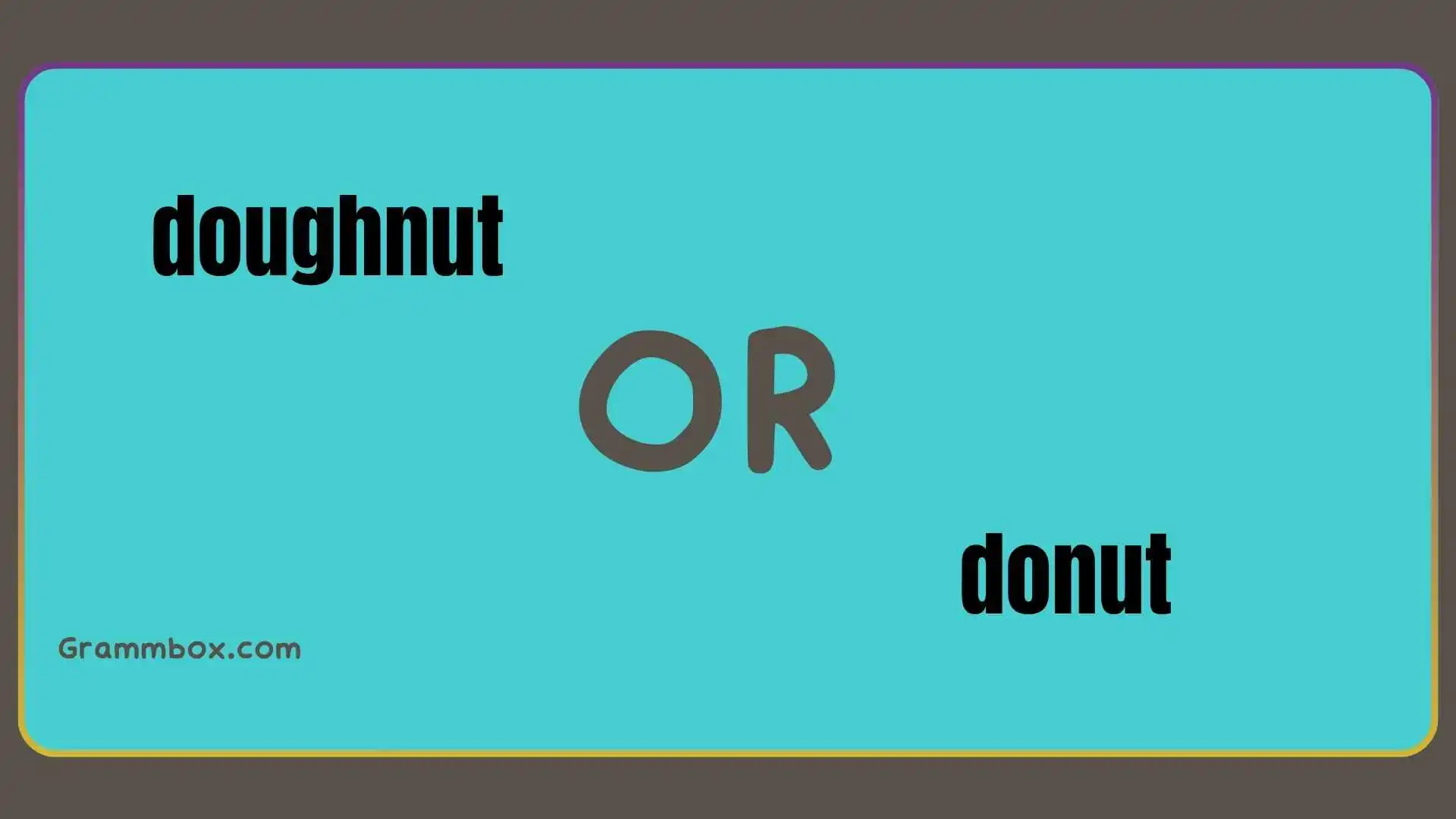
Many people often wonder whether to write “doughnut” or “donut”. Both spellings refer to the same sweet, deep-fried pastry, but the choice of spelling depends largely on geography, style, and context. For English learners and even native speakers, this small difference can sometimes be confusing.
Understanding this distinction is important, especially for those who write for international audiences or read English content from both the UK and the US. In British English, you are more likely to see “doughnut”, while in American English, “donut” has become the widely accepted and popular form.
Moreover, the debate is not just about spelling it also affects branding, menus, and general communication. Knowing which version to use ensures clarity, professionalism, and cultural accuracy.
Quick Answer
The correct form depends on your audience:
- British English: Use “doughnut”.
- American English: Use “donut” (especially in casual contexts or marketing).
While “donut” is a shortened form, both refer to the same delicious pastry. If writing formally or for a UK audience, always prefer “doughnut”. In contrast, US-based brands like Dunkin’ Donuts have popularized the shorter “donut”, making it widely acceptable in American English.
Meaning of the Correct Form (Doughnut or Donut)
Doughnut (UK & formal English)
The term “doughnut” is the original and traditional spelling. It refers to a sweet, fried pastry that is typically ring-shaped but can also be filled with cream, jam, or chocolate.
Examples in sentences:
- UK: I bought a chocolate doughnut from the bakery this morning.
- US (formal or traditional context): She prefers a classic doughnut over a donut from the chain store.
Key points:
- Doughnut is more formal and widely recognized in dictionaries.
- Often used in literature, cookbooks, and academic writing.
- Applies to both ring-shaped and filled pastries.
Donut (US & casual English)
“Donut” is a simplified, Americanized spelling of “doughnut”. It first appeared in the early 20th century as a marketing-friendly version.
Examples in sentences:
- US: I stopped by Dunkin’ to grab a dozen donuts.
- Casual: My kids love glazed donuts with sprinkles.
Key points:
- Shorter and easier to type or print.
- Very common in branding and menus in the US.
- Fully acceptable in everyday American English but less common in the UK.
Meaning of the Incorrect Form (Doughnut or Donut)
Some people mistakenly mix the two forms or spell them incorrectly, such as “dougnut” or “dount”, which are not recognized in standard English.
Examples of mistakes:
- Wrong: I want a dougnut.
- Wrong: She bought a dount for breakfast.
These misspellings can confuse readers and appear unprofessional, especially in formal writing. Always stick to “doughnut” or “donut” depending on your audience.
Keyword Comparison / Key Differences
| Feature | Doughnut (UK / formal) | Donut (US / casual) |
| Origin | Traditional spelling | Simplified American spelling |
| Usage | Formal writing, literature, UK menus | Branding, casual US English |
| Acceptability | UK, formal US contexts | US, informal contexts |
| Pronunciation | /ˈdəʊ.nʌt/ | /ˈdoʊ.nʌt/ |
| Appearance in media | Books, recipes, academic texts | Fast-food chains, advertisements |
Transition words: However, while doughnut remains traditional, donut has grown popular due to branding and simplicity. Therefore, knowing the context is key to proper usage.
Doughnut or Donut
| Keyword | Information |
|---|---|
| Doughnut or donut in English | Both doughnut and donut are correct English spellings. Doughnut is the traditional spelling commonly used in British English, while donut is a shorter, modern spelling that is more popular in American English. |
| Doughnut or donut meaning | A doughnut (or donut) is a sweet, fried pastry that is usually ring-shaped or filled with cream, jam, or custard. The meaning remains the same regardless of the spelling used. |
| Doughnut or donut slang | In slang, donut can refer to someone acting foolishly or making a silly mistake. It may also describe circular tire marks made by a vehicle spinning in circles, often called “doing donuts.” |
| Doughnut or donut Reddit | On Reddit, users generally agree that doughnut is the original and technically correct spelling, while donut is widely accepted due to its popularity in the United States and advertising by major brands. Most Reddit discussions conclude that both spellings are correct depending on the audience and region. |
Common Mistakes People Make
Many people misuse doughnut and donut, either by spelling the word incorrectly or by using the wrong form for their audience.
Examples of common mistakes:
- Writing donut in formal UK publications.
- Using doughnut on US fast-food menus, which may appear outdated or overly formal.
- Confusing pronunciation with spelling: “do-nut” vs “dough-nut”.
- Typing errors like dougnut or dount.
Tips to avoid mistakes:
- Check your audience: UK → doughnut, US → donut.
- Use spell-check tools that recognize regional variations.
- Remember the origin: doughnut is older and formal; donut is modern and Americanized.
Correct Usage in Sentences

Here are multiple real-life examples for both UK and US readers:
UK Examples:
- I bought a dozen doughnuts for the office party.
- She enjoyed a strawberry-filled doughnut with her tea.
- Doughnuts are popular treats in British bakeries.
US Examples:
- I grabbed a donut from Dunkin’ before work.
- Chocolate donuts are my favorite snack.
- He ordered a box of glazed donuts for the kids.
Transition phrases: In addition to regular usage, it is important to remember branding differences. For instance, Dunkin’ Donuts uses the American spelling exclusively.
Tips to Remember the Correct Usage
Here are some easy tricks to help you remember when to use each spelling:
- Think geography: UK → doughnut, US → donut.
- Brand association: Don’t forget that American brands like Dunkin’ Donuts use the shorter form.
- Formal vs casual: Doughnut is more formal; donut is casual.
- Mnemonic: “Doughnut has extra letters like the UK has extra tea breaks!”
Transition words: Therefore, whenever writing for a mixed audience, choose the form that aligns with your reader’s expectations.
FAQs
1. Are doughnut and donut the same thing?
Yes, they are the same pastry. The difference is mainly spelling and regional preference.
2. Which is correct in British English?
The correct and formal spelling in British English is doughnut.
3. Can I use donut in the UK?
Yes, but it is seen as informal or Americanized. For formal writing, prefer doughnut.
4. Why is donut spelled differently in the US?
“Donut” is a simplified, marketing-friendly version of the original word doughnut.
5. How do you pronounce doughnut vs donut?
- Doughnut (UK): /ˈdəʊ.nʌt/
- Donut (US): /ˈdoʊ.nʌt/
6. Are there other variations?
No standard variations exist beyond doughnut and donut. Any other spelling is considered incorrect.
7. Which spelling is better for branding?
In the US, donut is more memorable for marketing. In the UK, traditional bakeries may prefer doughnut.
Conclusion
In summary, the choice between doughnut or donut depends mainly on audience and context. For UK readers and formal writing, always use doughnut. For US readers or casual branding, donut is widely accepted and recognized.
Remember, both spellings refer to the same sweet pastry, and neither is incorrect in its appropriate context. By considering geography, formality, and branding, you can use the correct form confidently.
READ MORE ARTICLES..
Treck or Trek: Meaning, Examples, and Grammar Guide 2026
When to Use Get Past vs Get Passed (With Examples)
Worshiped or Worshipped? The Simple Grammar Guide You Need
Someday or Some Day: What’s the difference & usage? 2026