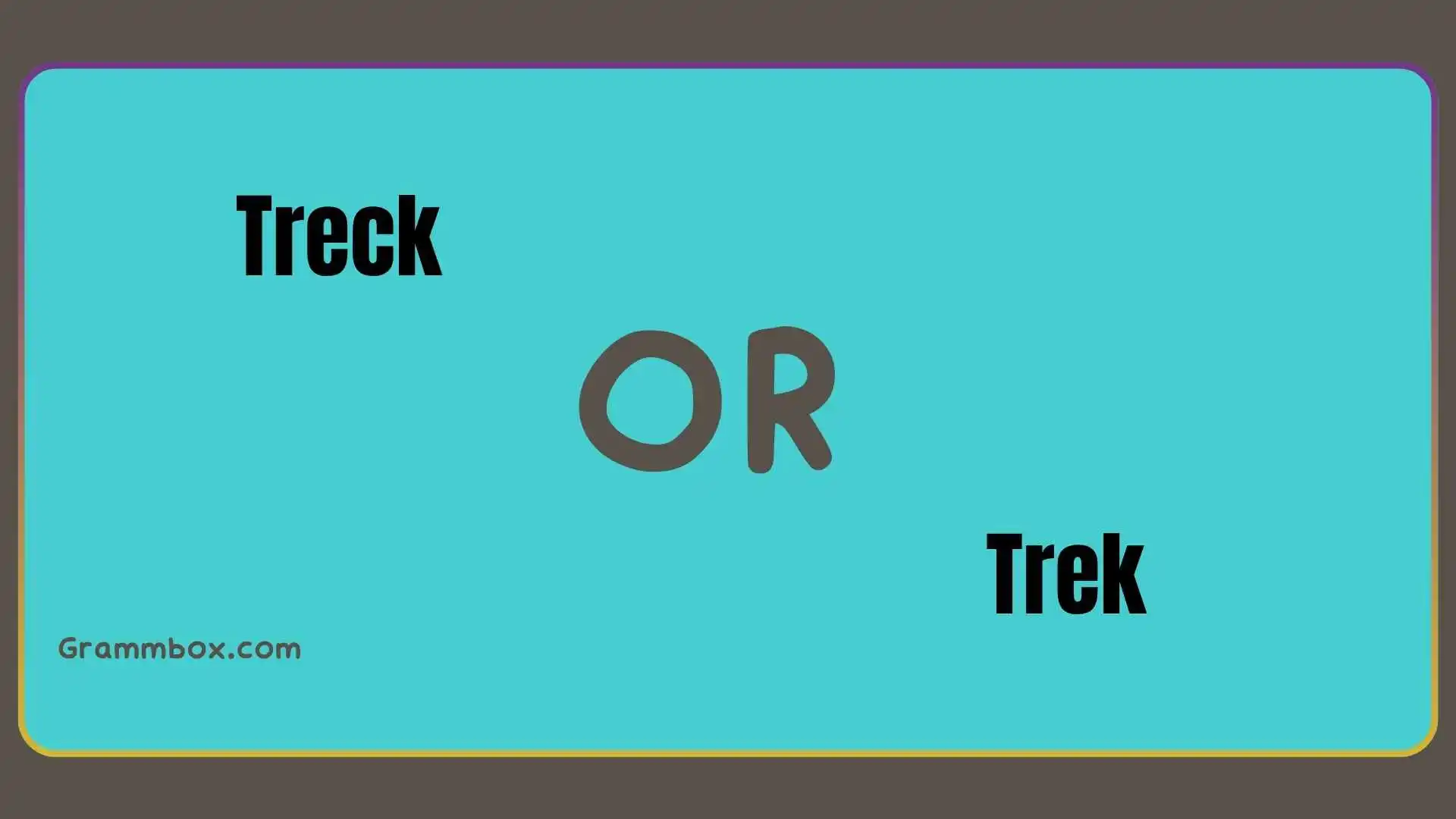
Many people often stumble upon the terms “treck” and “trek”, unsure which is correct. This confusion is common because the words sound similar, and sometimes people assume that both are acceptable. The reality, however, is different, and using the correct form is crucial for writing, conversation.
Understanding the distinction between treck and trek is particularly important for readers in both the UK and the US, as English spelling conventions can slightly differ, and misusing words may affect clarity.
While British English and American English share most words, certain forms and spellings are more standard in one region over the other.By the end of this guide, you will clearly know which word to use, why the other is incorrect, and how to confidently apply it in sentences.
Quick Answer
The correct form is “trek”.
“Trek” refers to a long, challenging journey, often on foot. The spelling “treck” is considered incorrect and should be avoided in both UK and US English.
In short, whenever you are describing hiking, adventurous walking trips, or metaphorical long journeys, use trek, not treck.
Meaning of the Correct Form – Trek
The word “trek” is a noun and a verb in English. Its origins trace back to South Africa, from the Afrikaans word trek, meaning “to pull” or “to travel.”
As a Noun
When used as a noun, trek describes a long and difficult journey, typically on foot or involving effort.
Examples:
- UK: “We went on a trekking expedition in the Scottish Highlands, and it was an unforgettable trek.”
- US: “Our trek through the Rocky Mountains lasted three days, but the views were worth it.”
As a Verb
As a verb, trek means to travel slowly or with difficulty, often implying exertion or endurance.
Examples:
- UK: “We trekked across the moorlands despite the rain and wind.”
- US: “The hikers trekked up the steep trails at Yosemite National Park.”
Contextual Notes
- Adventure & Hiking: Trek is often associated with nature, mountains, forests, or long-distance travel on foot.
- Metaphorical Use: Trek can also describe a challenging journey in a non-literal sense:
- “Starting a new business can be a tough trek, but persistence pays off.”
- “Starting a new business can be a tough trek, but persistence pays off.”
Meaning of the Incorrect Form – Treck
Many mistakenly write “treck”, thinking it’s a valid alternative. However, “treck” is not recognized in standard English dictionaries and is considered a misspelling of trek.
Using treck in professional writing, academic papers, or even casual communication can appear uneducated or careless.
Examples of incorrect usage:
- ❌ “We went on a long treck across the Alps.”
- ❌ “He trecked through the jungle for hours.”
Correction: Replace “treck” with “trek” in all cases.
Keyword Comparison / Key Differences
| Aspect | Trek (Correct) | Treck (Incorrect) |
| Spelling | T-R-E-K | T-R-E-C-K |
| Dictionary Recognition | ✅ Yes | ❌ No |
| Usage | Long journeys, hiking, metaphorical trips | Misspelling, not recommended |
| UK English | ✅ Standard | ❌ Incorrect |
| US English | ✅ Standard | ❌ Incorrect |
| Example (noun) | “The trek through the Alps was exhausting.” | “The treck through the Alps was exhausting.” ❌ |
| Example (verb) | “We trekked across the desert.” | “We trecked across the desert.” ❌ |
Key Takeaway: There is no situation in UK or US English where “treck” is correct. Always use trek.
Treck or Trek Halloween, Treck or Trek Reddit, Treck or Trek in English, Treck or Trek Meaning
| Keyword | Information |
|---|---|
| Trek or Treck Halloween | During Halloween-related discussions, the correct English word is trek if you mean a long walk, journey, or adventure. The spelling treck is generally considered a misspelling and is not recognized as standard English. |
| Treck or Trek Reddit | On Reddit, users frequently ask whether treck or trek is correct. The consensus is that trek is the proper spelling used in dictionaries, while treck is usually a typing error or an uncommon variant. |
| Treck or Trek in English | In standard English, trek is the correct word. It refers to a long, often difficult journey, especially on foot. Treck is not accepted as the standard spelling in modern English. |
| Treck or Trek Meaning | Trek means a long journey, hike, or travel over a challenging route. For example, “We went on a mountain trek.” The word can also be used figuratively to describe a long or difficult process. Treck does not have a recognized meaning in standard English dictionaries. |
Common Mistakes People Make
Understanding the common errors helps avoid them. Here are some frequent mistakes:
- Spelling Confusion
- Mistakenly adding a “c” after the “e”: treck
- Correct spelling: trek
- Mistakenly adding a “c” after the “e”: treck
- Verb Form Confusion
- Incorrect: “We trecked for miles.”
- Correct: “We trekked for miles.”
- Incorrect: “We trecked for miles.”
- Mixing with Similar Words
- Words like track or trick can confuse beginners. Always double-check:
- “Track” = a path or a music track
- “Trek” = a long journey
- “Track” = a path or a music track
- Words like track or trick can confuse beginners. Always double-check:
- Using Treck in Academic or Professional Writing
- ❌ “The team went on a treck.”
- ✅ “The team went on a trek.”
- ❌ “The team went on a treck.”
- Regional Misconceptions
- Some believe “treck” is UK-specific, but both UK and US English use trek exclusively.
- Some believe “treck” is UK-specific, but both UK and US English use trek exclusively.
Correct Usage in Sentences
Using trek correctly is easy once you practice. Here are examples for both UK and US audiences:
Noun Examples
- UK: “The trek across the Lake District tested our stamina.”
- US: “The trek along the Appalachian Trail was physically demanding.”
Verb Examples
- UK: “We trekked through the misty valleys of Wales.”
- US: “They trekked for hours in the Grand Canyon’s heat.”
Metaphorical Use
- UK: “Getting a degree can be a long trek, but it’s rewarding.”
- US: “Recovering from the storm was a trek, but the town rebuilt stronger.”
Everyday Conversations
- “I’m planning a trek to the Himalayas next summer.”
- “She trekked to work through the heavy snow.”
Tip: Whenever in doubt, ask yourself: Am I describing a long journey or effort? If yes, it’s “trek.”
Tips to Remember the Correct Usage
- Mnemonic Trick:
Think of Trek as “Tough, Really Exciting Kilometer” – it reminds you it’s about a long, challenging journey. - Verb/Noun Flexibility:
Trek works as both a noun (“the trek”) and a verb (“we trekked”). - Avoid Adding Extra Letters:
The extra “c” in treck is unnecessary and wrong. - Associate with Hiking/Adventure:
Whenever you imagine hiking, walking, or a challenging journey, link the word to trek, not treck. - Check Dictionaries:
Both Oxford English Dictionary (UK) and Merriam-Webster (US) confirm that trek is the correct form.
FAQs About Treck or Trek
1. Is “treck” ever correct?
No, “treck” is always incorrect. Use “trek” in all situations.
2. Can “trek” be used metaphorically?
Yes, you can say, “Completing the project was a trek,” meaning a long or difficult effort.
3. Are there UK vs US differences?
No major differences exist. Both forms use trek. The only difference is sometimes spelling preferences for other words, but not this one.
4. How do you spell the past tense?
- Correct: “trekked”
- Incorrect: “trecked”
5. Can I use “trek” in casual conversations?
Absolutely. Both in casual UK or US English, “trek” is widely understood.
6. Does trek only mean walking?
Primarily, yes, but it can also mean any long, challenging journey, even metaphorical ones.
7. Are there similar words I should not confuse?
Yes: track (path) and trick (prank) are different. Only trek refers to a long journey.
Conclusion
In conclusion, the confusion between treck or trek is common but easy to resolve. The correct word is trek, whether you are writing in British or American English. Treck is simply a misspelling and should be avoided in all formal and informal contexts.
Remember:
- Trek (noun/verb) = long journey, often on foot, or challenging effort.
- Treck = ❌ incorrect.
By understanding and practicing the correct usage, you can confidently write and speak without errors. So next time you plan a hiking adventure or describe a challenging journey, write trek and not treck!
READ MORE ARTICLES..
Chris or Chris’s: Which One Is Correct? Simple Guide to Possessive Forms.
Receive vs Recieve: Common Spelling Mistake Explained.
please advise or please advice: Difference & usage. 2026
Seel or Seal: Easy Grammar Explanation.