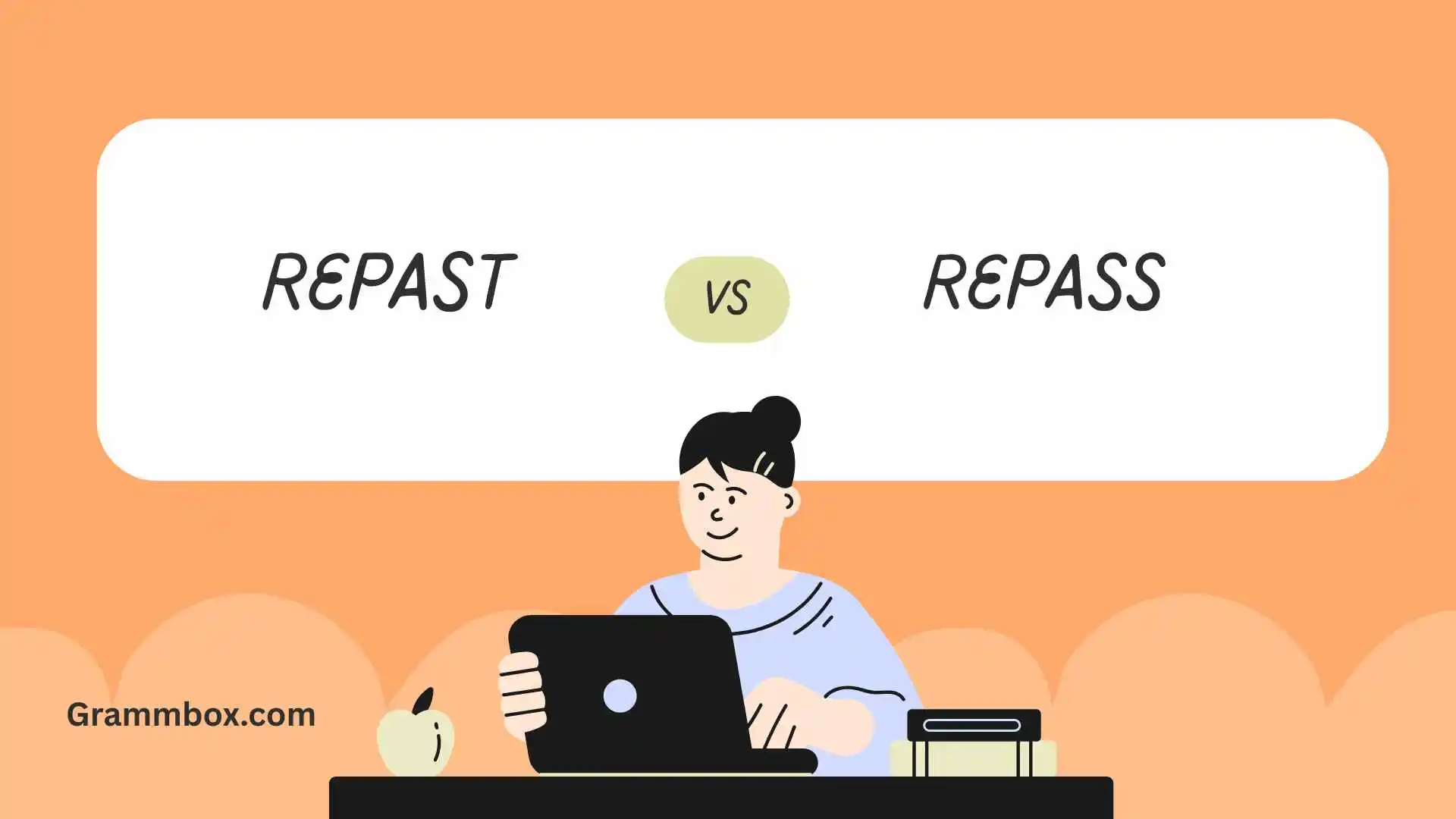
English can be tricky, especially when two words sound similar or look alike. One such confusing pair is “repast” and “repass.” Many learners and even native speakers often mix them up because they are phonetically close, but their meanings and uses are very different. Understanding the distinction is essential for clear communication, whether you are writing an academic essay, a professional email, or just chatting informally.
This confusion is particularly relevant for both UK and US audiences. While English spelling and usage sometimes differ across these regions, this pair is more about meaning than spelling. Therefore, knowing which word to use in the right context can prevent embarrassing mistakes and make your English sound polished and professional.
By the end of this article, you will clearly understand which is correct, how to use it, and common pitfalls to avoid. Whether you are in London, New York, or anywhere else in the English-speaking world, this guide will help you master this tricky pair.
Quick Answer
The correct word is “repast,” which refers to a meal or food that is eaten. For example, “We enjoyed a sumptuous repast after the wedding ceremony.”
The word “repass” is incorrect in this context and is often mistakenly written when people mean “repast.” Repass may exist as a verb in rare, formal contexts meaning “to pass again,” but it is not commonly used in everyday English, especially in American or British writing.
In short:
- ✅ Correct: repast = a meal
- ❌ Incorrect: repass = not used for meals
Meaning of the Correct Form: “Repast”
Definition
A repast is a formal or literary word that simply means a meal. It can refer to breakfast, lunch, dinner, or even a light snack, depending on the context.
Example (UK English):
- “The royal banquet was a lavish repast attended by hundreds of guests.”
Example (US English):
- “After the graduation ceremony, the family gathered for a celebratory repast.”
Usage Notes
- Commonly used in formal writing, literature, or ceremonial contexts.
- In casual conversation, “meal” is more common, but using “repast” can add elegance to your speech or writing.
- Often appears in historical texts or church contexts, e.g., “a funeral repast” refers to the meal served after a funeral.
Meaning of the Incorrect Form: “Repass”
Definition
The word “repass” is rarely used in English. When it does appear, it usually means “to pass again” or “to traverse again” and is mostly found in legal, archaic, or technical texts.
Example (rare/legal use):
- “The legislature will repass the bill next week after revisions.”
Key Point:
If your goal is to talk about food or a meal, “repass” is incorrect. Using it instead of “repast” is a spelling mistake and may confuse readers.
Keyword Comparison / Key Differences
| Feature | Repast | Repass |
| Meaning | Meal or food | To pass again (rare/archaic) |
| Common Usage | Formal, literary, ceremonial | Legal/technical, rarely used |
| Example (UK) | “The funeral repast was solemn.” | “They will repass the bill.” |
| Example (US) | “We shared a hearty repast.” | “The train will repass the station.” |
| Correct for meals | ✅ | ❌ |
| Common mistake | – | Often confused with “repast” |
Tip: If you are thinking about food, always choose repast.
Common Mistakes People Make
- Using “repass” instead of “repast”
- ❌ Incorrect: “We had a delicious repass yesterday.”
- ✅ Correct: “We had a delicious repast yesterday.”
- Confusing casual “meal” with “repast”
- While not technically wrong, saying “repast” in casual speech may sound overly formal.
- UK: “Let’s have our repast at noon” → formal; everyday: “Let’s have lunch at noon.”
- US: “After the ceremony, a light repast was served” → formal; everyday: “After the ceremony, we had some food.”
- Mixing pronunciation
- Correct pronunciation: /rɪˈpɑːst/ (UK), /rɪˈpæst/ (US).
- Mispronouncing it as “re-pass” may lead to confusion.
Correct Usage in Sentences
UK English Examples
- “The knight’s feast included a sumptuous repast of roast meats and fine bread.”
- “A repast was provided for guests after the memorial service.”
- “We enjoyed a quiet repast in the countryside, surrounded by nature.”
US English Examples
- “The wedding party gathered for a celebratory repast at the hotel ballroom.”
- “After the graduation ceremony, the school hosted a small repast for family and friends.”
- “The picnic offered a simple yet delightful repast of sandwiches and fruit.”
Tips to Remember the Correct Usage
- Think “meal” → “repast”
- If you are thinking about eating, the word you need is repast.
- Mnemonic Trick:
- “Repast” has ‘eat’ hidden in the sound of the word (re-past), reminding you it relates to food.
- Avoid “repass” for meals:
- Only use repass in technical, legal, or rare contexts meaning “pass again.”
- Check context:
- Is it about food? ✅ Use repast
- Is it about repeating an action? ✅ Possibly repass
FAQs About “Repast or Repass”
1. Can I use “repass” instead of “repast” in modern English?
No. Repass is rarely used and never correct when referring to a meal. Always use repast.
2. Is “repast” British or American English?
It is used in both. Spelling is the same in UK & US English, but pronunciation differs slightly:
- UK: /rɪˈpɑːst/
- US: /rɪˈpæst/
3. Can “repast” refer to a light snack?
Yes, although it is more formal, it can refer to any meal, big or small.
4. Is “repass” commonly used today?
No. You will mostly find it in legal documents or very old texts meaning “pass again.”
5. What is a “funeral repast”?
A funeral repast is the meal served after a funeral. It is a traditional use of the word.
6. Can I use “repast” in casual conversation?
Yes, but it may sound formal. In everyday English, “meal” or “lunch/dinner” is more natural.
7. Are there any common phrases with “repast”?
Yes, phrases like “hearty repast,” “light repast,” or “funeral repast” are common in both UK and US English.
Conclusion
Understanding the difference between repast and repass is essential for clear and effective English communication.
- Repast = meal (correct, formal, literary)
- Repass = to pass again (rare, technical, not for meals)
By using repast correctly, you can confidently write or speak about meals in both UK and US contexts. Remember the tips and mnemonics to avoid confusion, and check your context whenever in doubt.
Whether you are writing a novel, preparing a formal speech, or just sending a message, using repast appropriately will make your English sound polished, educated, and precise.
READ MORE ARTICLES..
Flakey or Flaky: Definition, Usage, and Grammar Rules 2026
good morning or goodmorning: What’s the difference? 2026
Noisey or Noisy: Easy Guide to the Right Spelling 2026
Thumb In vs Thumb Out: What’s the difference & usage? 2026