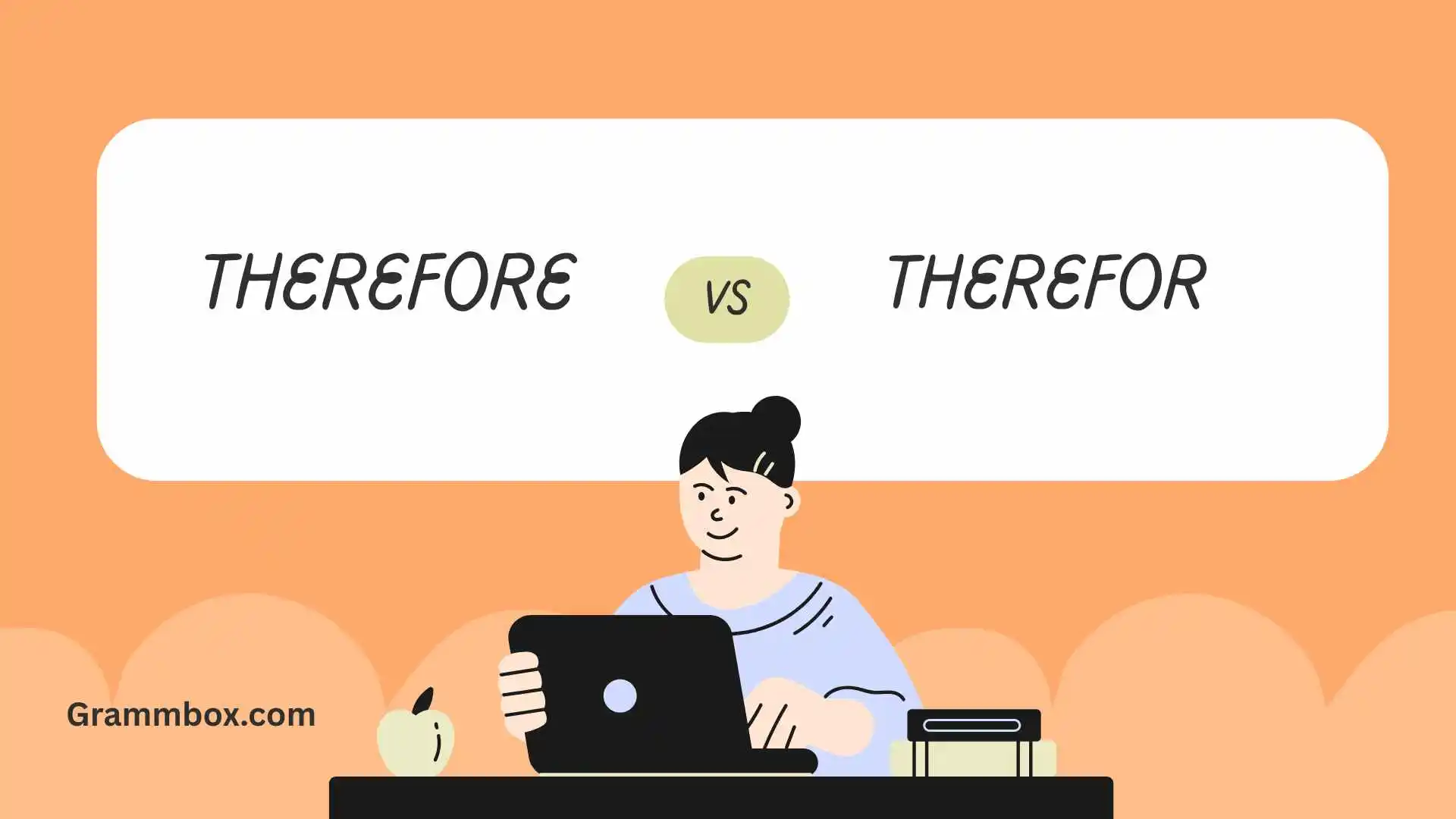
Many English learners, writers, and even native speakers often stumble upon the words “therefore” and “therefor.” Although they look and sound similar, their meanings and usages are entirely different. Misusing them can lead to awkward sentences, unclear writing, or even misunderstandings in professional and academic contexts.
Understanding the difference between these two words is essential for clear communication. Whether you’re writing an essay, a business email, or a legal document, using the correct word can make your message precise and professional. This is particularly important for both UK and US audiences, as subtle differences in formal English usage can sometimes affect clarity.
In this article, we will explore the correct and incorrect forms, explain their meanings, provide practical examples, highlight UK and US nuances, and give you tips to remember them. By the end, you will confidently know when to use “therefore” and when “therefor” is appropriate.
Quick Answer
Simply put, “therefore” is used to indicate a consequence or result. For example, “It rained all night; therefore, the match was postponed.” This is the form you will use in almost all everyday writing.
On the other hand, “therefor” is a rare legal or formal term that means “for that” or “for it.” For instance, in legal documents, one might write, “The party agreed to the terms and conditions therefor.” Outside legal or historical contexts, “therefor” is almost never used.
Meaning of the Correct Form: Therefore
“Therefore” is a conjunction and adverb used to show cause and effect. It connects a reason or premise with a logical conclusion.
Key points:
- Always links a cause to a result.
- Can appear at the start, middle, or end of a sentence.
- Works in both UK and US English with identical meaning.
Examples:
British English:
- The train was delayed; therefore, we missed our appointment.
- He forgot his umbrella; therefore, he got wet in the rain.
American English:
- The team did not submit the report on time; therefore, the project deadline was extended.
- She failed the exam; therefore, she has to retake the course.
Notes:
- In both UK and US English, “therefore” is widely accepted in formal and informal writing.
- It is often preceded by a semicolon or period when connecting two independent clauses.
Meaning of the Incorrect Form: Therefor
“Therefor” is much less common and is almost exclusively seen in legal, historical, or formal texts.
Definition:
- Means “for that” or “for it.”
- Used to refer to a specific item, agreement, or consideration mentioned earlier.
Examples in context:
- The committee issued a contract and received payment therefor.
- He signed the deed and obtained the rights therefor.
Important Points:
- Not interchangeable with “therefore.”
- Rarely used outside legal documents.
- Modern readers may find it archaic or confusing if used in everyday writing.
Keyword Comparison / Key Differences
| Feature | Therefore | Therefor |
| Meaning | As a result; consequently | For that; for it |
| Usage Context | Everyday English, formal and informal | Legal, formal, or historical texts |
| UK/US Difference | None; used identically | None; rare in both UK & US English |
| Part of Speech | Conjunction/Adverb | Adverb |
| Example Sentence | He didn’t study; therefore, he failed. | The tenant paid the rent and received a receipt therefor. |
Tip: If you are unsure, “therefore” is almost always the safe choice.
Common Mistakes People Make
Many writers confuse “therefore” with “therefor” simply because they sound alike. Let’s look at common errors:
- Using therefor instead of therefore
❌ I was late, therefor I missed the bus.
✅ I was late; therefore, I missed the bus. - Misplacing “therefore” in the sentence
❌ He is tired, he therefore should rest.
✅ He is tired; therefore, he should rest. - Using therefor in casual writing
❌ I bought a book therefor I could read it.
✅ I bought a book; therefore, I could read it. - Confusing punctuation rules
- Correct: Use semicolon before therefore when linking independent clauses.
- Incorrect: I was hungry therefore I ate.
- Correct: I was hungry; therefore, I ate.
UK vs US English:
- Both varieties follow the same rules for “therefore”.
- Usage of “therefor” is extremely rare and generally appears in legal documents, which can be either UK or US law.
Correct Usage in Sentences
Here are multiple examples of correct usage in everyday and professional contexts:
Everyday Situations:
- It started snowing; therefore, the roads were slippery.
- She missed the bus; therefore, she was late for school.
Business/Professional Writing:
- The client rejected the proposal; therefore, we revised the plan.
- Sales dropped in the first quarter; therefore, management decided to adjust the strategy.
Academic Writing:
- The experiment failed to produce results; therefore, further study is required.
- The hypothesis was incorrect; therefore, alternative theories were considered.
Legal / Formal Context (therefor):
- The lessee signed the agreement and paid the rent therefor.
- The trustee executed the deed and accepted the responsibilities therefor.
Tips to Remember the Correct Usage
Here are some practical tips to avoid confusion:
- Remember the cause-effect rule:
- “Therefore” = result/consequence.
- Test: Can you replace it with “as a result”? If yes, it’s correct.
- Legal context check for therefor:
- If writing a contract, agreement, or formal deed, consider “therefor”.
- Otherwise, stick to “therefore.”
- Mnemonic trick:
- “Therefore” has an extra “e” for Effect.
- “Therefor” = For that” → think “for” at the end.
- Punctuation clue:
- Use a semicolon before therefore when connecting independent clauses.
FAQs Section
1. Can I use “therefor” in modern writing?
- Generally, no. It’s mostly limited to legal or historical texts. In modern writing, use “therefore.”
2. Is “therefore” the same in UK and US English?
- Yes. There are no significant differences in meaning or usage. Punctuation rules apply equally.
3. Can I start a sentence with “therefore”?
- Yes. Example: Therefore, we decided to postpone the meeting.
4. How do I know if I should use “therefor”?
- If the sentence refers to something specific previously mentioned, particularly in legal contexts, “therefor” might be correct.
5. Is “therefore” formal or informal?
- It works in both formal and informal writing, making it versatile for essays, emails, and conversations.
6. Are there common mistakes in professional writing?
- Yes. Writers often misuse “therefor” in place of “therefore,” leading to confusion.
7. Can I replace “therefore” with “thus”?
- Yes. Example: It rained all night; thus, the match was postponed. However, “therefore” is more universally understood in everyday English.
Conclusion
In conclusion, understanding the difference between “therefore” and “therefor” is essential for clear and professional writing. “Therefore” indicates a result or consequence and is suitable for both UK and US English in everyday, academic, and professional writing. “Therefor”, however, is a rare term mostly used in legal or historical contexts to mean “for that.”
To avoid mistakes:
- Stick to “therefore” unless you are certain “therefor” is needed in a legal document.
- Remember cause-effect relationships, punctuation rules, and the mnemonic tips shared above.
READ MORE ARTICLES..
more than or more then: What’s the difference & usage? 2026
leaped or leapt: What’s the difference & usage?
repast or repass: What’s the difference & usage? 2026
wont or won’t: What’s the difference & usage?