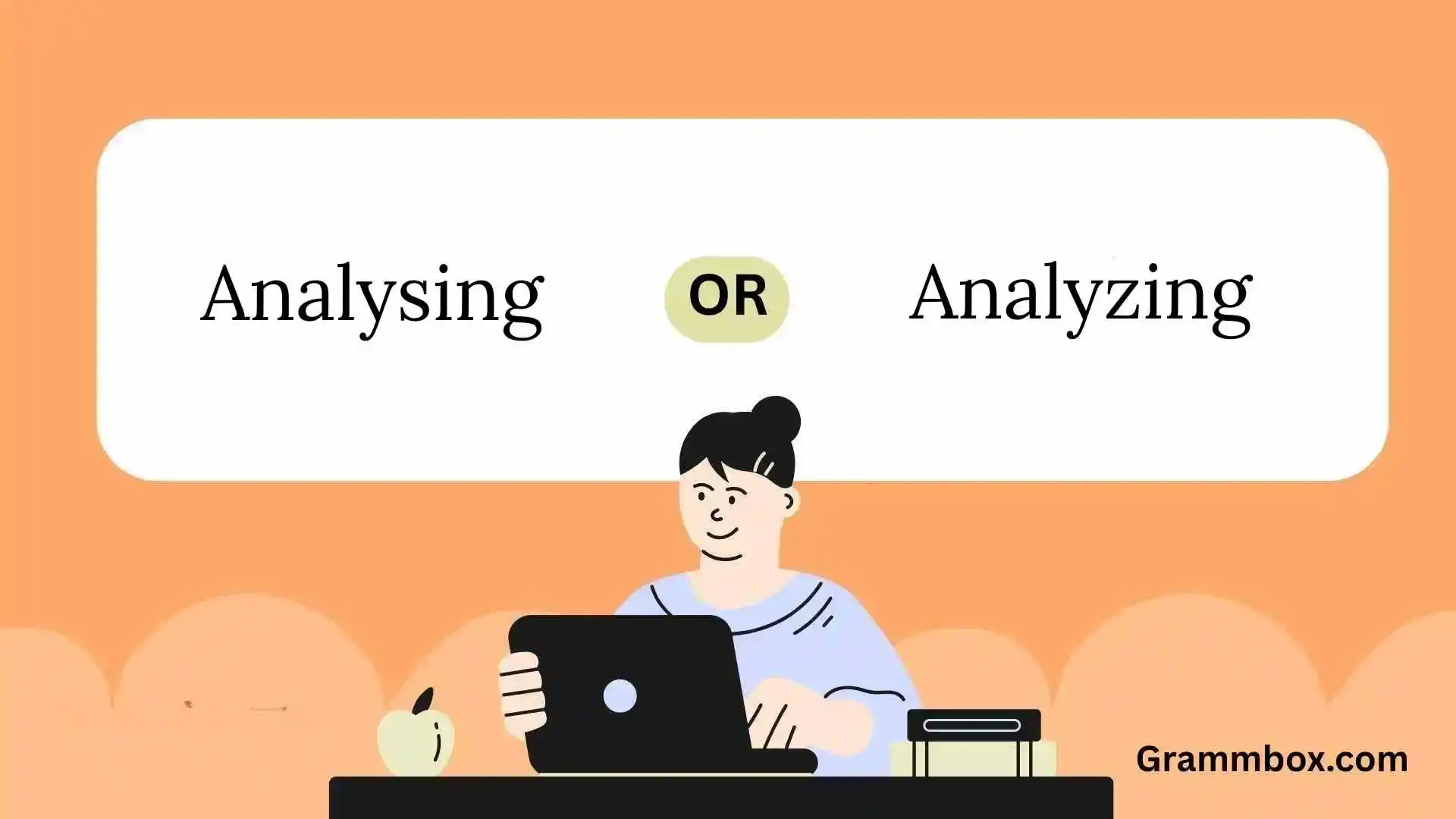
If you’ve ever paused while writing and wondered whether to use analysing or analyzing, you’re not alone. This is one of the most common spelling differences between British English (UK) and American English (US). Both versions look correct, yet choosing the wrong one for your audience can make your writing feel inconsistent or unprofessional.
The confusion mainly comes from how English evolved differently across regions. While British English tends to retain traditional spellings, American English often simplifies them. As a result, words like analyse/analyze, organise/organize, and realise/realize follow different patterns depending on where you are writing.
Understanding the difference between analysing and analyzing is important, especially if you write for a global audience. Whether you’re a student, blogger, or professional writer, using the correct form can improve clarity, credibility, and SEO performance.
Quick Answer
Both analysing and analyzing are correct, but they are used in different regions:
- Analysing → British English (UK)
- Analyzing → American English (US)
In short, the meaning is exactly the same. The only difference is spelling based on regional preference.
Meaning of the Correct Form
The word comes from the verb:
- Analyse (UK)
- Analyze (US)
Both mean:
👉 To examine something carefully in order to understand it better or draw conclusions.
Examples in British English (UK)
- She is analysing the results of the experiment.
- The team is analysing customer feedback.
- He spent hours analysing the data.
Examples in American English (US)
- She is analyzing the results of the experiment.
- The team is analyzing customer feedback.
- He spent hours analyzing the data.
👉 As you can see, the meaning is identical. Only the spelling changes.
Meaning of the Incorrect Form (If Any)
Technically, neither form is incorrect.
However, using the wrong version for your audience can be considered a mistake.
For example:
- Writing analyzing in a UK academic paper ❌
- Writing analysing in a US business report ❌
👉 This doesn’t make the word wrong, but it creates inconsistency and may confuse readers.
Analysing vs Analyzing: Key Differences
Let’s break it down clearly:
| Feature | Analysing | Analyzing |
| Region | UK (British English) | US (American English) |
| Base Verb | Analyse | Analyze |
| Spelling Style | Uses -yse | Uses -yze |
| Usage | UK, Australia, India | USA |
Why the Difference Exists
The difference comes from language standardization:
- British English kept the -yse ending (analyse, organise).
- American English simplified it to -yze (analyze, organize).
👉 Therefore:
- Analyse → Analysing
- Analyze → Analyzing
Common Mistakes People Make
Even experienced writers mix these up. Here are the most common mistakes:
1. Mixing UK and US Spellings in One Document
❌ The company is analysing data and optimizing performance.
✔ The company is analysing data and optimising performance (UK)
✔ The company is analyzing data and optimizing performance (US)
👉 Always stay consistent.
2. Assuming One Version Is More Correct
Some people think analyzing is more modern or correct.
👉 This is not true. Both are correct in their respective regions.
3. Ignoring Audience Location
- Writing for a UK university? → Use analysing
- Writing for a US client? → Use analyzing
4. Copy-Paste Errors
Sometimes content copied from different sources mixes styles.
👉 Always proofread for consistency.
Correct Usage in Sentences
Let’s look at real-life examples for both UK and US audiences.
British English (Analysing)
- The scientist is analysing the chemical composition.
- We are analysing market trends this quarter.
- She enjoys analysing literature deeply.
- The report focuses on analysing financial data.
- They are analysing the risks involved.
American English (Analyzing)
- The scientist is analyzing the chemical composition.
- We are analyzing market trends this quarter.
- She enjoys analyzing literature deeply.
- The report focuses on analyzing financial data.
- They are analyzing the risks involved.
Mixed Context Example (Global Writing)
If writing for an international audience:
👉 Choose one style and stick to it.
- Global blog (US style): analyzing
- Academic UK paper: analysing
Tips to Remember the Correct Usage
Here are simple tricks to help you remember:
1. Think of the Base Word
- Analyse → Analysing (UK)
- Analyze → Analyzing (US)
👉 Match the verb with its -ing form.
2. Remember “Z = USA”
- Words with Z → American English
- Words with S → British English
👉 analyzing = USA
👉 analysing = UK
3. Check Your Audience
Ask yourself:
- Who will read this?
- Where are they from?
👉 Then choose the correct spelling.
4. Use Spell Check Tools
Most tools allow language settings:
- UK English → analysing
- US English → analyzing
5. Stay Consistent
Once you choose a style:
👉 Stick with it throughout your document.
FAQs
1. Is analysing or analyzing correct?
Both are correct.
- Analysing is British English.
- Analyzing is American English.
2. Which one should I use in academic writing?
It depends on your institution:
- UK universities → analysing
- US universities → analyzing
3. Is analyzing more modern than analysing?
No. Both are equally valid.
The difference is regional, not based on time.
4. Can I use both in the same document?
No, this is not recommended.
👉 Choose one style and remain consistent.
5. Why does American English use “z” instead of “s”?
American English simplified spellings to make them more phonetic and consistent.
6. Is analysing used outside the UK?
Yes. It is also used in:
- Australia
- New Zealand
- India
7. Does this rule apply to similar words?
Yes! For example:
- Organising (UK) / Organizing (US)
- Realising (UK) / Realizing (US)
Conclusion
In the end, the debate between analysing and analyzing is not about right or wrong it’s about where and how you are writing.
- Use analysing for British English audiences.
- Use analyzing for American English audiences.
Both forms carry the same meaning: examining something carefully to understand it better. However, consistency is key. Mixing styles can confuse readers and weaken your writing.
READ MORE ARTICLES..
Binging or Bingeing: What’s the difference & usage? 2026
Their or Thier: The Simple Trick to Never Get It Wrong.
Chris or Chris’s: What’s the difference & usage? 2026
Labelling or Labeling: What’s the difference & usage? 2026