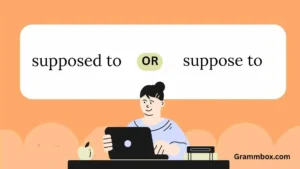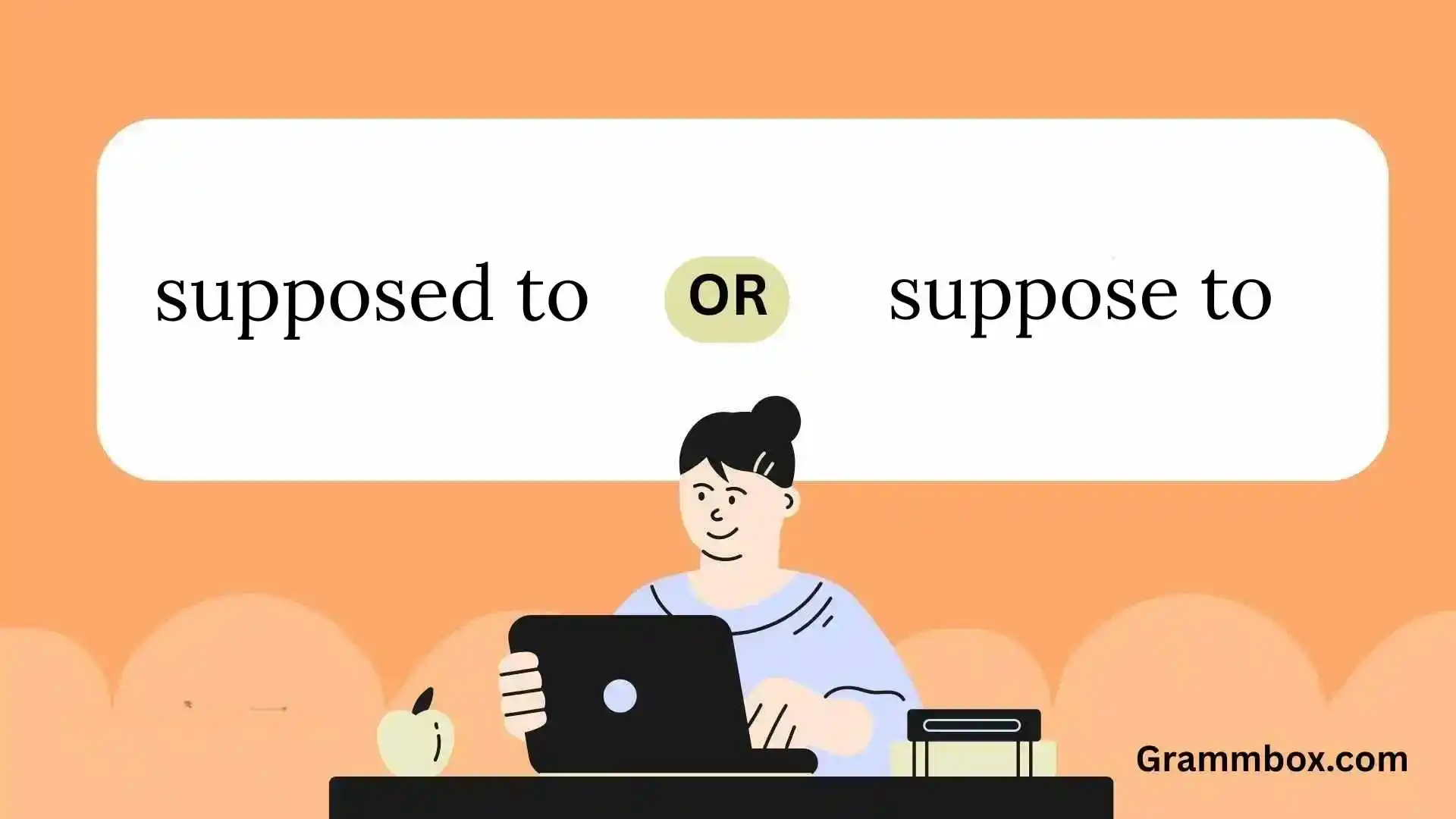
Have you ever wondered whether you should write “supposed to” or “suppose to”? You’re not alone. This is one of the most common grammar mistakes in everyday English, both in speaking and writing. Many people say “suppose to” because it sounds natural in fast speech, but when it comes to correct grammar, things are a bit different.
Understanding the difference between these two forms is important. Whether you’re writing an email, preparing an assignment, or simply trying to improve your English, using the correct phrase can make your communication clearer and more professional. This applies to both British (UK) and American (US) English, as the rules are the same in both varieties.
In this detailed guide, we’ll break everything down in simple English. You’ll learn the correct form, why the mistake happens, and how to avoid it forever.
Quick Answer
The correct phrase is “supposed to.”
❌ Suppose to — Incorrect
✅ Supposed to — Correct
“Supposed to” is used to talk about obligations, expectations, or something that should happen. On the other hand, “suppose to” is simply a grammatical mistake that often appears in informal speech or writing.
Meaning of the Correct Form
What Does “Supposed To” Mean?
“Supposed to” is a common phrase in English. It is used to express:
- Obligation
- Expectation
- Something planned or intended
Structure
Subject + is/are/was/were + supposed to + verb
Examples in British English (UK)
- I am supposed to finish this report by Friday.
- She is supposed to attend the meeting in London.
- They were supposed to arrive earlier.
Examples in American English (US)
- I’m supposed to call my boss today.
- He is supposed to pick up the kids after school.
- We were supposed to go on vacation last week.
Key Uses of “Supposed To”
- Obligation
- You are supposed to wear a uniform at school.
- You are supposed to wear a uniform at school.
- Expectation
- The train is supposed to arrive at 6 PM.
- The train is supposed to arrive at 6 PM.
- Social Rules
- You are supposed to say “thank you.”
- You are supposed to say “thank you.”
- Planned Events
- We are supposed to meet tomorrow.
- We are supposed to meet tomorrow.
Important Note
The word “supposed” is the past participle of the verb “suppose.” That’s why it must include the -ed ending.
Meaning of the Incorrect Form
What About “Suppose To”?
“Suppose to” is incorrect in standard English grammar.
However, many people use it in speech because:
- It sounds similar to “supposed to”
- The “-ed” sound is often dropped in fast speech
Why People Say “Suppose To”
In spoken English, especially informal conversation, “supposed to” is often pronounced like:
👉 “suppose ta”
👉 “suh-pose-tu”
Because of this, learners and even native speakers sometimes write it incorrectly as “suppose to.”
Example of Incorrect Usage
❌ I am suppose to go to work.
❌ She is suppose to call you.
✔ Correct versions:
✅ I am supposed to go to work.
✅ She is supposed to call you.
Keyword Comparison / Key Differences
Let’s clearly compare the two:
| Feature | Supposed To | Suppose To |
| Grammar | Correct | Incorrect |
| Meaning | Obligation / expectation | No valid meaning |
| Usage | Formal & informal | Informal mistake |
| UK English | ✔ Used | ✖ Not used |
| US English | ✔ Used | ✖ Not used |
Key Takeaway
- “Supposed to” is correct in both UK and US English.
- “Suppose to” is always incorrect in writing.
Common Mistakes People Make
Even advanced English learners sometimes make this mistake. Let’s look at common errors and corrections.
1. Dropping the “-ed”
❌ He is suppose to be here.
✅ He is supposed to be here.
2. Writing Based on Pronunciation
❌ I’m suppose to study tonight.
✅ I’m supposed to study tonight.
3. Confusing Verb Forms
❌ They suppose to finish the project.
✅ They are supposed to finish the project.
4. Missing the Helping Verb
❌ I supposed to go there.
✅ I am supposed to go there.
5. Mixing Tenses Incorrectly
❌ She suppose to went yesterday.
✅ She was supposed to go yesterday.
UK vs US Context
Interestingly, this mistake appears in both British and American English equally. However:
- In spoken UK English, the “-ed” is often softened
- In spoken US English, it may sound like “suppose ta”
Despite this, both follow the same grammar rules in writing.
Correct Usage in Sentences
Let’s explore more examples to make things crystal clear.
Daily Life Examples
- I am supposed to wake up early.
- You are supposed to follow the rules.
- She is supposed to call me later.
Work & Professional Context
UK Example:
- Employees are supposed to submit reports weekly.
US Example:
- Staff members are supposed to attend training sessions.
School & Education
- Students are supposed to complete their homework.
- You are supposed to listen to your teacher.
Past Situations
- I was supposed to meet him yesterday.
- They were supposed to travel last week.
Negative Form
- I am not supposed to eat junk food.
- She is not supposed to enter that room.
Questions
- Are you supposed to be here?
- Was he supposed to call you?
Tips to Remember the Correct Usage
Learning grammar becomes easier with simple tricks. Here are some helpful tips:
1. Remember the “-ed”
👉 Always think: “It ends with -ed.”
If it doesn’t, it’s wrong.
2. Think of “Expected”
“Supposed to” is similar to “expected to.”
- I am expected to arrive early
- I am supposed to arrive early
3. Use the Full Structure
👉 Subject + be + supposed to + verb
Example:
- She is supposed to study
4. Don’t Trust Pronunciation
Just because people say “suppose to” doesn’t mean it’s correct. Always write:
✅ supposed to
5. Practice with Sentences
The more you write and read, the easier it becomes.
FAQs
1. Is “suppose to” ever correct?
No, “suppose to” is never correct in standard English. Always use “supposed to.”
2. Why do people say “suppose to”?
People say it because of fast pronunciation. The “-ed” sound is often not clearly spoken.
3. Is “supposed to” used in both UK and US English?
Yes, both British and American English use “supposed to.” There is no difference in grammar.
4. Can I use “supposed to” in formal writing?
Absolutely. It is correct and commonly used in both formal and informal writing.
5. What tense is “supposed to”?
It uses the past participle “supposed”, but the tense depends on the helping verb:
- Present: I am supposed to go
- Past: I was supposed to go
6. How do I use it in negative sentences?
Add “not”:
- I am not supposed to do that
- You are not supposed to be here
7. Is it okay in spoken English to say “suppose to”?
In casual speech, people may say it, but it is still grammatically incorrect, especially in writing.
Conclusion
To sum up, the difference between “supposed to” and “suppose to” is simple but important. “Supposed to” is the only correct form, used to express obligation, expectation, or intention. On the other hand, “suppose to” is a common mistake caused by pronunciation shortcuts in everyday speech.
READ MORE ARTICLES..
Bear With Me vs Bare With Me: Common Mistake Explained Clearly
good night or goodnight: What’s the difference & usage? 2026
Mama or Momma: What’s the difference & usage?
Inquire or Enquire: What’s the difference & usage? 2026