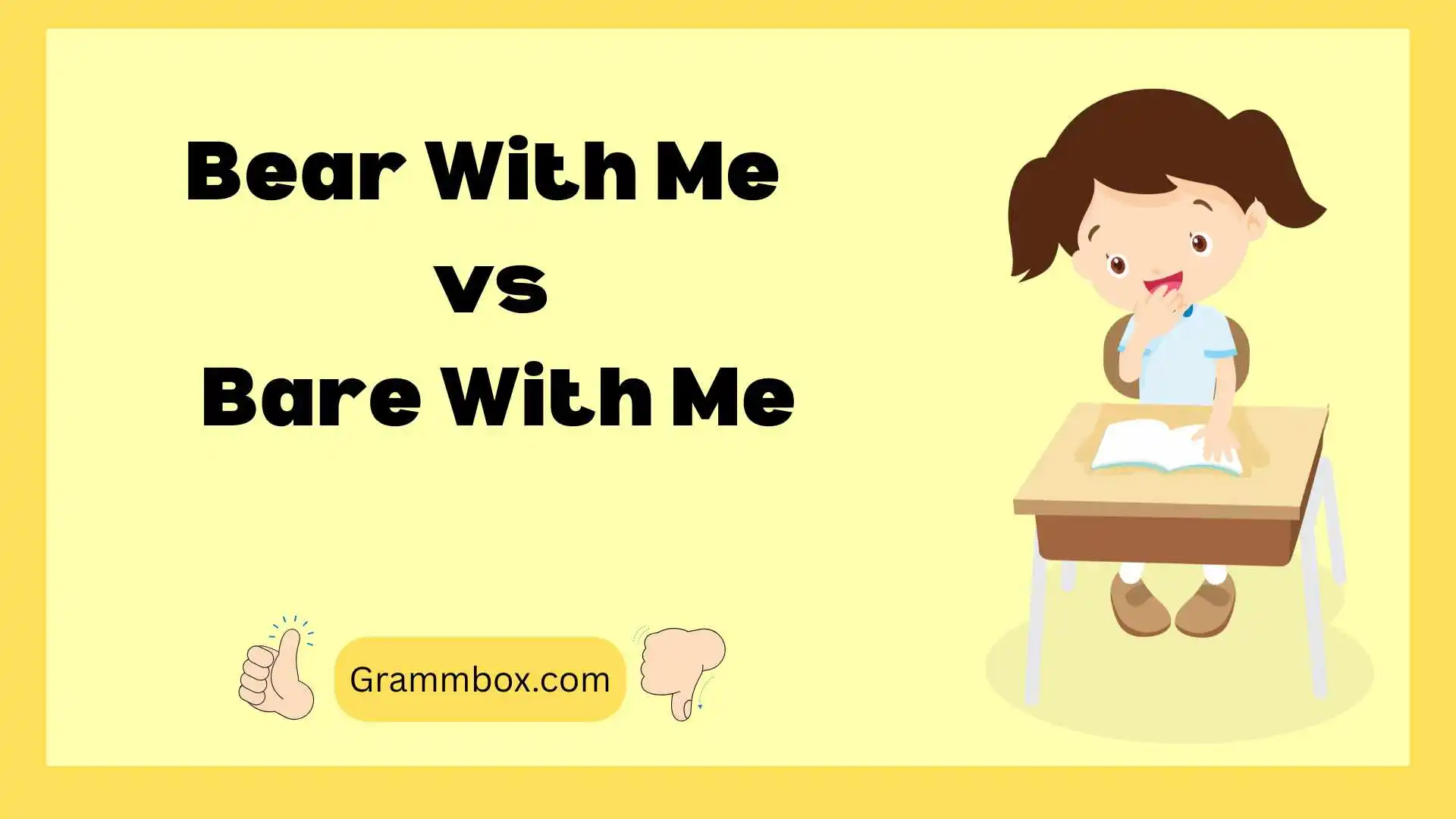
English is full of phrases that sound similar but carry very different meanings. One of the most common confusions for both British and American English speakers is the difference between “bear with me” and “bare with me.” These phrases are often mixed up in writing and speech, causing misunderstandings that can be embarrassing or confusing.
The confusion usually arises because both phrases sound identical when spoken aloud. However, their meanings and contexts are completely different. Using the wrong form can subtly change your message and even make it seem like you don’t know basic English.
Understanding this difference is especially important in professional communication, emails, social media, and casual conversations. Whether you are writing a formal report in the UK, chatting with friends in the US, or posting on LinkedIn, knowing the correct phrase ensures clarity and professionalism.
Quick Answer
“Bear with me” is the correct phrase when asking someone to be patient or wait calmly. It means: “Please be patient while I deal with something.”
“Bare with me” is technically incorrect in this context. It would mean “be naked with me,” which is almost never what people intend.
So, whenever you are requesting patience, always use “bear with me.”
Meaning of the Correct Form
Bear With Me
The phrase “bear with me” uses the verb bear, which can mean to endure, to tolerate, or to carry a burden. When you say “bear with me,” you are politely asking someone to tolerate a situation or be patient with you while you handle something.
Examples in British English (UK):
- “Bear with me while I check your details.”
- “Please bear with me, the train is running late.”
Examples in American English (US):
- “Bear with me for a moment while I explain this.”
- “Bear with me, I need to sort out a quick problem.”
Notice that in both UK and US English, the meaning remains the same. The verb bear is consistent across both varieties, and the phrase is widely understood.
Additional Notes:
- This phrase is often used in formal writing, emails, presentations, and professional settings.
- It can also be used casually in conversation, especially when asking someone to wait briefly.
Meaning of the Incorrect Form
Bare With Me
The phrase “bare with me” uses the verb bare, which means to uncover, expose, or make naked.
If someone writes “bare with me” intending patience, it completely changes the meaning and may cause confusion. In its literal sense, it could be interpreted as: “be naked with me,” which is inappropriate in almost every situation outside of intimate contexts.
Examples (Incorrect / Misleading Usage):
- “Bare with me while I sort this out.” ❌
→ Incorrect because it implies exposure rather than patience. - “Bare with me, I’ll explain everything.” ❌
When “bare with me” could be correct:
- In an artistic or metaphorical context: “Bare with me your thoughts and feelings.”
→ Here, “bare” is used metaphorically to mean open up, but it is rare and usually poetic.
Key takeaway: In everyday writing and speech, “bear with me” is almost always correct.
Keyword Comparison / Key Differences
| Feature | Bear With Me | Bare With Me |
| Meaning | Ask someone to be patient | Expose oneself physically or metaphorically |
| Verb Used | Bear (endure, tolerate) | Bare (uncover, expose) |
| Usage Context | Common in UK & US, formal and informal | Rare, mostly poetic or literal exposure |
| Common Mistake | People confuse the sound | People rarely confuse the meaning |
| Example | “Bear with me, the system is updating.” | “Bare with me your emotions.” (poetic) |
UK vs US Differences:
- There is no significant difference in meaning or usage between British and American English for bear with me.
- Bare with me is universally incorrect if the intention is patience.
Common Mistakes People Make
Even native speakers sometimes mix up bear and bare. Here are the most common mistakes:
- Confusing homophones:
- ❌ “Bare with me, I’m almost done.”
- ✅ “Bear with me, I’m almost done.”
- Misunderstanding the verb meaning:
Some think bare is just a typo or slang, but it changes the meaning entirely. - Incorrect usage in professional writing:
- ❌ Email: “Bare with me while I check your invoice.”
- ✅ Corrected: “Bear with me while I check your invoice.”
- Assuming UK vs US has different rules:
- ✅ Both UK and US use bear with me for patience.
- Overcorrecting casual speech:
- Saying “bare with me” because it seems trendy is wrong.
Tip: Whenever in doubt, remember patience = bear.
Correct Usage in Sentences
Everyday British English Examples:
- “Bear with me, I need a few minutes to finish this task.”
- “If you bear with me, I’ll explain the plan step by step.”
Everyday American English Examples:
- “Bear with me while I find the right document.”
- “Can you bear with me for a moment? I’ll be right back.”
In Emails or Formal Writing:
- “We appreciate your patience and ask you to bear with us during the system upgrade.”
- “Bear with me as I clarify the details of the agreement.”
Casual Conversation:
- “Hey, bear with me, I’m almost ready.”
- “Bear with me for a second, I just need to grab my notes.”
Wrong Usage to Avoid:
- ❌ “Bare with me, it won’t take long.”
- ❌ “Bare with me, I need a minute.”
Tips to Remember the Correct Usage
- Mnemonic Tip:
- Bear = endure / tolerate → patience
- Bare = naked / uncover → exposure
- Visual Trick:
Imagine holding a bear in your arms while waiting – you are enduring it. That’s bear with me. - Think about context:
If you’re asking for patience, it’s bear. If you’re talking about revealing something physically or emotionally, it’s bare. - Double-check in writing:
Before sending emails, messages, or posts, read it aloud:- If it’s about waiting, bear is correct.
- British vs American English:
- No differences here. Always use bear with me for patience.
FAQs About “Bear With Me” and “Bare With Me”
Q1: Can “bare with me” ever be correct?
A: Only in rare poetic or artistic contexts where “bare” means reveal or expose. In everyday speech or writing, it’s almost always wrong.
Q2: Is “bear with me” formal or informal?
A: Both. It is polite in formal writing but also common in casual conversation.
Q3: Do British and American English differ in this phrase?
A: No. Both use bear with me for patience.
Q4: Can I use “bear with me” in emails?
A: Absolutely. It’s widely accepted in professional emails when requesting patience.
Q5: Why do people confuse “bear” and “bare”?
A: Because they sound the same (homophones), but their meanings are very different.
Q6: Is it okay to correct someone who writes “bare with me”?
A: Yes, gently. It’s a common mistake, and correcting it helps clarity.
Q7: Are there any idiomatic expressions related to “bear with me”?
A: “Bear with” is commonly used in other phrases like:
- “Bear with the noise.”
- “Bear with the situation.”
These mean tolerating or enduring something.
Conclusion
In summary, the correct phrase is “bear with me” when asking for patience. Using “bare with me” is almost always incorrect and can confuse your audience. Remember the simple mnemonic:
- Bear = endure → patience
- Bare = uncover → exposure
Whether you are writing a formal email, chatting with friends, or posting on social media, using bear with me ensures your message is clear, polite, and professional.
So next time you need someone to wait or be patient, don’t hesitate bear with me is your safe, correct choice. Start practicing it today and never mix it up again!
READ MORE ARTICLES..
Burry or Bury: What’s the difference & usage? 2025
Chris or Chris’s: What’s the difference & usage?
Receive or Recieve: What’s the difference & usage? 2026
please advise or please advice: Easy guide with examples. 2026