If you’ve ever paused before typing a message to someone at night, wondering whether to write “good night” or “goodnight”, you are not alone. Many people struggle with this common English spelling and usage dilemma. Although it may seem minor, using the wrong form can subtly affect how your writing is perceived, especially in professional, educational, or friendly contexts.
Understanding the difference is important for both UK and US audiences because English spelling and style conventions can vary slightly. For instance, certain expressions might feel more formal in the UK, while Americans may adopt a casual approach. Using the correct form shows attention to detail and ensures your message is clear, polite, and grammatically sound.
Moreover, the difference isn’t just about spelling. It reflects how English evolves in written communication especially in messages, emails, and letters. Whether you are a student, professional, or casual texter, knowing when to use each form improves clarity and avoids misunderstandings.
Quick Answer
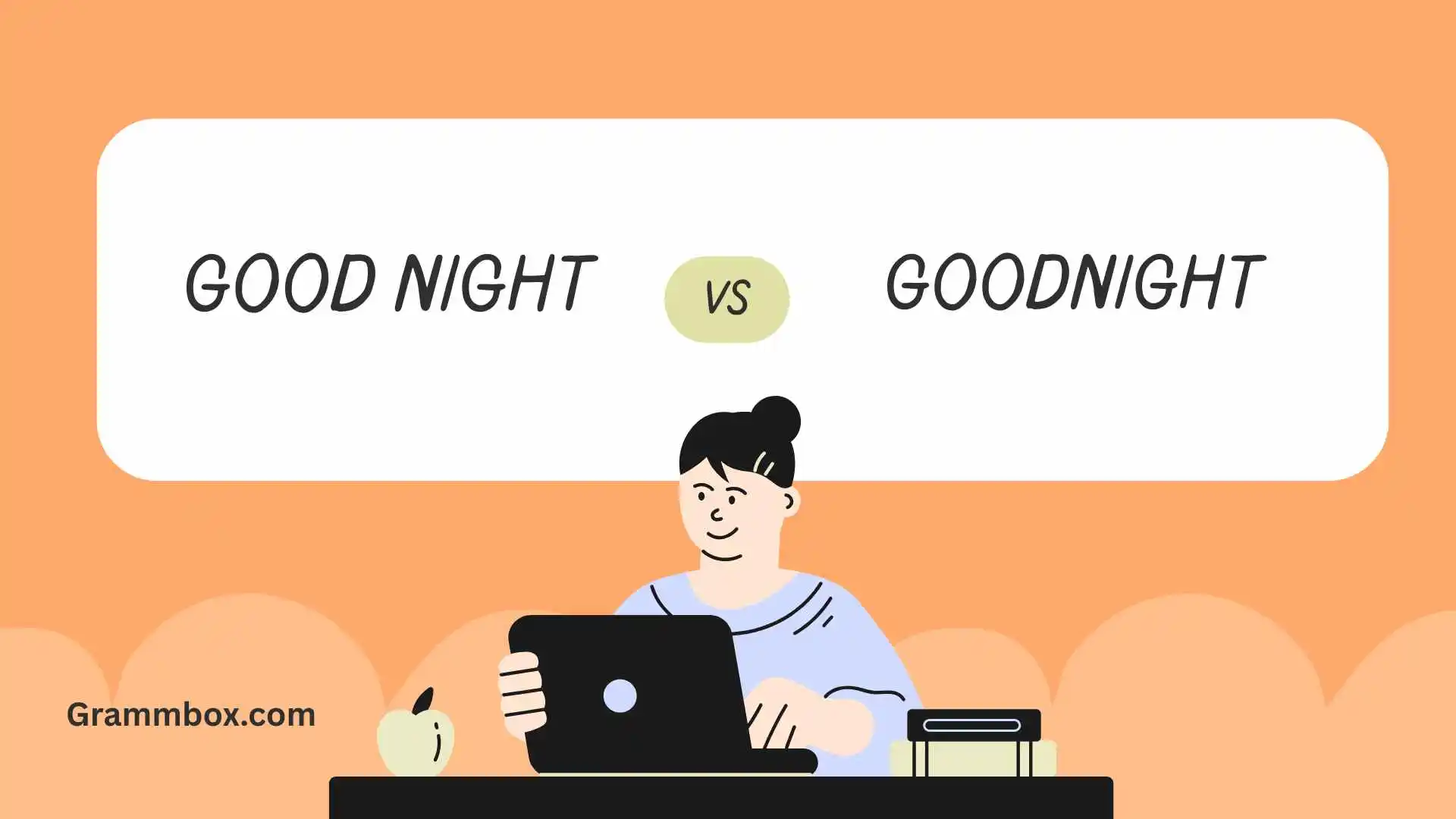
The correct form for wishing someone a restful night is “good night” (two words). It is a polite phrase used to say goodbye in the evening or before sleep.
“Goodnight” (one word) is less formal and often appears in literature, titles, or casual messages. While both forms are widely understood, “good night” is preferred in standard writing, especially in UK and US English.
Meaning of the Correct Form: “Good Night”
The phrase “good night” is used to wish someone a peaceful or restful night. It is a standard, polite expression commonly used in conversations, texts, letters, and formal writing.
Examples in British English:
- “I hope you sleep well. Good night!”
- “It was lovely seeing you today. Good night, darling.”
Examples in American English:
- “Don’t forget to lock the doors. Good night!”
- “Good night, everyone. See you tomorrow.”
Key points about “good night”:
- Always written as two separate words.
- Functions as a farewell, often at bedtime.
- Suitable for both formal and informal contexts.
- Accepted universally in both UK and US English.
Note: While spoken English may blur the distinction, written English maintains the two-word form for clarity.
Meaning of the Incorrect Form: “Goodnight”
The single-word “goodnight” is technically not incorrect, but its usage is more specific and less formal. It is often seen in literature, song titles, and casual messages, rather than standard writing.
Examples:
- In a bedtime story: “Goodnight, moon.”
- In a song title: “Goodnight Sweetheart”.
While “goodnight” is recognized, it is less common in everyday writing. Using it in emails, essays, or professional messages may appear informal or stylistically inconsistent.
Summary:
- “Good night” → Preferred in standard, everyday English (formal and informal).
- “Goodnight” → Acceptable in creative writing, literature, or casual digital messages.
Keyword Comparison / Key Differences
| Feature | Good Night | Goodnight |
| Form | Two words | One word |
| Usage | Standard farewell before sleep, formal & informal | Informal, literary, or creative writing |
| Common Context | Messages, conversations, emails, letters | Bedtime stories, songs, poems |
| UK Preference | Always two words for formal writing | Acceptable in literature or casual texting |
| US Preference | Two words preferred universally | Often seen in casual messages or titles |
Key takeaway: If you are unsure, always use “good night”. It’s universally safe and grammatically correct.
Common Mistakes People Make
Even native speakers sometimes misuse these forms. Here are the most frequent mistakes:
- Using “goodnight” in formal writing
❌ Wrong: “Thank you for coming. Goodnight.”
✅ Correct: “Thank you for coming. Good night.” - Confusing it with “good morning” or “good evening”
Sometimes people write “goodnight” as one word by analogy with “good morning,” but in standard English, only morning and evening are single words in greetings. - Inconsistent spelling
Switching between good night and goodnight in the same text can confuse readers. - Omitting punctuation
Ending the phrase with no punctuation in formal writing may feel abrupt. Always consider:- Good night! (exclamation for warmth)
- Good night. (formal or neutral tone)
- Misplacing in sentences
❌ Wrong: “I hope you good night.”
✅ Correct: “I hope you have a good night.”
Correct Usage in Sentences
Using the correct form helps convey your message clearly. Here are examples for both UK and US English:
UK Examples:
- “I’ll call you tomorrow. Good night!”
- “Good night, Mum. Sleep well.”
- “Before leaving the party, she said, ‘Good night to everyone.’”
US Examples:
- “Good night, John. Don’t stay up too late.”
- “Thanks for dinner. Good night, everyone!”
- “He whispered, ‘**Good night, sweetheart,’ as he closed the door.”
Creative/Literary Usage:
- “Goodnight stars, goodnight air.” (literature, poem, or song)
Tips to Remember the Correct Usage
- Think of it as a farewell: If you are saying goodbye at night, always use two words.
- Check context: For professional messages or emails, stick to good night.
- Mnemonic trick: Remember “night has two words” → good night.
- Creative texts: Use goodnight only in poetry, stories, or casual texting.
- Consistency matters: Pick one form for your writing and stick with it.
Extra Tip: If texting a friend late at night, either form works. For letters or professional emails, stick to good night.
FAQs (Frequently Asked Questions)
1. Can I use “goodnight” in emails?
Yes, but only in informal emails to friends or family. In professional emails, always use good night.
2. Is “good night” American or British English?
It is correct in both UK and US English. There’s no regional difference in standard usage.
3. Can “goodnight” be used in speech?
Yes, in casual conversation, “goodnight” is understood and often used interchangeably with “good night.”
4. Which is more polite: “good night” or “goodnight”?
Good night is more polite, especially in formal or professional contexts.
5. Is “good night” always capitalized?
Only capitalize the first word in a sentence or in greetings:
- “Good night, everyone!”
- Mid-sentence, use lowercase if not starting the sentence: “I hope you have a good night.”
6. Can I use “good night” for texts or social media?
Absolutely. It’s the most widely accepted and clear form.
7. Are there other variations?
In informal texting, some people shorten it: gn. This is casual and suitable only among friends.
Conclusion
Understanding the difference between “good night” and “goodnight” may seem small, but it can significantly improve your English writing and communication. “Good night”, the two-word version, is universally correct in both UK and US English and suitable for all contexts, whether formal or casual. On the other hand, “goodnight” is more literary, informal, and often used in songs, poetry, or bedtime stories.
By following the tips, avoiding common mistakes, and using consistent spelling, you can confidently say good night in any situation whether texting a friend, writing an email, or sending a thoughtful message to a loved one. Remember, clarity and politeness go a long way in effective communication.
READ MORE ARTICLES..
Meant or Ment :What’s the difference & usage? 2026
Noisey or Noisy: What’s the difference & usage?
Walk Past or Passed: What’s the difference & usage? 2026
Complimentary or Complementary? Clear Your Confusion in Minutes!