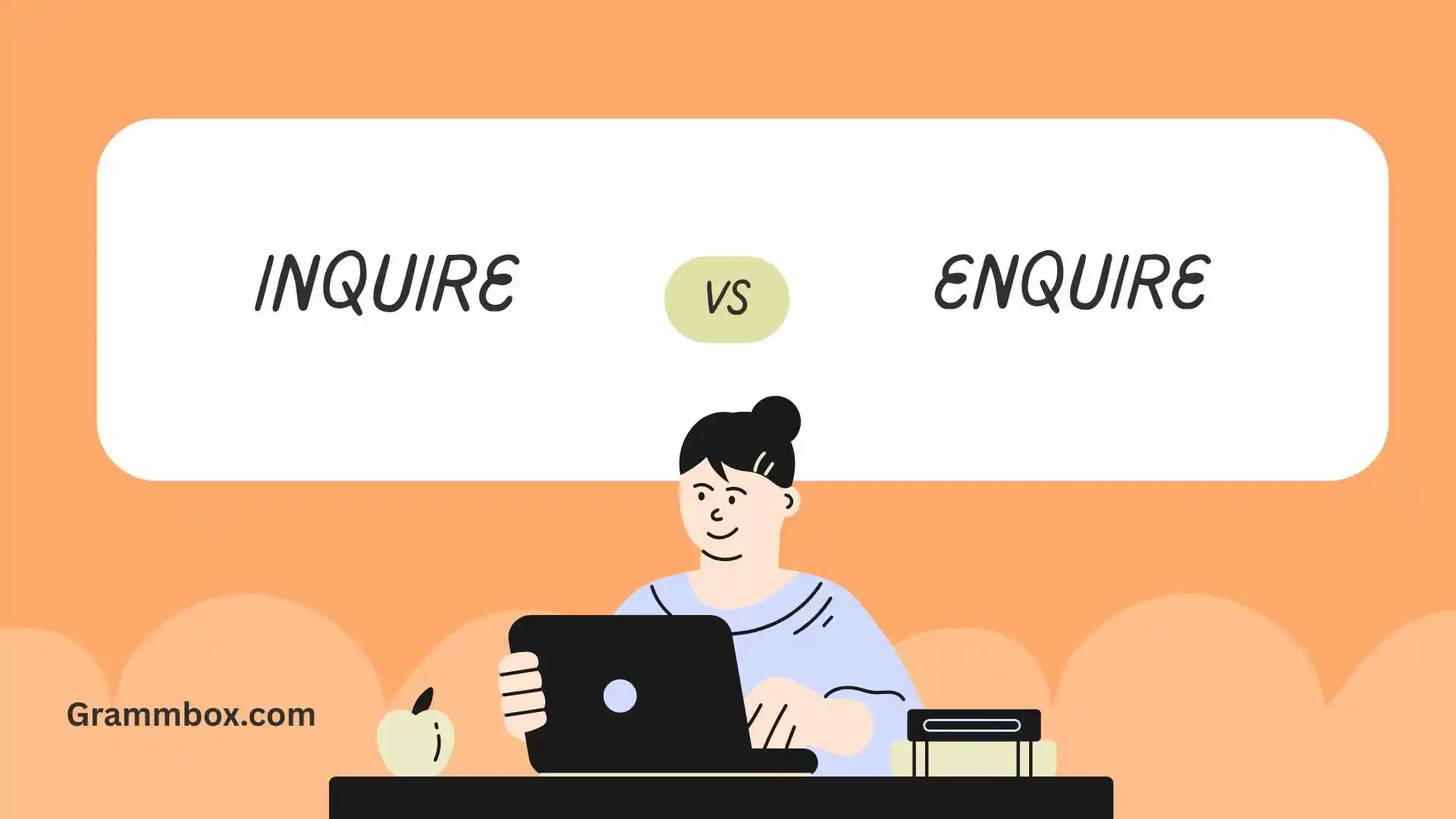
Many English learners and even native speakers often get confused between “inquire” and “enquire”. Both words seem to have the same meaning: asking questions or seeking information. However, the difference lies in spelling preferences, regional usage, and formality.
Understanding the correct usage is important because it ensures your writing is professional, accurate, and appropriate for your audience. For instance, a UK-based reader might notice “inquire” and “enquire” differently, whereas a US reader may only be familiar with one form. Misusing them can sometimes make your text appear less polished.
This guide will break down the meanings, common mistakes, differences, and practical tips for using inquire and enquire correctly. By the end, you’ll be confident in writing for both UK and US audiences.
Quick Answer
In short:
- Inquire is the preferred spelling in American English and is widely accepted in formal British English.
- Enquire is traditionally British English and is used in everyday, less formal contexts in the UK.
- Both words mean to ask or seek information, but regional preferences dictate which one to use.
For example:
- US: “I would like to inquire about your services.”
- UK (informal): “I need to enquire about the train schedule.”
So, if writing for an international audience, “inquire” is safer, while “enquire” adds a British touch.
Meaning of the Correct Form
1. Inquire (American English & Formal British English)
Definition: To ask for information formally or investigate something.
Examples:
- “I called the company to inquire about job openings.”
- “The police will inquire into the missing documents.”
Notes:
- In the US, inquire is the standard and nearly exclusive form.
- In the UK, inquire is considered slightly more formal and is often used in official or legal contexts.
2. Enquire (British English)
Definition: To ask about something in a general or informal way.
Examples:
- “I need to enquire about the library timings.”
- “She enquired if the meeting had been rescheduled.”
Notes:
- Common in the UK, especially in everyday speech or writing.
- In American English, enquire is rarely used and can appear unusual or outdated.
Meaning of the Incorrect Form
Using enquire in American English contexts can confuse readers or make the text seem too British. Conversely, in British English, using inquire for casual communication can appear unnecessarily formal.
Example of awkward usage:
- US: “I want to enquire about your services.” → technically correct meaning, but unusual in American English.
- UK (casual): “I will inquire about the shop hours.” → correct, but slightly formal.
Key takeaway: Context and audience matter more than strict correctness.
Keyword Comparison / Key Differences
| Feature | Inquire | Enquire |
| Meaning | To ask for information / investigate | To ask for information (general) |
| Formality | Formal, professional | Informal or neutral |
| Region | US (standard), UK (formal/legal) | UK (everyday English) |
| Usage in US | Preferred | Rare |
| Usage in UK | Formal / official documents | Common in daily use |
| Example Sentence | “I will inquire about the new policy.” | “I’ll enquire about the library hours.” |
Tip: Think of inquire as a more professional term and enquire as casual and British.
Common Mistakes People Make
- Mixing up UK and US forms
- US audience: Using “enquire” might confuse readers.
- UK audience (formal context): Using “enquire” instead of “inquire” might be seen as less professional.
- Assuming they are always interchangeable
- They share meanings but carry different tones and formality levels.
- Incorrect spelling in professional emails
- Many write: “I would like to enquire about…” in US emails. While understandable, inquire is preferred for American English.
- Using in legal or formal documents
- UK legal documents usually prefer inquire over enquire.
Correct Usage in Sentences
American English Examples:
- “We will inquire about your complaint immediately.”
- “The manager decided to inquire into the sudden drop in sales.”
- “Please inquire at the front desk for assistance.”
British English Examples:
- “I need to enquire about train tickets.”
- “She enquired if we could join the seminar.”
- “If you enquire at reception, they will help you.”
Formal UK Examples (legal/business):
- “The board will inquire into the financial discrepancies.”
- “We are inquiring about the contract terms with our lawyers.”
Quick tip: When in doubt, “inquire” works everywhere; “enquire” is optional and UK-specific.
Tips to Remember the Correct Usage
- Think regionally:
- US → inquire
- UK → enquire (informal) / inquire (formal)
- Use mnemonics:
- Inquire → Investigation (formal)
- Enquire → Everyday (casual, British)
- Check your audience:
- Business letters, legal documents, official emails → inquire is safe.
- Casual emails or British blog posts → enquire is fine.
- Spell consistently: Don’t mix “inquire” and “enquire” in the same document.
- When writing for the internet: “Inquire” is globally recognized and SEO-friendly.
FAQs (Frequently Asked Questions)
1. Can I use “enquire” in American English?
- Technically yes, but it’s unusual. Most Americans prefer inquire.
2. Are “inquire” and “inquisition” related?
- Yes. “Inquire” comes from Latin roots meaning to seek information. “Inquisition” is more intense and often formal/legal.
3. Is “enquire” correct in formal UK documents?
- Not usually. Formal UK documents prefer inquire. “Enquire” is casual.
4. Which is better for email communication?
- US audience: Always use inquire.
- UK audience: Use inquire for formal emails and enquire for casual messages.
5. Do dictionaries treat them differently?
- Yes. British dictionaries list enquire as informal/casual and inquire as formal. American dictionaries often list only inquire.
6. Can “inquire” mean investigate?
- Yes. “Inquire” can also mean conducting a formal investigation, especially in legal or business contexts.
7. Is there a pronunciation difference?
- No significant difference. Both are pronounced /ɪnˈkwaɪər/.
Conclusion
In conclusion, the difference between inquire and enquire is largely a matter of regional preference and formality. Use inquire when writing for American readers or in formal British contexts, and enquire for casual British English.
Remember these key tips:
- Check your audience first.
- Use mnemonics to distinguish formality.
- Stick to one form consistently in a document.
- When in doubt, inquire is safe worldwide.
Mastering this subtle difference will make your writing appear polished, professional, and culturally aware. Start practicing today, and you’ll never be confused about whether to inquire or enquire again!
READ MORE ARTICLES..
more than or more then: What’s the difference & usage? 2026
honor or honour: What’s the difference & usage?
leaped or leapt: What’s the difference & usage? 2026
repast or repass: What’s the difference & usage? 2026