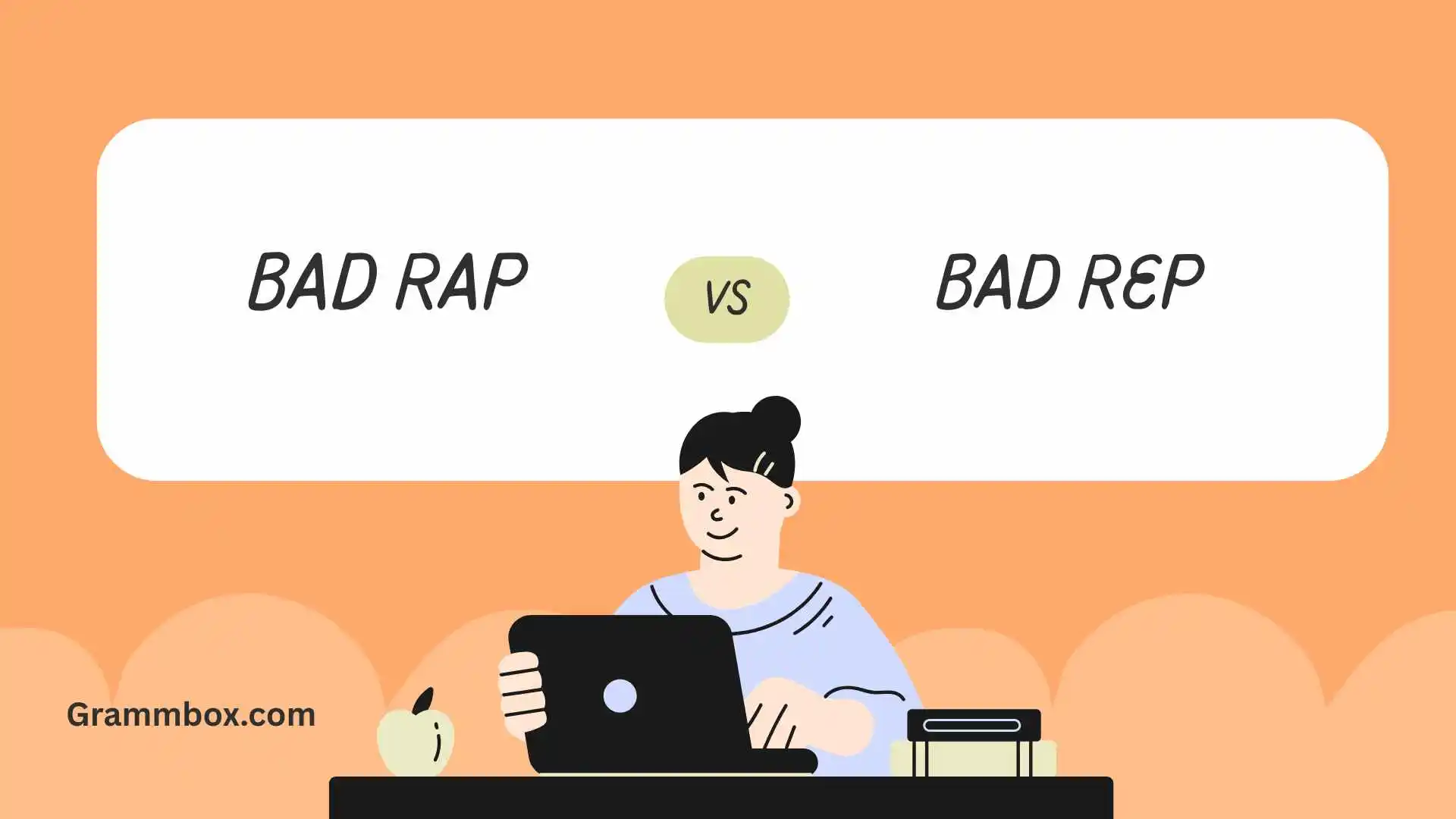
? 2Have you ever heard someone say, “That company gets a bad rap,” and wondered if it should actually be “bad rep”? You’re not alone. Many English learners and even native speakers confuse “bad rap” with “bad rep.” At first glance, both phrases seem similar, and they even sound almost identical when spoken. However, only one of them is considered correct in standard English.
Understanding the difference between bad rap or bad rep is important because using the wrong form can affect your credibility in writing and speaking. Whether you’re writing an email, preparing academic work, or simply having a conversation, using the correct phrase helps you communicate clearly and confidently.
This topic matters for both UK (British English) and US (American English) audiences. While spelling differences often exist between the two (like “colour” vs “color”), this particular phrase behaves differently. Let’s explore it in detail so you never make this mistake again.
Quick Answer
The correct phrase is “bad rap.”
- “Bad rap” means an unfair or negative reputation.
- “Bad rep” is considered incorrect in standard English, although some people mistakenly use it.
For example:
✔️ He got a bad rap for something he didn’t do.
❌ He got a bad rep for something he didn’t do.
Meaning of the Correct Form: “Bad Rap”
The phrase “bad rap” means an unfair or undeserved negative reputation. It is commonly used when someone or something is judged harshly without proper reason.
Origin of “Bad Rap”
Interestingly, the word “rap” in this phrase does not refer to music. Instead, it comes from an older meaning of “rap,” which meant a criticism, accusation, or blame. Over time, the phrase “bad rap” came to describe situations where someone is wrongly blamed or judged.
Examples in American English
- Fast food often gets a bad rap for being unhealthy, but some options are quite balanced.
- He received a bad rap after the incident, even though he wasn’t responsible.
- Online education gets a bad rap, but it can be very effective.
Examples in British English
- The city has a bad rap for crime, but it is actually quite safe.
- Public transport sometimes gets a bad rap in the UK, although it has improved a lot.
- That brand has a bad rap, yet many customers are satisfied.
👉 As you can see, both UK and US English use “bad rap” in exactly the same way. There is no spelling variation here.
Meaning of the Incorrect Form: “Bad Rep”
The phrase “bad rep” is widely considered incorrect. However, it appears because of confusion.
Why Do People Say “Bad Rep”?
Many people assume “rep” is short for “reputation.” Since “bad reputation” is a valid phrase, they mistakenly shorten it to “bad rep.”
However, this is not how English idioms work. “Bad rap” is a fixed expression, and replacing “rap” with “rep” changes the meaning and makes it incorrect.
Is “Rep” Ever Correct?
Yes, but in different contexts:
- Rep = Representative
She is a sales rep. - Rep = Reputation (informal slang)
He has a good rep in the industry.
Even though “rep” can mean reputation informally, the phrase “bad rep” is not standard usage when referring to the idiom.
Examples of Incorrect Usage
❌ That restaurant has a bad rep.
❌ He got a bad rep in school.
✔️ Correct versions:
- That restaurant has a bad rap.
- He got a bad rap in school.
Keyword Comparison / Key Differences
Let’s clearly compare bad rap vs bad rep to understand the difference:
| Feature | Bad Rap | Bad Rep |
| Correct usage | ✅ Yes | ❌ No |
| Meaning | Unfair negative reputation | Misused phrase |
| Origin | Old meaning of “rap” (blame/criticism) | Misunderstanding of “reputation” |
| UK usage | ✔️ Common | ❌ Incorrect |
| US usage | ✔️ Common | ❌ Incorrect |
Key Takeaways
- “Bad rap” is the correct idiom.
- “Bad rep” is a common mistake.
- Both UK and US English follow the same rule.
Common Mistakes People Make
Even fluent English speakers sometimes make mistakes with this phrase. Let’s look at some of the most common ones.
1. Confusing Sound with Meaning
Because “rap” and “rep” sound similar, people assume they are interchangeable.
❌ The company has a bad rep.
✔️ The company has a bad rap.
2. Thinking “Rep” Is Short for Reputation
While “rep” can mean reputation informally, it doesn’t work in this idiom.
❌ She has a bad rep in the office.
✔️ She has a bad rap in the office.
3. Mixing Formal and Informal Language
In formal writing, people might avoid “bad rap” and try to replace it incorrectly.
❌ The policy has a bad rep among citizens.
✔️ The policy has a bad rap among citizens.
✔️ The policy has a negative reputation among citizens.
4. Using “Bad Rap” Incorrectly
Some people misunderstand the meaning and use it for deserved criticism, which is wrong.
❌ He cheated and got a bad rap. (This implies unfairness, which is incorrect)
✔️ He cheated and got a bad reputation.
✔️ He got a bad rap even though he was innocent.
Correct Usage in Sentences
Let’s explore more examples in both UK and US contexts.
Everyday Conversation (US English)
- Diet soda gets a bad rap, but it can be helpful for reducing sugar intake.
- That neighbourhood has a bad rap, but it’s improving quickly.
- He’s a good guy who got a bad rap.
Everyday Conversation (British English)
- Reality TV often gets a bad rap in Britain.
- That area of London has a bad rap, though it’s quite vibrant.
- She received a bad rap despite her hard work.
Professional Contexts
- The company suffered a bad rap due to false rumours.
- Remote work used to get a bad rap, but attitudes are changing.
- The product got a bad rap after one negative review.
Academic or Formal Context
- The theory has received a bad rap in academic circles, although recent studies support it.
- Social media often gets a bad rap in discussions about mental health.
Tips to Remember the Correct Usage
Here are some easy tricks to help you remember:
1. Think of “Rap” as “Blame”
- “Rap” = criticism or blame
👉 Bad rap = unfair blame
2. Avoid Shortcuts
Even though “rep” can mean reputation, don’t use it in this phrase.
3. Replace with “Bad Reputation”
If unsure, replace the phrase:
- He has a bad rap → He has an unfair bad reputation
If it makes sense, “bad rap” is correct.
4. Use a Memory Trick
👉 RAP = Wrongly Accused Person
If someone is wrongly accused, they get a bad rap.
FAQs
1. Is “bad rep” ever correct?
No, “bad rep” is not correct in standard English. Always use “bad rap.”
2. What does “bad rap” mean exactly?
It means an unfair or undeserved negative reputation.
3. Do British and American English use different forms?
No, both UK and US English use “bad rap.” There is no variation.
4. Can I use “bad reputation” instead?
Yes, especially in formal writing. However, “bad rap” adds the meaning of unfairness.
5. Why do people say “bad rep”?
Because they mistakenly think “rep” (short for reputation) fits the phrase.
6. Is “bad rap” informal?
Yes, it is slightly informal. For formal contexts, use “negative reputation.”
7. Can “bad rap” be used for things as well as people?
Yes. It can describe people, places, products, or ideas.
Conclusion
The confusion between bad rap or bad rep is very common, but the answer is simple once you understand it.
- ✅ “Bad rap” is correct and means an unfair negative reputation.
- ❌ “Bad rep” is incorrect and should be avoided.
- ✔️ Both UK and US English use “bad rap” in the same way.
In everyday communication, using the correct phrase helps you sound more natural and confident. Moreover, understanding idioms like this improves your overall English fluency.
READ MORE ARTICLES..
modeled or modelled: What’s the difference & usage? 2026
humour or humor: What’s the difference & usage?
honor or honour: What’s the difference & usage? 2026
diner or dinner: What’s the difference & usage?