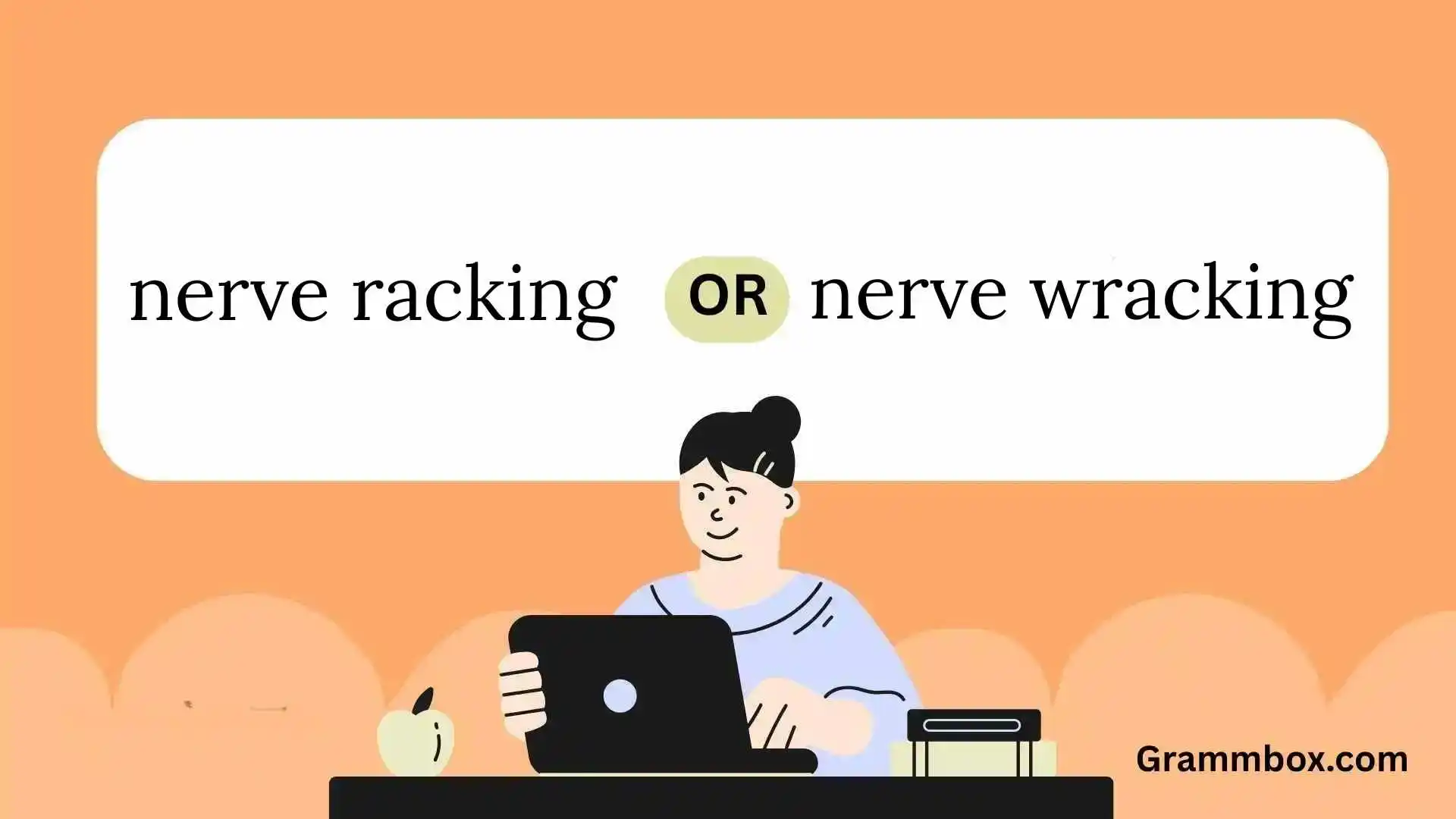
Many English learners and even native speakers often pause when choosing between “nerve racking” and “nerve wracking.” At first glance, both phrases look and sound similar. In fact, you may have seen both versions used in books, blogs, and conversations. So, which one is correct?
This confusion exists because English evolves over time, and different regions especially British English (UK) and American English (US) sometimes prefer different spellings or expressions. As a result, what seems wrong in one place may be perfectly acceptable in another.
Understanding the difference is important for clear communication. Whether you are writing an email, preparing content, or speaking in a professional setting, using the correct phrase helps you sound more confident and accurate.
Quick Answer
Both “nerve-racking” and “nerve-wracking” are correct, but “nerve-racking” is more commonly accepted and preferred in modern English, especially in formal writing.
- US English: Strong preference for nerve-racking
- UK English: Both forms are used, but nerve-racking is still more standard
In short, if you want to be safe and correct in all contexts, use “nerve-racking.”
Meaning of the Correct Form

What Does “Nerve-Racking” Mean?
The phrase “nerve-racking” describes something that causes stress, anxiety, or mental tension. It refers to situations that make you feel nervous or uneasy.
Simple Definition:
Nerve-racking = very stressful or anxiety-inducing
Examples in American English:
- The final exam was nerve-racking.
- Waiting for the job interview result felt nerve-racking.
- Driving in heavy traffic can be nerve-racking.
Examples in British English:
- The football match was nerve-racking until the last minute.
- Public speaking is often nerve-racking for students.
- The long wait at the hospital was nerve-racking.
Why “Racking” Works
The word “rack” historically means to stretch or strain, especially in a painful way. Therefore, “nerve-racking” suggests that your nerves are being stretched or stressed—perfectly matching the meaning of anxiety.
Meaning of the Incorrect Form (or Alternative Form)
What About “Nerve-Wracking”?
The phrase “nerve-wracking” is also widely used, but it is considered a variant spelling rather than the original form.
Definition:
It means exactly the same as nerve-racking:
causing stress, worry, or anxiety
Examples:
- It was a nerve-wracking experience waiting for the results.
- The suspense in the movie was nerve-wracking.
Is It Incorrect?
Not exactly. However:
- It is less traditional than “nerve-racking”
- Some grammar experts consider it a modern adaptation
- It is accepted in both UK and US English, but less preferred in formal writing
Why “Wracking” Exists
The confusion comes from the word “wrack,” which can mean destruction or ruin. Over time, people started using “wracking” in place of “racking,” especially in emotional contexts.
However, many style guides still recommend sticking with “racking.”
Keyword Comparison / Key Differences
Let’s break down the differences clearly:
| Feature | Nerve-Racking | Nerve-Wracking |
| Correctness | Fully correct | Also acceptable |
| Popularity | More common | Less common |
| Formal Writing | Preferred | Less preferred |
| US English | Strongly preferred | Rare but used |
| UK English | Preferred | Sometimes used |
| Origin | From “rack” (strain) | From “wrack” (damage) |
Key Takeaways:
- Both mean the same thing
- “Nerve-racking” is the safer choice
- “Nerve-wracking” is acceptable but less formal
Common Mistakes People Make
Even though both forms exist, people often make mistakes when using them. Let’s look at some common errors.
1. Mixing Spellings in the Same Text
❌ Incorrect:
- The test was nerve-racking, and the wait was nerve-wracking.
✔ Correct:
- The test was nerve-racking, and the wait was also nerve-racking.
👉 Tip: Stay consistent with one form.
2. Assuming “Wracking” is Always Wrong
❌ Incorrect belief:
- “Nerve-wracking is completely wrong.”
✔ Reality:
- It is acceptable, but not preferred in formal contexts.
3. Using It in the Wrong Context
❌ Incorrect:
- The cake tasted nerve-racking.
✔ Correct:
- The baking process was nerve-racking.
👉 The phrase should describe emotions, not physical objects.
4. Confusing With “Rack and Ruin”
People sometimes confuse:
- Rack (to strain)
- Wrack (to destroy)
This leads to incorrect assumptions about usage.
5. Overusing in Formal Writing
Even though it’s common, using “nerve-wracking” in:
- Academic essays
- Business reports
may not be ideal.
👉 Use nerve-racking instead.
Correct Usage in Sentences
Let’s look at real-life examples in both UK and US contexts.
Everyday Situations
- Waiting for exam results is nerve-racking.
- First dates can be nerve-racking.
- Job interviews are often nerve-racking experiences.
Professional Context (US English)
- The presentation was nerve-racking, but it went well.
- Negotiating the deal was extremely nerve-racking.
- The deadline made the team feel nerve-racking pressure.
Professional Context (UK English)
- The meeting with the client was quite nerve-racking.
- Preparing for the speech felt nerve-racking.
- The final decision was nerve-racking for everyone involved.
Using “Nerve-Wracking” (Less Preferred)
- The suspense in the film was nerve-wracking.
- It was a nerve-wracking journey through the storm.
👉 Acceptable, but use carefully in formal writing.
Tips to Remember the Correct Usage
Here are some easy tricks to help you remember:
1. Think of “Rack = Stress”
- Rack → strain → stress → nerves
- So: nerve-racking = stressing your nerves
2. Use the Safer Option
When in doubt:
👉 Always choose nerve-racking
3. Formal Writing Rule
- Essays, reports, emails → nerve-racking
- Casual writing → either is fine
4. Remember the Trend
Modern English is moving toward simpler and clearer forms, and “nerve-racking” fits better.
5. Visual Memory Trick
Imagine your nerves being stretched on a rack (like tension).
That mental image helps you remember the correct spelling.
FAQs
1. Is “nerve wracking” correct?
Yes, “nerve-wracking” is correct, but it is less preferred. Most experts recommend using “nerve-racking.”
2. Which is more common in the US?
In American English, “nerve-racking” is far more common and widely accepted.
3. Which is used in the UK?
In British English, both forms are used. However, “nerve-racking” is still considered more standard.
4. Can I use “nerve-wracking” in formal writing?
You can, but it is better to use “nerve-racking” in formal or academic contexts to avoid criticism.
5. Do both phrases mean the same thing?
Yes, both mean something that causes stress, anxiety, or tension.
6. Why do people confuse these two?
The confusion comes from the words “rack” and “wrack,” which have similar spellings and overlapping meanings.
7. Is one older than the other?
Yes, “nerve-racking” is the original and older form.
“Wracking” developed later as a variation.
Conclusion
To sum up, the debate between “nerve racking or wracking” is less about right vs wrong and more about preference and correctness in context.
Here’s what you should remember:
- “Nerve-racking” is the best and safest choice
- It is widely accepted in both UK and US English
- “Nerve-wracking” is also correct, but less formal
- Consistency and clarity matter more than anything
READ MORE ARTICLES..
Meant or Ment :Common English Mistake Explained.
Worshipped or Worshiped – Meaning, Usage, and Examples.
Too Much vs To Much: Don’t Make This Mistake.
Working Hard or Hardly Working: Grammar Rules Explained.