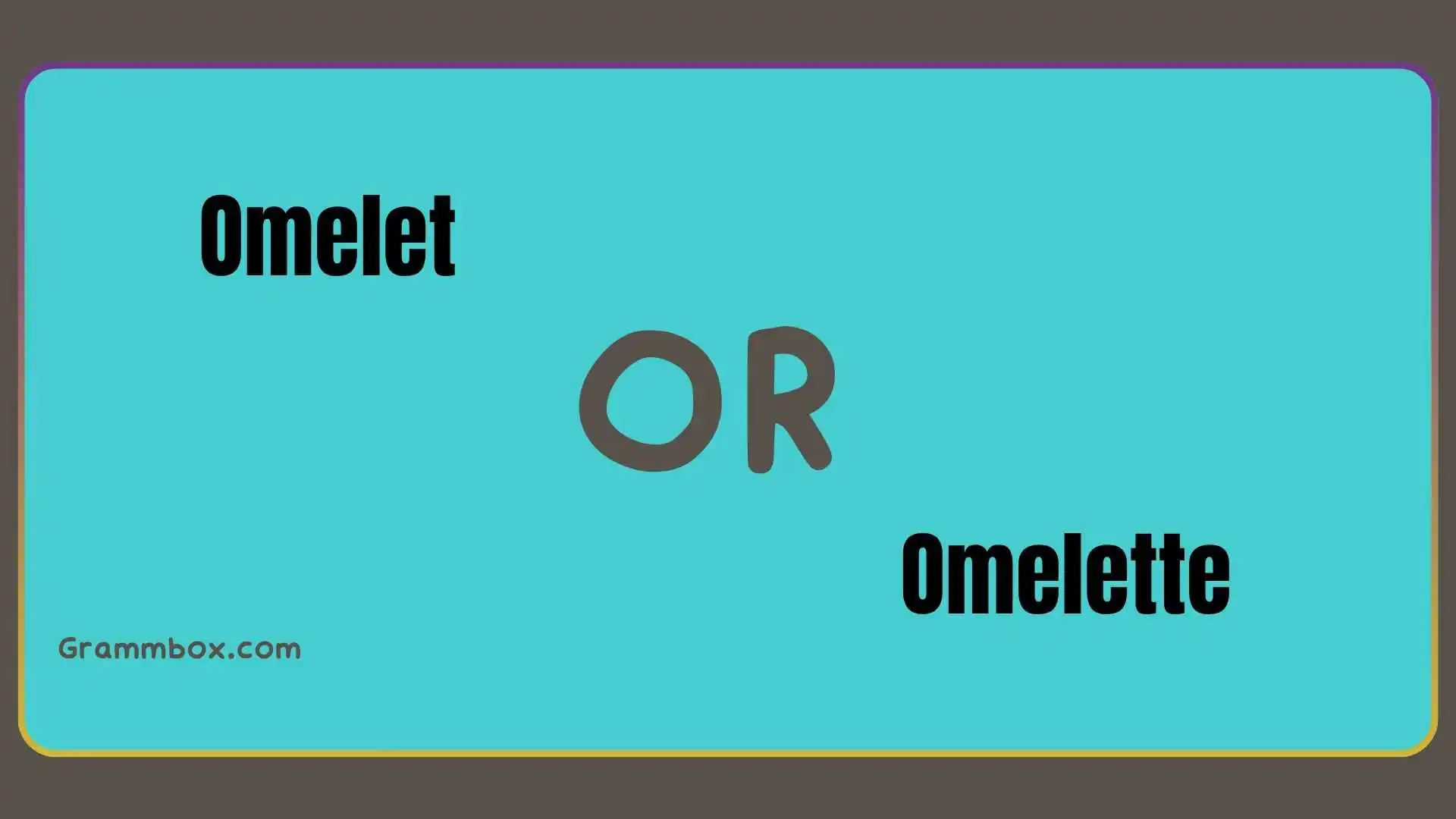
Many English learners and even native speakers often feel confused when choosing between “omelet” and “omelette.” At first glance, both words look similar and refer to the same delicious egg dish. However, the spelling difference can make people wonder which one is correct and when to use each version.
This confusion becomes even more common when writing for different audiences. For example, what sounds correct in the United States may look unusual in the United Kingdom, and vice versa. Therefore, understanding the difference between these two spellings is important, especially if you write blogs, articles, or professional content.
In addition, knowing the correct usage helps you communicate clearly and confidently. Whether you are ordering breakfast, writing a recipe, or creating SEO content, choosing the right spelling can make a strong impression.
Quick Answer
Both “omelet” and “omelette” are correct spellings. The difference lies in regional usage:
- “Omelet” is the preferred spelling in American English (US)
- “Omelette” is the preferred spelling in British English (UK) and other regions like France
In simple terms, you can use either word, but you should match your spelling with your audience.
Meaning of the Correct Form
The words “omelet” and “omelette” have the same meaning. They refer to a dish made by beating eggs and cooking them in a pan, often with fillings like cheese, vegetables, or meat.
Definition:
An omelet/omelette is a cooked egg dish that is usually folded over fillings.
Examples in American English (US):
- I had a cheese omelet for breakfast.
- She makes the best vegetable omelet in town.
- He ordered a ham omelet with toast.
Examples in British English (UK):
- I enjoyed a mushroom omelette this morning.
- She prepared a delicious cheese omelette.
- He prefers a plain omelette with herbs.
As you can see, the meaning remains exactly the same. Only the spelling changes based on location.
Meaning of the Incorrect Form (If Any)
Technically, neither “omelet” nor “omelette” is incorrect. However, using the wrong version for your audience may feel unnatural.
For example:
- Writing “omelette” in an American blog may seem overly formal or unusual.
- Writing “omelet” in a British cookbook may look incorrect to UK readers.
Therefore, the “mistake” is not about correctness, but about context and audience.
Omelet or Omelette: Key Differences
Although both spellings are correct, there are some key differences to keep in mind.
1. Regional Usage
- Omelet → American English (US)
- Omelette → British English (UK), French influence
2. Origin
The word originally comes from French:
- French spelling: omelette
However, American English simplified it to omelet, removing the extra letters.
3. Writing Style
- Omelet → Simpler, shorter, more direct
- Omelette → Traditional, elegant, French-style spelling
4. SEO and Audience Targeting
If you are writing content:
- Use “omelet” for US-based readers
- Use “omelette” for UK or international audiences
Quick Comparison Table
| Feature | Omelet (US) | Omelette (UK) |
| Region | United States | United Kingdom |
| Origin Influence | Simplified English | French origin |
| Usage Style | Modern, simple | Traditional |
| Meaning | Same | Same |
| Heading | Information |
|---|---|
| Omelette Meaning in English | An omelette (or omelet) is a dish made by beating eggs and cooking them in a frying pan. It can be served plain or filled with ingredients such as cheese, vegetables, herbs, or meat. The word is commonly used in both British and American English, although the spelling may differ. |
| Omelet or Omelette Vegetarian | A basic omelet/omelette made only with eggs is generally considered vegetarian because it does not contain meat, poultry, or fish. However, some vegetarians may choose fillings like vegetables, cheese, mushrooms, or spinach to keep the dish fully vegetarian-friendly. |
| Omelet or Omelette Pronunciation | The words “omelet” and “omelette” are pronounced almost the same in English. omelette (OM-let) The pronunciation is typically /ˈɒm.lət/ in British English and /ˈɑːm.lət/ in American English. |
| Omelet or Omelette Reddit | On Reddit, users often discuss the spelling difference between “omelet” and “omelette.” Most agree that “omelet” is the preferred American English spelling, while “omelette” is more common in British English and other English-speaking countries. Both spellings refer to the same egg dish. |
Common Mistakes People Make
Even though the difference is simple, many people still make mistakes. Let’s look at the most common ones.
1. Mixing Both Spellings in One Article
❌ Incorrect:
- I like a cheese omelet, and my friend prefers an omelette.
✔ Correct:
- Use one style consistently:
- US: omelet
- UK: omelette
2. Using the Wrong Version for the Audience
❌ Incorrect:
- A US blog using “omelette” everywhere
✔ Correct:
- Match your audience’s language style
3. Thinking One Is Wrong
Many learners believe:
- “Omelet is correct” OR
- “Omelette is correct”
✔ Truth:
- Both are correct, depending on the region
4. Overcomplicating the Choice
Some writers try to use both to sound smart. However, this can confuse readers.
✔ Tip:
- Keep it simple and consistent
Correct Usage in Sentences
Here are practical examples to help you understand better.
American English (Omelet)
- I usually eat a spinach omelet for breakfast.
- The restaurant serves a fluffy egg omelet.
- He cooked a quick omelet before work.
- She added cheese to her omelet.
- A healthy omelet can be very filling.
British English (Omelette)
- I had a delicious tomato omelette today.
- She made a classic French omelette.
- He enjoys a simple herb omelette.
- The chef prepared a soft omelette.
- A cheese omelette is my favourite meal.
Mixed Context (Explaining Both)
- In the US, people write omelet, while in the UK, they write omelette.
- Both spellings refer to the same egg dish.
Tips to Remember the Correct Usage
Remembering the difference is easy if you follow these simple tips:
1. Think of Location
- US → Omelet (shorter)
- UK → Omelette (longer)
2. “Extra Letters = British”
British English often uses longer spellings:
- Colour vs Color
- Favourite vs Favorite
- Omelette vs Omelet
3. Link It to French
- “Omelette” looks more French
- So it is used in the UK and Europe
4. Keep It Consistent
If you start with one spelling:
- Stick with it throughout your writing
5. Know Your Audience
Ask yourself:
- Who will read this?
Then choose:
- US readers → Omelet
- UK readers → Omelette
FAQs About Omelet or Omelette
1. Is “omelet” or “omelette” correct?
Both are correct. “Omelet” is used in American English, while “omelette” is used in British English.
2. Which spelling should I use in SEO writing?
It depends on your target audience. Use:
- “Omelet” for US traffic
- “Omelette” for UK or international readers
3. Do both words mean the same thing?
Yes, they have exactly the same meaning. Both refer to a dish made from beaten eggs cooked in a pan.
4. Why does “omelette” have extra letters?
Because it comes from French, where the original spelling includes those extra letters.
5. Is “omelette” more formal than “omelet”?
Not necessarily. However, it may feel more traditional or elegant due to its French origin.
6. Can I use both spellings in one article?
It is better not to. Mixing both can confuse readers and affect readability.
7. Which spelling is more popular globally?
“Omelette” is more widely used internationally, especially in the UK and Europe. However, “omelet” dominates in the United States.
Conclusion
In summary, the difference between “omelet” and “omelette” is simple yet important. Both words refer to the same dish, and neither is wrong. However, the correct choice depends on your audience and writing style.
To recap:
- Use “omelet” in American English
- Use “omelette” in British English
- Always stay consistent in your writing
Understanding these small differences can improve your grammar, boost your confidence, and make your content more professional. Therefore, the next time you write about food or recipes, you will know exactly which spelling to use.
If you found this guide helpful, keep exploring more English word differences to sharpen your writing skills even further!
READ MORE ARTICLES..
good morning or goodmorning: What’s the difference? 2026
Flakey or Flaky: Definition, Usage, and Grammar Rules
on site or onsite:What’s the difference & usage? 2026
Is It Bear or Bare With Me? Differene & usage. 2026