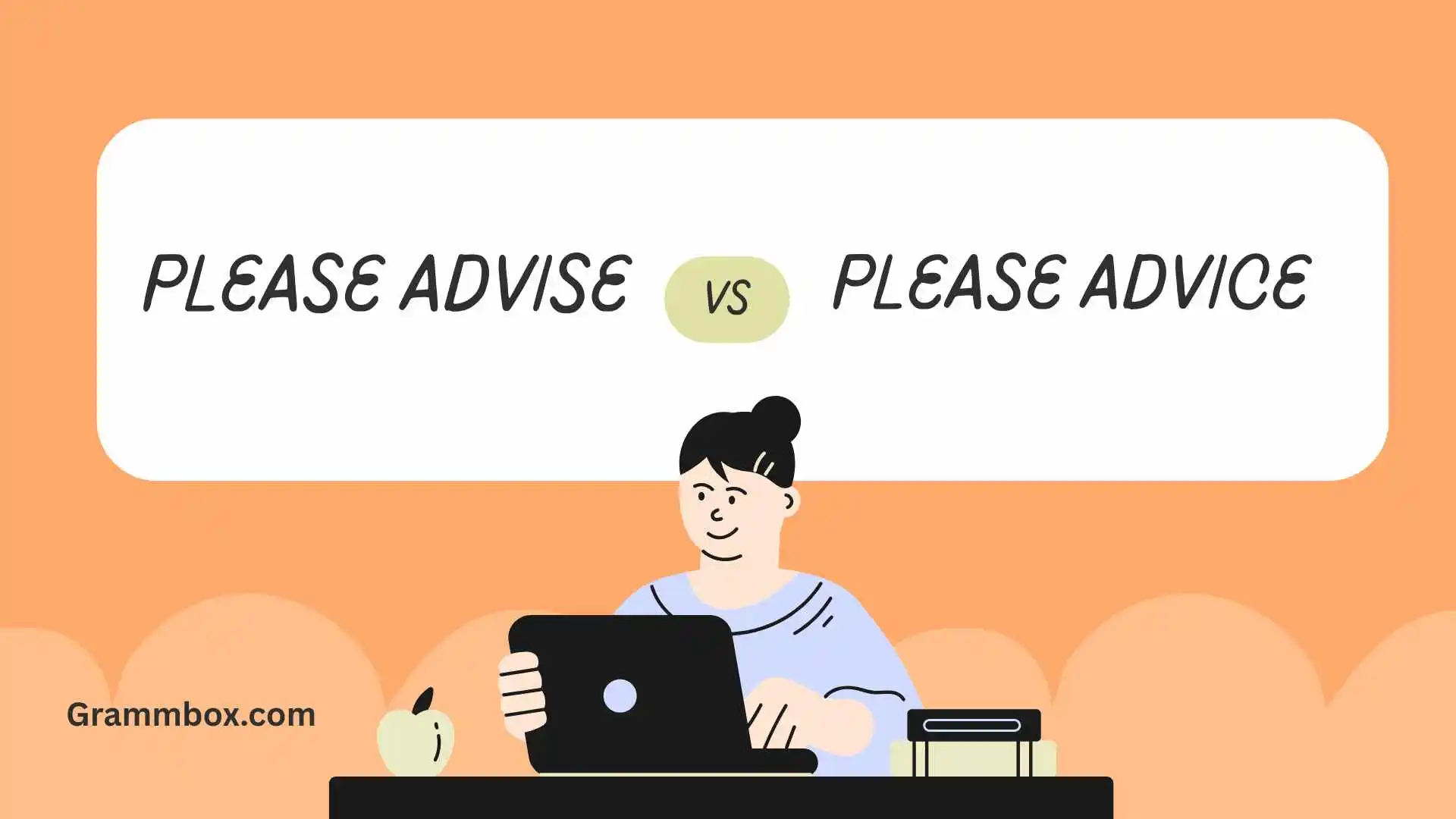
Many English learners and even native speakers often stumble when deciding whether to use “please advise” or “please advice.” The two phrases may sound similar, but their meanings and grammatical functions are very different. Misusing them can make your emails, messages, or professional communications look unpolished or even incorrect.
In professional and casual English alike, clarity matters. Especially for business emails, customer service, and formal letters, knowing the right form ensures that your message is understood correctly. For both UK and US audiences, understanding this distinction is crucial because it affects tone, grammar, and professionalism.
Moreover, since English is rich with subtle differences between British English and American English, learners often wonder if one form is more acceptable in the UK versus the US. In this article, we’ll break down the correct usage, highlight common mistakes, and provide practical tips to help you confidently use these phrases in any context.
Quick Answer
The correct phrase is “please advise”, not “please advice.”
- Please advise is a verb phrase, meaning “please give guidance” or “please tell me what to do.”
- Please advice is incorrect because advice is a noun, and a verb is needed after “please.”
In short: always use “advise” in emails or formal requests.
Meaning of the Correct Form: “Please Advise”
The phrase “please advise” is widely used in English as a polite and professional way to ask for guidance, suggestions, or instructions.
- Grammatical Note: “Advise” is a verb, so it can be followed by an object or remain standalone in a formal request.
- Example (UK & US):
- “Could you please advise on the next steps for this project?”
- “Please advise if you are available for the meeting tomorrow.”
Usage in British English
In the UK, “please advise” is often seen in formal emails and letters, particularly in corporate or government contexts:
- “Please advise whether the attached documents meet the compliance requirements.”
- “Kindly review the proposal and please advise accordingly.”
Usage in American English
In the US, the usage is almost identical, but sometimes it appears slightly more casual or direct in business emails:
- “Please advise if you can attend the conference next week.”
- “We are unsure about the procedure; please advise.”
Key takeaway: Whether in the UK or US, “please advise” is always correct, professional, and understood across English-speaking regions.
Meaning of the Incorrect Form: “Please Advice”
Many people mistakenly write “please advice”, thinking it works interchangeably with “please advise.” However, this is grammatically incorrect.
- Advice is a noun, meaning a recommendation or guidance.
- Using it after “please” doesn’t work because please is typically followed by a verb to form a polite request.
- Incorrect: “Please advice me on this matter.”
- Correct: “Please advise me on this matter.”
In short, never use “please advice” in formal or professional writing. It is considered a grammatical error in both UK and US English.
Keyword Comparison / Key Differences
| Feature | Please Advise | Please Advice |
| Part of speech | Verb phrase | Noun (incorrect here) |
| Meaning | Request for guidance or instruction | Recommendation (not a verb) |
| Correctness in emails | ✅ Correct | ❌ Incorrect |
| UK Usage | Common in formal and corporate emails | ❌ Not acceptable |
| US Usage | Common in business communication | ❌ Not acceptable |
| Example | “Please advise on the contract.” | “Please advice on the contract.” ❌ |
Tip: Remember, when you are asking someone to act or respond, use “advise.” When referring to guidance itself as a thing, you can use “advice”, e.g., “Your advice is appreciated.”
Please Advise or Please Advice – Examples, Email Usage, and Sentences
| Keyword Variation | Correct Form | Explanation | Example |
|---|---|---|---|
| Please advise or please advice grammar | Please advise ✅ | Advise is a verb (action word), while advice is a noun (thing or suggestion). After “please,” you usually need a verb. | Please advise on the next steps. |
| Please advise or please advice examples | Please advise ✅ | Use advise when asking someone to give guidance or recommendations. | Please advise whether the meeting will be held tomorrow. |
| Please advise or advice in email | Please advise ✅ | In professional emails, “Please advise” is a common and polite way to request information or direction. | Dear John, I have attached the report. Please advise if any revisions are needed. |
| Please advise or please advice in a sentence | Please advise ✅ | “Please advice” is grammatically incorrect because advice cannot function as a verb. | Please advise me on the best course of action. |
| When to use “advice” | Advice ✅ | Use advice as a noun when referring to a recommendation or opinion. | Thank you for your advice regarding the project. |
| Common mistake | Please advice ❌ | Incorrect because advice is a noun, not a verb. | ❌ Please advice me what to do. |
| Correct alternative | Please advise me ✅ | Proper verb usage in formal and informal writing. | Please advise me about the application process. |
Common Mistakes People Make

Even experienced English speakers sometimes mix up advise and advice. Here are the most frequent errors:
- Using advice instead of advise in requests
- ❌ “Please advice me about the schedule.”
- ✅ “Please advise me about the schedule.”
- Overusing “please advise” in casual contexts
While correct, repeating “please advise” in every sentence can sound robotic. Consider alternatives like:- “Could you guide me on this?”
- “I would appreciate your input.”
- Omitting the verb entirely
- ❌ “Please advice on the attached document.”
- ✅ “Please advise on the attached document.”
- Confusing US and UK spelling conventions
Luckily, advise/advice is spelled the same in both UK and US English, so this is one area without variation. The main issue is correct part of speech.
Correct Usage in Sentences
Here are multiple examples showing correct usage in both British and American English:
British English Examples
- “Please advise if any further documents are required.”
- “I am unsure about the procedure; please advise.”
- “Please advise on the best course of action regarding this complaint.”
- “We have reviewed the policy; please advise whether approval is needed.”
American English Examples
- “Please advise if you will attend the meeting on Thursday.”
- “We need your guidance on the proposal, so please advise.”
- “Please advise on any changes required before submission.”
- “If the schedule changes, please advise me immediately.”
Tip: In both forms, adding context makes your request clearer, e.g., “Please advise on the payment procedure” instead of simply “Please advise.”
Tips to Remember the Correct Usage
- Check part of speech:
- Advise = verb → correct after “please.”
- Advice = noun → incorrect in this context.
- Mnemonic trick:
- Advise = Action (V) → you are asking someone to act or respond.
- Advice = Thing (N) → it is a thing someone gives.
- Substitute with synonyms for clarity:
- “Please guide me”
- “Please let me know”
- “Could you provide instructions?”
- Always double-check in emails:
- Many grammar tools highlight “please advice” as incorrect.
- Think: Am I asking or giving?
- Asking → advise
- Giving → advice
FAQs About “Please Advise or Please Advice”
1. Can I use “please advice” in emails?
No, “please advice” is incorrect because advice is a noun, and a verb is required after “please.” Always use please advise.
2. Is “please advise” formal or casual?
It is formal and widely used in professional, corporate, and academic contexts. In casual contexts, you can say: “Can you tell me?” or “Let me know.”
3. Is there a UK vs US difference?
No. Both UK and US English use please advise the same way. There is no spelling difference.
4. Can I end an email with “please advise”?
Yes. Example:
“Thank you for reviewing the documents. Please advise.”
5. Is it okay to replace “please advise” with “kindly advise”?
Yes. “Kindly advise” is slightly more formal and polite, common in British English.
6. How do I respond to “please advise”?
You should provide guidance, instructions, or the requested information:
“Thank you for your email. We suggest proceeding with Option B.”
7. Can I use “advise” in the middle of a sentence?
Absolutely. Example:
“Could you please advise me on the best approach for this project?”
Conclusion
Understanding the difference between “please advise” and “please advice” is crucial for clear, professional communication. Remember:
- Please advise = correct, because advise is a verb used to request guidance.
- Please advice = incorrect, because advice is a noun and cannot function as a verb in this context.
Whether you are writing emails in the UK or US, using please advise correctly demonstrates professionalism and ensures your message is clearly understood.
Next time you draft a formal email, remember this simple rule: if you’re asking for help, guidance, or instructions, always use “please advise.” It’s simple, correct, and universally understood.
READ MORE ARTICLES..
Anyway or Anyways: Correct Usage in English.
Seel or Seal: Easy Grammar Explanation.
Prefer vs Perfer: Meaning, Usage & Examples.
Is “Til” Correct or Should You Use “Till”?