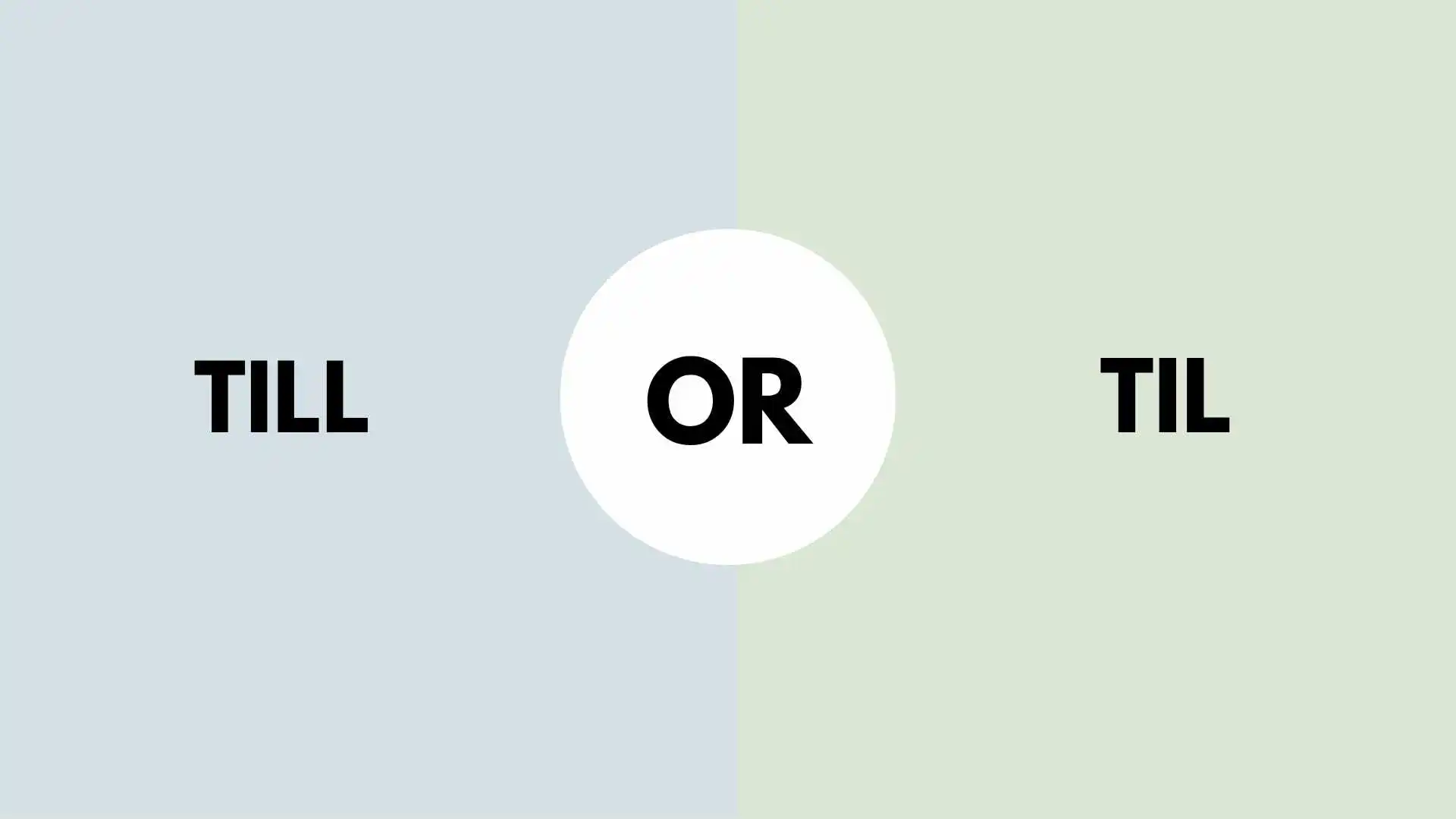
Many English learners and even native speakers often get confused between “till” and “til.” At first glance, both words seem correct, and you might see them used interchangeably in casual writing. However, there is an important difference that you should understand if you want to write correctly and professionally.
This confusion becomes even more noticeable when comparing British English (UK) and American English (US) usage. While English rules are generally similar in both regions, spelling preferences and accepted forms can sometimes differ. Therefore, knowing the correct form will help you avoid mistakes in exams, professional writing, and everyday communication.
In this article, we will explain everything in a simple and beginner-friendly way, including meanings, correct usage, examples, common mistakes, and tips to remember the difference.
Quick Answer
The correct word is “till.” It is a proper English word that means “up to a certain time” or “until.”
On the other hand, “til” is not considered correct in standard English. If you want a shorter version, the correct abbreviation is “’til” (with an apostrophe).
👉 Correct: till / until / ’til
👉 Incorrect: til
Meaning of the Correct Form (Till)
“Till” is a real and fully accepted English word. It has been used in English for centuries and is correct in both UK and US English.
Meaning
“Till” means “up to a certain time” or “until.”
Examples (UK & US Usage)
- I will wait till tomorrow.
- She stayed at work till late evening.
- Let’s talk till the meeting ends.
- He studied till midnight for his exam.
👉 In both British and American English, “till” is perfectly correct and commonly used in informal and neutral writing.
“Till” vs “Until”
Both words mean the same thing, but:
- “Until” is more formal
- “Till” is slightly more casual
Examples:
- UK: Please remain seated until the train stops.
- US: Stay here till I come back.
Meaning of the Incorrect Form (Til)
“Til” (without an apostrophe) is generally considered incorrect in standard English.
Why is “til” wrong?
Many people think “til” is a short form of “until.” However:
- “Till” is already a complete word
- It is not a shortened version of “until”
- Therefore, writing “til” without an apostrophe is incorrect
The Correct Short Form
If you want to shorten “until,” the correct form is:
👉 ’til (with an apostrophe at the beginning)
Examples
- ❌ Wrong: I’ll wait til tomorrow.
- ✅ Correct: I’ll wait till tomorrow.
- ✅ Also correct: I’ll wait ’til tomorrow.
Keyword Comparison / Key Differences
Let’s clearly compare till, til, and ’til:
| Word | Correct? | Meaning | Usage |
| Till | ✅ Yes | Until / up to a time | Standard in UK & US |
| Til | ❌ No | — | Incorrect spelling |
| ’Til | ✅ Yes | Short form of until | Informal writing |
UK vs US Differences
- In both British English and American English, the rules are the same
- “Till” is correct everywhere
- “Til” is incorrect everywhere
- “’Til” is acceptable in informal writing in both regions
👉 Therefore, there is no major difference between UK and US usage in this case.
Till or Til Examples
| Heading | Information |
|---|---|
| Till or Til Examples | Till is the standard and correct word in English, while til is an informal shortened spelling. Examples: I will wait till tomorrow. / Let’s stay here till the rain stops. Informal: See you til Friday. Most grammar guides recommend using till in formal writing. |
| Till or Til Grammar | In grammar, till and til both mean “up to the time of.” However, till is the accepted dictionary spelling, whereas til is considered informal. Example: She worked till midnight. In professional, academic, and business writing, till is usually preferred. |
| Till or Til Next Time | The phrase “Till next time” is the more common and grammatically accepted form. It is often used when ending a conversation, article, video, or presentation. Example: Till next time, take care and stay safe. Although “Til next time” may appear in casual writing, till is generally recommended. |
| Till or Til Meaning | Both till and til mean until or up to a particular time. Example: Wait till I arrive. The word till has existed in English for centuries and is not a shortened version of until. Til developed later as an informal variant and is less common in formal English. |
Common Mistakes People Make
Many learners and writers make simple mistakes with these words. Let’s look at the most common ones:
1. Using “til” instead of “till”
❌ I will wait til you arrive.
✅ I will wait till you arrive.
2. Forgetting the apostrophe in “’til”
❌ I’ll stay here til evening.
✅ I’ll stay here ’til evening.
3. Thinking “till” is incorrect
Some people wrongly believe “till” is informal or wrong.
❌ Avoid using “till” in writing
✅ “Till” is completely correct in both UK and US English
4. Overusing “until” in casual writing
While “until” is correct, it may sound too formal in casual contexts.
👉 Example:
- Formal: Please wait until further instructions.
- Casual: Wait here till I return.
5. Mixing styles in the same sentence
❌ Stay here till I come back until 5 PM.
✅ Stay here till 5 PM.
Correct Usage in Sentences
Here are practical examples for both UK and US readers:
Daily Life Examples
- I will be busy till tomorrow.
- Wait here till I call you.
- She didn’t sleep till midnight.
Formal vs Informal
- Formal (UK & US): Please remain here until further notice.
- Informal (UK & US): Stay here till I return.
Using “’til” in Informal Writing
- I won’t leave ’til you arrive.
- Let’s wait ’til sunset.
Workplace Examples
- The office is open till 6 PM.
- We worked till late to finish the project.
Academic Examples
- Students must stay until the exam ends.
- He studied till morning for his test.
Tips to Remember the Correct Usage
Here are some easy tips to help you never forget:
1. Remember: “Till” is already complete
👉 “Till” is not short for anything
2. Avoid “til” completely
👉 If there’s no apostrophe, it’s wrong
3. Use “’til” only in informal writing
👉 Best for messages, chats, or creative writing
4. Use “until” in formal writing
👉 Perfect for essays, emails, and professional use
5. Simple Rule
- Formal → Until
- Neutral → Till
- Informal → ’Til
FAQs
1. Is “til” ever correct?
No, “til” without an apostrophe is incorrect in standard English.
2. Is “till” old-fashioned?
No, “till” is a very old but still correct and commonly used word in both UK and US English.
3. Which is better: till or until?
Both are correct. However:
- “Until” is more formal
- “Till” is more casual
4. Can I use “’til” in essays?
It is better to avoid “’til” in formal writing like essays. Use “until” instead.
5. Do Americans and British people use different forms?
No, both UK and US English follow the same rules for till, til, and ’til.
6. Why do people write “til” so often?
Because they think it is a shortened form of “until,” but this is a common misunderstanding.
7. Is “till” used in professional writing?
Yes, but “until” is preferred in formal and professional contexts.
Conclusion
Understanding the difference between “till or til” is simple once you know the rule. The word “till” is completely correct, widely used, and accepted in both British and American English. On the other hand, “til” is incorrect and should be avoided in all types of writing.
If you prefer a shorter version, you can use “’til”, but only in informal contexts. For formal writing, “until” remains the best choice.
READ MORE ARTICLES..
diner or dinner: What’s the difference & usage? 2026
therefore or therefor: What’s the difference & usage? 2026
molding or moulding: What’s the difference & usage? 2026
Bear in Mind or Bare in Mind: Usage & easy guide? 2026