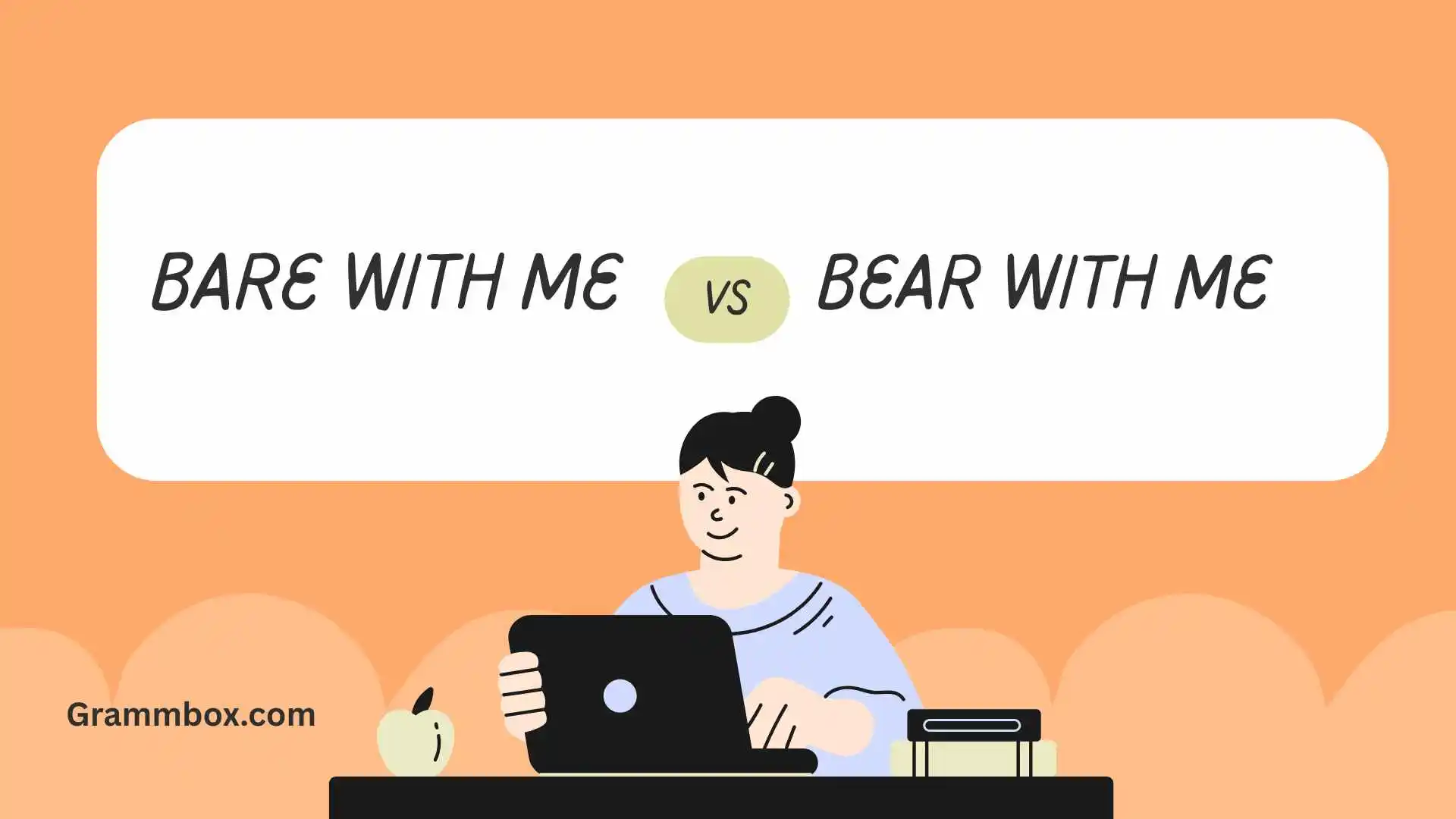
Many people often stumble upon the phrase “bare with me” or “bear with me” in both casual and professional English. At first glance, these two phrases may seem interchangeable, but using the wrong one can change the meaning of your sentence entirely. This confusion is common among native and non-native English speakers alike.
Understanding the difference is especially important for both UK and US English speakers because these phrases appear in emails, meetings, text messages, and social media posts. Using the correct version demonstrates strong language skills and helps avoid misunderstandings.
Whether you are writing a professional email in London or having a casual chat in New York, knowing whether to use “bare” or “bear” can make your English appear polished and confident.
Quick Answer
The correct phrase is “bear with me”, which means “please be patient with me” or “tolerate a temporary inconvenience.”
Example: “Please bear with me while I fix this issue.”
On the other hand, “bare with me” is incorrect in this context. “Bare” means to uncover or expose, which gives your sentence a completely different meaning.
Example (Incorrect): “Please bare with me while I fix this issue.” (This would imply exposing yourself, which is not the intended meaning.)
Meaning of the Correct Form
Bear With Me
The verb “bear” in this phrase is derived from Old English beran, which means to carry, endure, or tolerate. When you say “bear with me,” you are essentially asking someone to be patient while you handle a task, explain something, or resolve an issue.
- UK English Example: “The website is updating, so please bear with me while it loads.”
- US English Example: “We’re experiencing a minor delay, so bear with me for a moment.”
This phrase is polite, professional, and widely accepted in both formal and informal contexts. It is used in emails, presentations, and everyday conversations to show respect and request patience.
Meaning of the Incorrect Form
Bare With Me
The word “bare” literally means to uncover, expose, or reveal something. If you mistakenly use “bare with me,” it changes your sentence to something unintended or even awkward.
- Literal Meaning: “Remove clothing with me” or “Expose yourself along with me.”
- Example (Incorrect & Funny): “Please bare with me while I fix the report.” (This would sound like a very unusual request!)
This mistake is common because “bare” and “bear” are homophones they sound the same but have different meanings.
Keyword Comparison / Key Differences
| Feature | Bear With Me | Bare With Me |
| Meaning | Be patient, tolerate, endure | Uncover, expose |
| Correct Usage | ✅ Yes | ❌ No |
| UK English | Common in both formal & informal contexts | Incorrect |
| US English | Common in professional emails & conversations | Incorrect |
| Example Sentence | “Bear with me while I gather the data.” | “Bare with me while I gather the data.” (wrong) |
Key Takeaway: Always use “bear with me” when asking for patience. “Bare with me” should only appear if you are literally asking someone to uncover something.
Common Mistakes People Make
Many people confuse “bear” and “bare” because they sound identical. Here are some frequent mistakes:
- Using “bare” instead of “bear” in emails
- ❌ “Please bare with me as I update the spreadsheet.”
- ✅ “Please bear with me as I update the spreadsheet.”
- Misinterpreting the phrase literally
Some learners think “bare” is correct because it feels like “sharing” or “revealing.” - Mixing with other idioms
People often combine it with “bear the burden,” creating sentences like:- ❌ “I will bare with you through this process.” (Wrong)
- ✅ “I will bear with you through this process.” (Correct)
- Regional spelling confusion
While both UK and US English use “bear with me” correctly, some non-native speakers assume “bare” is the British form, which is incorrect.
Correct Usage in Sentences
Here are several examples of how to use “bear with me” correctly in both UK and US contexts:
UK English Examples
- “Bear with me while I check the train timetable.”
- “The new software may take a few minutes to load, so please bear with me.”
- “We’re updating our website, so bear with me if pages take longer to load.”
US English Examples
- “Bear with me as I walk you through this tutorial.”
- “The printer is jammed, but please bear with me for a moment.”
- “I know this is confusing, so bear with me while I explain it step by step.”
Notice how both UK and US English use the same phrase correctly, and the only difference may be in spelling, punctuation, or minor style preferences.
Tips to Remember the Correct Usage
- Mnemonic Trick: Think of “bear” as endurance. You “bear” the wait or the difficulty, so you are asking someone to tolerate a situation.
- Visual Cue: “Bare” reminds you of exposure (like bare hands or bare feet). If it doesn’t involve uncovering, don’t use it.
- Substitute Test: Replace “bear with me” with “please be patient.” If it makes sense, it’s correct.
- Professional Tip: In emails, presentations, or reports, default to “bear with me”. It is safe and correct everywhere.
FAQs
1. Is “bare with me” ever correct?
No, unless you literally mean uncovering something. For asking patience, always use “bear with me.”
2. Can I use “bear with me” in informal conversations?
Yes! It works in both casual and professional contexts.
3. Is there a difference between UK and US usage?
No significant difference exists. Both English varieties use “bear with me” in the same way.
4. How do I remember the difference between “bare” and “bear”?
Remember: bear = endure, bare = expose. If you’re asking for patience, think “endure the wait.”
5. Can I shorten “bear with me” in text messages?
Yes, you can use “bwm” informally, but in formal writing, always spell it out.
6. Why do people confuse “bare” and “bear”?
They are homophones they sound the same but have different meanings. Context is key.
7. Can “bear with me” sound rude?
No, it is polite and shows respect for someone’s patience. Using it incorrectly as “bare with me” could sound awkward.
Conclusion
To sum up, the correct phrase is “bear with me”, meaning please be patient or tolerate a temporary inconvenience. Avoid the common mistake of using “bare with me”, which implies exposure rather than patience.
Whether you are writing an email in London or giving a presentation in New York, remembering the difference will enhance your English skills and prevent misunderstandings.
READ MORE ARTICLES..
Receive vs Recieve: Common Spelling Mistake Explained.
Someday or Some Day – Meaning, Usage & Examples
Complimentary or Complementary? Clear Your Confusion in Minutes!
Worshiped or Worshipped? The Simple Grammar Guide You Need