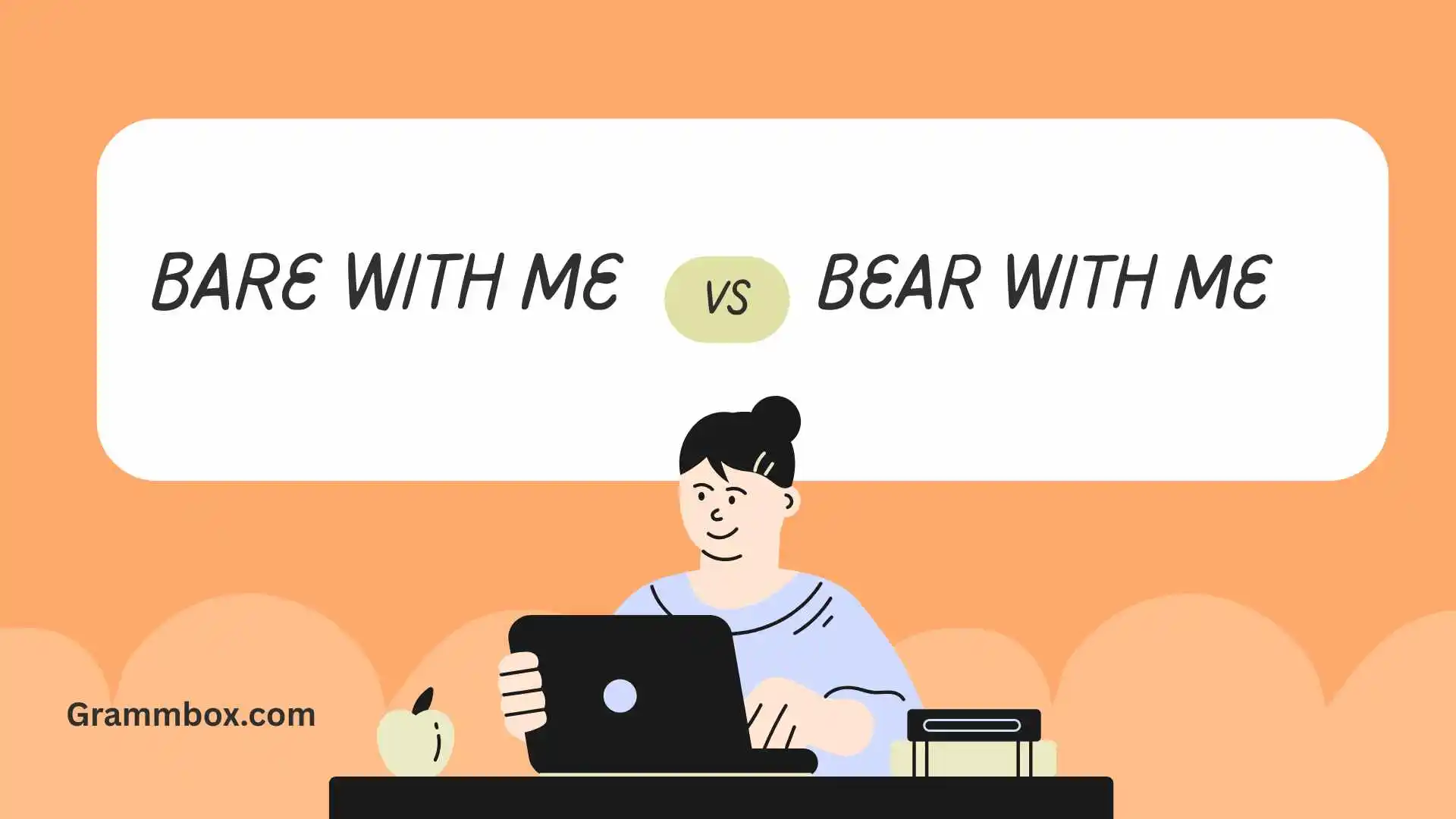
Many people struggle with understanding whether to write “bare” or “bear with me” in English. These two phrases sound similar but have very different meanings, and using the wrong one can confuse readers or make your writing seem unprofessional.
The confusion is especially common in both British English and American English, as the words are pronounced similarly. However, knowing the correct usage is essential for clear communication, whether you’re writing emails, giving instructions, or chatting with friends.
Understanding the difference is not just about spelling; it’s about conveying patience, tolerance, or exposure properly. By the end of this article, you will know exactly when to use “bear with me” and why “bare” is usually the incorrect choice in this context.
Quick Answer
The correct phrase is “bear with me”, which means “please be patient with me” or “allow me some time.”
The word “bare” means “exposed,” “naked,” or “minimal,” and should not be used in the phrase. Using “bare with me” is a common mistake, but it changes the meaning entirely.
For example:
- ✅ Correct: “Please bear with me while I explain.”
- ❌ Incorrect: “Please bare with me while I explain.”
Meaning of the Correct Form: “Bear With Me”
The phrase “bear with me” comes from the verb “bear”, which has multiple meanings, including “to endure,” “to tolerate,” or “to carry.”
When someone says “bear with me”, they are asking others to be patient or understanding during a situation. It’s a polite way to request a little time or tolerance.
Examples in British English
- “Bear with me while I check the details.”
- “The train is delayed; please bear with me as I find an alternative route.”
Examples in American English
- “Bear with me for a moment while I finish this task.”
- “We’re experiencing technical difficulties, so bear with me, please.”
Key points:
- Always use “bear”, not “bare.”
- It is formal enough for professional emails but also works in casual conversations.
Meaning of the Incorrect Form: “Bare With Me”
The word “bare” is an adjective or verb that usually means:
- Exposed (The tree’s branches were bare in winter.)
- Minimal or simple (He wore bare essentials for the trip.)
- To uncover (She bared her soul in the letter.)
If you say “bare with me”, it could be misinterpreted as asking someone to undress with you or reveal themselves, which is completely wrong in standard English usage.
Examples of Wrong Usage
- ❌ “Bare with me while I explain this task.”
- ❌ “Bare with me, I need to finish the report.”
These sentences are grammatically incorrect and can cause embarrassment or confusion.
Keyword Comparison / Key Differences
| Phrase | Meaning | Correct Usage | Common Mistake |
| Bear with me | Ask for patience or tolerance | “Bear with me while I sort this out.” | Often mistakenly written as “bare with me” |
| Bare | Exposed, naked, minimal | “The floor was bare of furniture.” | Incorrectly used as “bare with me” in patience context |
UK vs US Notes:
- Both UK and US English use “bear with me” the same way.
- Pronunciation differs slightly: UK /beə/ vs US /ber/, but meaning remains identical.
- Spelling of “bare” remains the same in both, but the confusion occurs because of similar sound.
Common Mistakes People Make
Many mistakes stem from sound-alike words (homophones).
- Using “bare” instead of “bear”:
- ❌ “Bare with me, this might take a while.”
- ✅ “Bear with me, this might take a while.”
- Forgetting context: “Bear with me” only applies when asking for patience. Don’t use it when talking about exposure.
- Incorrect punctuation: Always place a comma after “bear with me” when it introduces a pause.
- ✅ “Bear with me, I’ll explain shortly.”
- ❌ “Bear with me I’ll explain shortly.”
- Mixing with “bare your soul”: These are two separate expressions:
- “Bear with me” = please be patient.
- “Bare your soul” = reveal your feelings.
Correct Usage in Sentences
Everyday Situations
UK examples:
- “Bear with me while I set up the projector for the meeting.”
- “The website is loading slowly; please bear with me.”
US examples:
- “Bear with me as I explain the steps for installation.”
- “We’re experiencing some issues, bear with me while we fix them.”
Professional Emails
- “Dear team, please bear with me as I review the quarterly report.”
- “Bear with me while I gather the necessary documents.”
Informal Conversations
- “Bear with me, I’ll find my keys in a moment.”
- “Just bear with me, this recipe takes a few extra minutes.”
Tips for UK/US readers:
- “Bear with me” is versatile: use it in emails, messages, or spoken English.
- Never replace it with “bare,” no matter the context.
Tips to Remember the Correct Usage
- Think “endure” or “tolerate”: If you mean “be patient,” always use bear.
- Mnemonic trick:
- Be Enduring, Ask Respectfully = BEAR
- Visual reminder: Picture yourself carrying a load (bear) while someone waits patiently.
- Check context: If it’s about patience, it’s “bear with me.” If it’s about exposure, it’s “bare.”
FAQs
1. Can I use “bare with me” in emails?
No. Always use “bear with me” in professional or casual emails. “Bare with me” is incorrect.
2. Is “bear with me” formal or informal?
It is neutral: polite enough for formal emails, casual enough for conversation.
3. Are there regional differences in the UK vs US?
No significant differences exist. Both regions use “bear with me” identically.
4. Can I shorten it to “bear with”?
Yes, informally you may say “bear with” in speech, but in writing, “bear with me” is preferred.
5. Why do people confuse “bare” and “bear”?
Because they are homophones words that sound the same but have different meanings.
6. Can I say “please bear with me a moment”?
Yes, that’s correct and widely used.
7. What’s the origin of “bear with me”?
It comes from the verb “bear”, meaning “endure or tolerate,” dating back to Middle English.
Conclusion
In summary, the phrase “bear with me” is correct when asking someone to be patient or tolerant. Avoid using “bare with me”, as it changes the meaning entirely and may confuse your readers.
Whether you are writing emails, talking to friends, or giving instructions, using “bear with me” ensures clarity, professionalism, and correctness in both UK and US English.
READ MORE ARTICLES..
Learn the Correct Use of Forth and Fourth Easily 2026.
Aging or Ageing: Which Is Right in English Writing?
Leach or Leech – Common Confusion Solved.
When to Use Get Past vs Get Passed (With Examples)