English can be tricky, especially when similar words look alike but have slightly different meanings or spellings. One common example is the choice between “protesters” and “protestors.” Many people, writers, and even news outlets often mix them up. But is there a right or wrong choice? And does it depend on whether you are writing for a UK or US audience?
Understanding this difference is important because using the correct term ensures your writing is professional, accurate, and easily understood by readers. Whether you are a student, journalist, or social media user, knowing the right form will prevent embarrassment and improve clarity.
In this guide, we will break down the meaning of both forms, compare UK and US preferences, provide real-life examples, and give practical tips to remember the correct usage.
Quick Answer
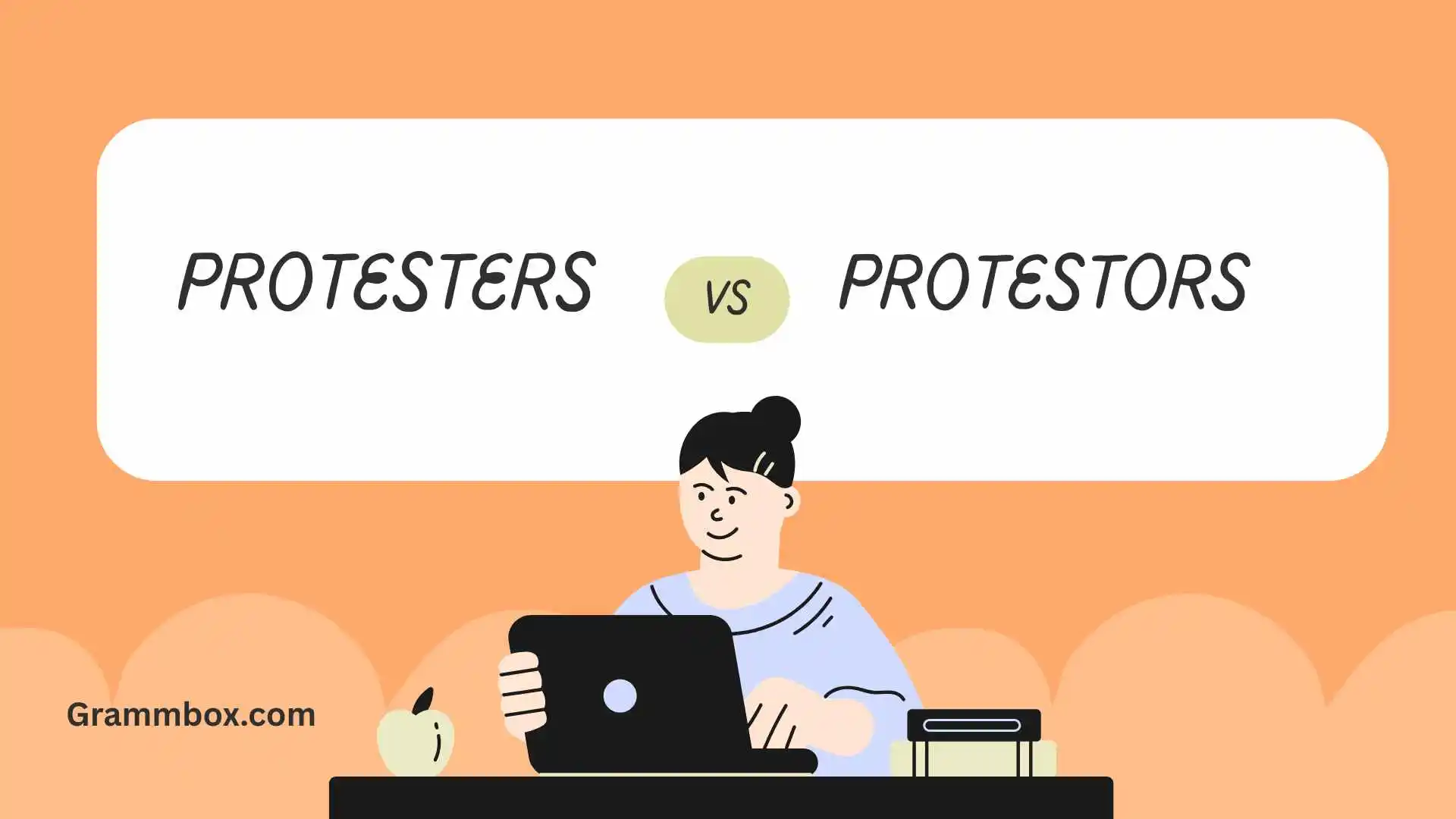
The correct and most widely accepted form is “protesters.” This is the preferred spelling in both British and American English. It refers to people who publicly demonstrate against something, usually a policy, law, or social issue.
The word “protestors” exists but is far less common and often considered a variant spelling. Most style guides, including major US and UK dictionaries, recommend using “protesters.”
So, if you want to stay safe and sound in your writing, always choose “protesters.”
Meaning of the Correct Form
Protesters
A protester is someone who expresses opposition to something, often in a public demonstration, rally, or march.
Examples in US English:
- Thousands of protesters gathered outside the Capitol to demand reform.
- The protesters peacefully marched through downtown Chicago.
Examples in UK English:
- Environmental protesters blocked the roads in London to highlight climate change.
- Protesters at the Parliament Square held banners demanding action.
Key Notes:
- Works in both UK and US English without confusion.
- Always pluralize as protesters when talking about a group.
- Can describe anyone actively showing opposition, not just through marches (e.g., online protests, petitions).
Meaning of the Incorrect Form (if any)
Protestors
Protestors is sometimes seen in texts, especially older or informal sources. While it is technically not “wrong,” it is far less common and can look outdated or incorrect to modern readers.
Examples:
- The protestors gathered near the city hall. (Less preferred)
- Protestors voiced their concerns loudly. (Rarely used in formal writing)
Why it’s not recommended:
- Modern style guides, including Oxford English Dictionary and Merriam-Webster, list protesters as the standard spelling.
- Using protestors can distract readers or suggest a typo.
Quick Tip: Stick to protesters to avoid confusion.
Keyword Comparison / Key Differences
| Aspect | Protesters | Protestors |
| Correctness | Standard, widely accepted | Variant, less common |
| Usage (UK) | Preferred | Rare, outdated |
| Usage (US) | Preferred | Rare, sometimes informal |
| Formal writing | ✅ Yes | ❌ No |
| Informal writing | ✅ Yes | ⚠ Possible, but avoid |
| Pronunciation | /prəˈtɛstərz/ | /prəˈtɛstərz/ (same sound) |
UK vs US differences:
- Both the UK and US prefer protesters.
- Protestors might appear occasionally in older newspapers or informal contexts in both countries but is largely discouraged today.
Common Mistakes People Make
Many writers make these mistakes when using the words:
- Mixing up the spelling:
- ❌ The protestors marched for justice. (less preferred)
- ✅ The protesters marched for justice.
- Assuming “-or” is always US English:
Some think protestors is US English and protesters is UK English. This is incorrect—both countries prefer protesters. - Using the word in singular incorrectly:
- ❌ A group of protestors is gathering.
- ✅ A group of protesters is gathering.
- Confusing with “attestors” or “contestors”:
Words ending in “-or” don’t automatically convert to “-er.” Always check the dictionary. - Overcomplicating formal writing:
- Stick to protesters in essays, articles, and official documents.
Correct Usage in Sentences
Here are practical examples for both UK and US contexts:
UK Examples
- Protesters in Manchester staged a sit-in to support fair wages.
- Thousands of healthcare protesters gathered outside Westminster.
- The police monitored protesters peacefully demonstrating in Trafalgar Square.
US Examples
- Protesters in New York City demanded stricter environmental regulations.
- The school board faced protests from parents, but the protesters remained calm.
- Protesters at the rally held up signs calling for justice.
Tips for sentence structure:
- Always use plural when referring to groups.
- Pair with verbs like gathered, marched, rallied, blocked, protested, voiced.
- Use peacefully or angrily to describe tone, depending on context.
Tips to Remember the Correct Usage
- Think “-er” for people doing something:
Most modern English words follow this pattern: worker, reader, runner, and yes—protester. - Mnemonic Trick:
“People protest, therefore they are protesters.” - Check contemporary media:
If a word looks odd, compare it to trusted news outlets (BBC, The Guardian, CNN, New York Times). They all use protesters. - Avoid “-or” unless certain:
Only use -or endings for words where it’s standard, like actor, senator, or inventor.
FAQs about [protesters or protestors]
1. Are “protesters” and “protestors” the same?
Yes, they refer to the same group of people. However, protesters is standard and preferred.
2. Which is correct in UK English?
Protesters is correct. UK media and dictionaries recommend this spelling.
3. Which is correct in US English?
Protesters is also preferred in US English, though you may see protestors occasionally in informal writing.
4. Can I use “protestor” for a single person?
Yes, but protester is still preferred. Example: She is a peaceful protester.
5. Why do some people use “protestors”?
It is an older variant spelling, but it is rarely used in modern writing.
6. Is “protesters” plural only?
No, “protester” is singular; “protesters” is plural. Example: One protester stood out among the crowd.
7. Can “protester” refer to online activism?
Yes, it can describe people protesting through petitions, social media campaigns, or virtual events.
Conclusion
In summary, if you are wondering whether to write protesters or protestors, the clear, safe, and widely accepted choice is protesters. It works perfectly in both UK and US English, in formal and informal contexts, and avoids confusion.
Key Points to Remember:
- Protesters = correct, standard spelling
- Protestors = rare, outdated variant
- Works in sentences like “The protesters gathered peacefully.”
Next time you write about public demonstrations, marches, or rallies, remember this guide. Choosing protesters will keep your writing professional, clear, and correct.
READ MORE ARTICLES..
Dammit or Damnit: Which One Is Correct?
Laser vs Lazer: Meaning, Difference, and Usage.
Beside or Besides: What’s the Real Difference?
Walk Past or Passed: Which One Is Correct?