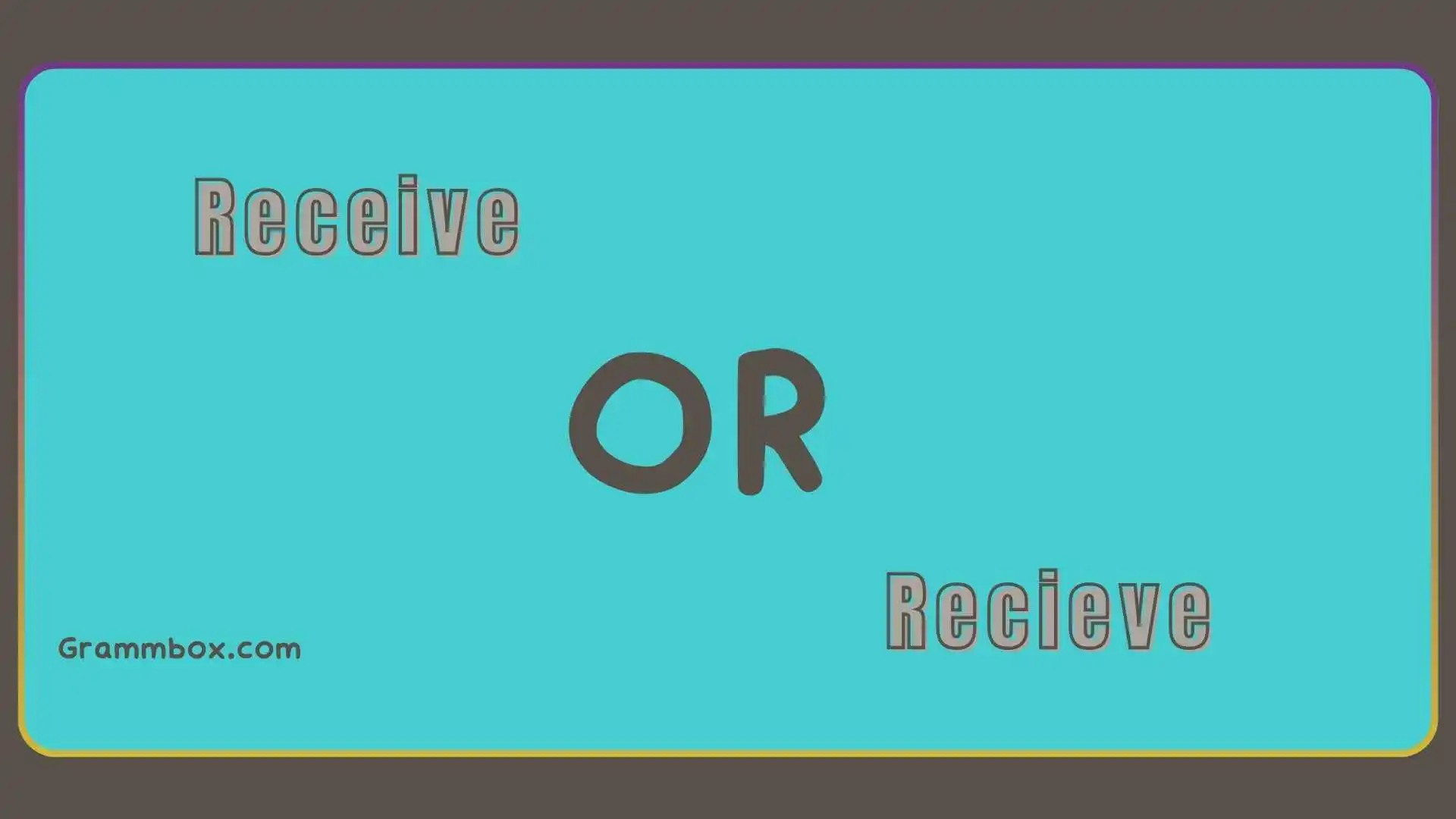
Many English learners and even native speakers often get confused between “receive” and “recieve.” At first glance, both words look very similar, and it’s easy to mix up the order of letters. However, only one of them is correct, while the other is a common spelling mistake.
This confusion usually happens because English spelling rules can feel inconsistent. Words like believe, achieve, and receive don’t always follow the same pattern, which makes it harder to remember the correct form. Therefore, understanding the difference is important if you want to write clearly and professionally.
Whether you are writing for school, work, or everyday communication, using the correct spelling matters in both British English (UK) and American English (US). In this article, you will learn the correct spelling, meanings, examples, and easy tips to remember it forever.
Quick Answer
The correct spelling is “receive.”
The word “recieve” is incorrect and should never be used.
Simple rule:
👉 “I before E, except after C”
Since “receive” comes after the letter C, the correct order is E before I.
Meaning of the Correct Form (Receive)
The word receive is a verb. It means to get something, accept something, or be given something.
Simple Definition:
- To get or accept something that is sent, given, or offered.
Examples in Everyday English
British English (UK) Examples:
- I received a letter from my friend yesterday.
- She will receive her exam results next week.
- We received a warm welcome at the hotel.
American English (US) Examples:
- I received an email from my boss this morning.
- They received the package on time.
- He is happy to receive the award.
👉 As you can see, the meaning and usage of receive are the same in both UK and US English. There is no spelling difference between them.
Meaning of the Incorrect Form (Recieve)
The word “recieve” has no meaning in English because it is simply a misspelling of “receive.”
Why Do People Write “Recieve”?
People often make this mistake because:
- They forget the spelling rule
- They rely on pronunciation instead of spelling
- They confuse it with words like believe
Important Note:
❌ Recieve is always wrong
✔️ Receive is always correct
Receive vs Recieve: Key Differences
| Feature | Receive ✅ | Recieve ❌ |
| Correct spelling | Yes | No |
| Meaning | To get or accept something | No meaning |
| Used in UK English | Yes | No |
| Used in US English | Yes | No |
| Grammar status | Correct verb | Spelling mistake |
Key Takeaway:
There is no regional difference between UK and US English for this word. Both use “receive” as the correct spelling.
| Heading | Information |
|---|---|
| Receive or Recieve Examples | The correct spelling is receive, while recieve is incorrect. Examples: I will receive your email tomorrow. / She received a gift on her birthday. Remember the rule: “i before e except after c”, which makes receive the correct form. |
| Received Spelling Synonym | Received is the past tense of receive. Common synonyms include accepted, obtained, gained, collected, acquired, and got. Example: He received an award can also be written as He accepted an award. |
| Receive or Recieve Grammar | In English grammar, receive is the correct verb meaning to get, accept, or be given something. The spelling recieve is a common mistake because the letters e and i are placed in the wrong order. |
| Receive or Recieve in English | In standard English, only receive is accepted as the correct spelling. It is widely used in both British and American English. The misspelling recieve should be avoided in formal and informal writing. |
| Receive or Recieve Meaning | Receive means to get, accept, take, or be given something from someone else. For example, Students receive certificates after completing the course. The word can refer to receiving gifts, messages, payments, information, or support. |
Common Mistakes People Make
Even though the rule is simple, many people still make errors. Let’s look at some common mistakes:
1. Mixing Letter Order
❌ I did not recieve your message.
✔️ I did not receive your message.
2. Ignoring the “I before E” Rule
❌ She will recieve the gift tomorrow.
✔️ She will receive the gift tomorrow.
3. Typing Errors in Emails
❌ Please confirm if you recieve the document.
✔️ Please confirm if you receive the document.
4. Confusion with Similar Words
Words like:
- believe
- achieve
These follow a different pattern, which confuses learners.
5. Overconfidence in Spell Check
Sometimes, people rely too much on autocorrect. However, it may not always catch errors in certain contexts.
Correct Usage in Sentences
Here are practical examples to help you understand how to use receive correctly:
Daily Life Examples
- I received a phone call this morning.
- Did you receive my message?
- We are happy to receive your feedback.
Workplace Examples
- Please receive the attached file.
- The company received many applications.
- I received your email and will reply soon.
Education Examples
- Students will receive their results next month.
- She received a scholarship for her studies.
UK vs US Context Examples
Even though spelling is the same, context may differ slightly:
UK Example:
- I received my parcel from Royal Mail.
US Example:
- I received my package from USPS.
👉 Notice that only the context changes, not the spelling.
Tips to Remember the Correct Usage
Remembering spelling rules can be tricky, but these tips will make it easier:
1. Follow the Rule
👉 “I before E, except after C”
Since “receive” has a C, the correct order is E before I.
2. Break the Word
Re-ceive
Think: C → E comes first
3. Use Memory Trick
👉 “After C, E comes before I”
4. Practice Daily
Write sentences using “receive” regularly:
- I receive messages daily.
- I received your email.
5. Use Spell Check (Carefully)
Spell check tools help, but you should still understand the rule yourself.
6. Learn Similar Words
Practice with similar words:
- receive
- deceive
- perceive
They all follow the same pattern.
FAQs About Receive or Recieve
1. Which spelling is correct: receive or recieve?
The correct spelling is receive. “Recieve” is incorrect.
2. Is “recieve” used in British English?
No, “recieve” is not used in British English. The correct spelling is receive.
3. Is there any difference between UK and US spelling?
No, both UK and US English use receive as the correct spelling.
4. Why do people confuse receive and recieve?
People confuse them because of spelling rules and similar-looking words like “believe.”
5. What does “receive” mean?
It means to get, accept, or be given something.
6. Is “receive” a formal word?
Yes, it is commonly used in both formal and informal communication.
7. Can spell check fix “recieve”?
Most spell check tools will correct it, but not always. It’s better to learn the correct spelling.
Conclusion
Understanding the difference between receive and recieve is simple but very important. The correct spelling is always receive, while “recieve” is just a common mistake that should be avoided.
By remembering the rule “I before E, except after C,” you can easily avoid this error in your writing. In addition, practicing regularly and using helpful memory tricks will make the correct spelling stick in your mind.
Whether you are writing in British English or American English, the spelling remains the same. Therefore, mastering this small detail can greatly improve your writing accuracy and confidence.
READ MORE ARTICLE..
Leach or Leech – Common Confusion Solved.
Omelet or Omelette: Which Spelling Is Correct (and Why It Matters)?
Mold or Mould: Which Spelling Should You Use and Why?
Mama or Momma: Explained With Easy Examples and Rules 2026