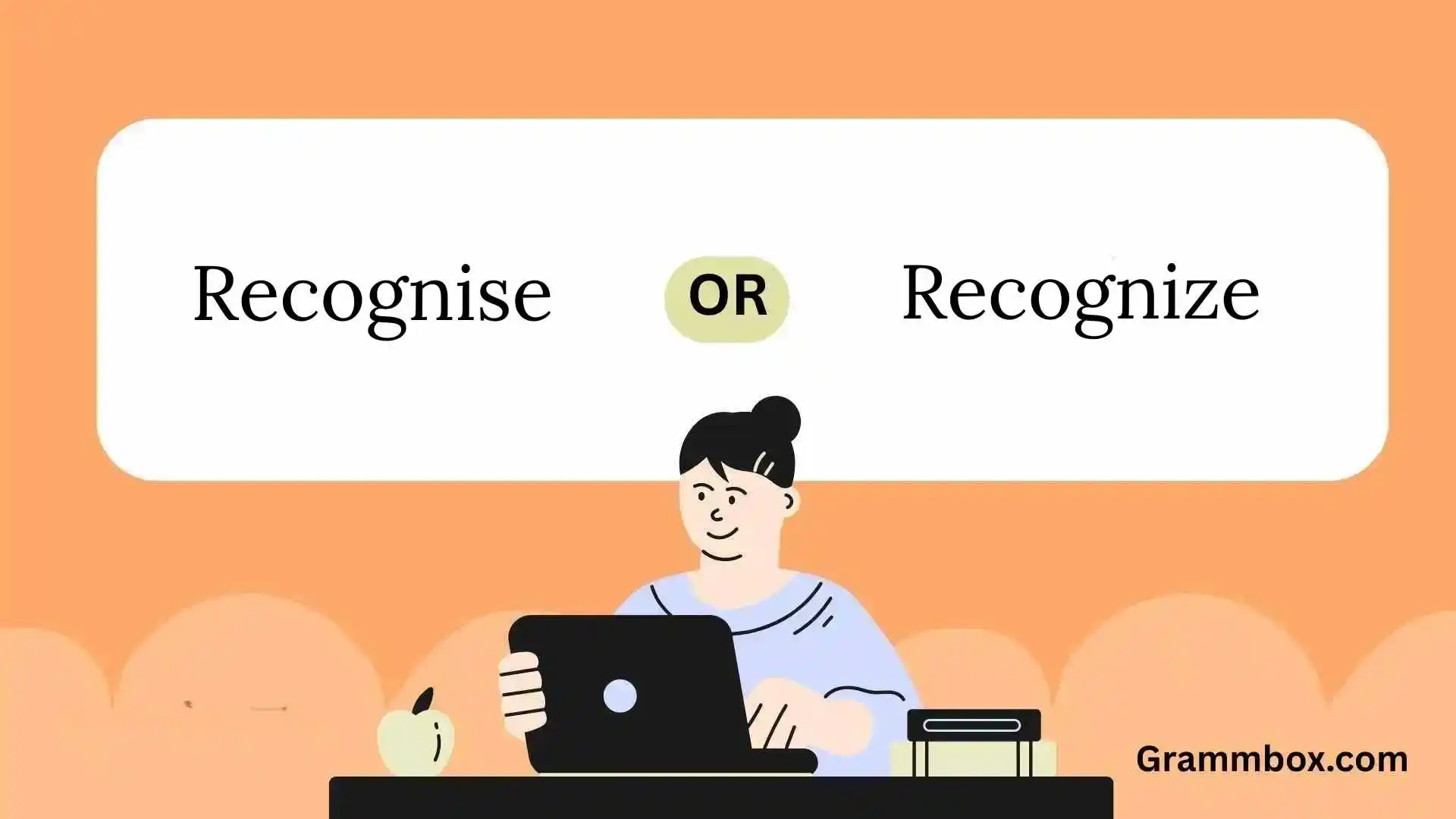
Many English learners and even native speakers often wonder whether to write “recognise” or “recognize.” At first glance, both spellings look correct, and that’s exactly what makes this topic confusing. You might see one version in a British book and another in an American website, leaving you unsure which one to use.
This confusion becomes even more important in writing, especially for students, professionals, bloggers, and businesses. Using the wrong spelling for your audience can affect clarity, credibility, and even SEO rankings. Therefore, understanding the difference between “recognise” and “recognize” helps you write more accurately and confidently.
In addition, English is used worldwide, and spelling differences between British English (UK) and American English (US) are common. This article will guide you step-by-step, so you can easily understand when and where to use each spelling.
Quick Answer
Both “recognise” and “recognize” are correct spellings of the same word.
- “Recognise” is commonly used in British English (UK).
- “Recognize” is the preferred spelling in American English (US).
However, there’s an interesting twist: even in British English, “recognize” is also considered acceptable, although less common in modern UK usage.
👉 Simple rule:
- Writing for a UK audience? Use recognise
- Writing for a US audience? Use recognize
Meaning of the Correct Form
The word (whether spelled recognise or recognize) means:
- To identify someone or something you have seen before
- To acknowledge or accept something as true or valid
- To show appreciation or give credit
Examples in British English (UK)
- I didn’t recognise him at first because he had changed so much.
- She was recognised for her hard work at the ceremony.
- Do you recognise this place?
Examples in American English (US)
- I didn’t recognize him at first.
- She was recognized for her achievements.
- Do you recognize this song?
👉 As you can see, the meaning stays exactly the same. Only the spelling changes depending on the region.
Meaning of the Incorrect Form (if any)
There is no incorrect form between “recognise” and “recognize.”
However, problems occur when:
- You mix both spellings in the same document
- You use the wrong version for your audience
Example of inconsistency (incorrect usage)
- The company will recognise your efforts and recognize your contribution.
👉 This looks unprofessional. You should choose one style and stick with it.
Recognise vs Recognize: Key Differences
Let’s clearly compare both spellings.
| Feature | Recognise | Recognize |
| Region | UK (British English) | US (American English) |
| Usage Style | More common in modern UK writing | Standard in US writing |
| Acceptance | Accepted in UK | Accepted globally |
| Ending | -ise | -ize |
Important Note
Interestingly, the “-ize” spelling has historical roots in Greek, and some British institutions (like Oxford University Press) still prefer “recognize.”
👉 So technically:
- Recognize = internationally acceptable
- Recognise = stylistically British
Common Mistakes People Make
Even though both spellings are correct, people often make avoidable mistakes.
1. Mixing UK and US spelling
❌ The organisation will recognize your efforts and recognise your skills.
✔ The organisation will recognise your efforts and skills. (UK)
✔ The organization will recognize your efforts and skills. (US)
2. Using the wrong spelling for your audience
- Writing for a UK university but using recognize
- Writing for a US company but using recognise
👉 Always match your audience.
3. Confusing with similar words
People sometimes confuse “recognise” with:
- Realise / Realize
- Organise / Organize
👉 These follow the same UK vs US pattern.
4. Thinking one is incorrect
Many learners wrongly believe:
- “Recognize is wrong in British English” ❌
- “Recognise is wrong in American English” ❌
👉 Both are correct but context matters.
Correct Usage in Sentences
Let’s look at more real-life examples.
British English (UK)
- I didn’t recognise her voice on the phone.
- He was recognised for his bravery.
- It’s important to recognise your mistakes.
- The government should recognise this issue.
American English (US)
- I didn’t recognize her voice.
- He was recognized for his service.
- You must recognize the importance of this decision.
- The system can recognize faces quickly.
Mixed Context (Global Writing)
If your audience is international, you can choose either—but stay consistent:
✔ The system can recognize user behavior.
OR
✔ The system can recognise user behaviour.
Tips to Remember the Correct Usage
Here are some simple tricks to help you remember:
1. Think of “Z” for “USA”
- Z = American English
- Recognize → USA
2. Think of “S” for “Standard UK”
- S = British English
- Recognise → UK
3. Match your audience
Ask yourself:
- Who will read this?
👉 Then choose the spelling accordingly.
4. Stay consistent
Once you pick one version:
- Use it throughout your document
5. Follow your style guide
If you’re writing for:
- A company → Follow their style
- A university → Follow their rules
- A blog → Pick one style and stick with it
FAQs
1. Is “recognise” correct in English?
Yes, “recognise” is correct, especially in British English. It is widely used in the UK and other regions that follow British spelling.
2. Is “recognize” wrong in British English?
No, it is not wrong. In fact, some British publishers prefer “recognize.” However, “recognise” is more common in everyday UK usage.
3. Which spelling should I use in academic writing?
It depends on your institution:
- UK universities → usually prefer recognise
- US universities → use recognize
👉 Always check your style guide.
4. Can I use both in the same document?
No. You should avoid mixing spellings. Choose one style and use it consistently.
5. Why are there two spellings?
English has evolved differently in the UK and the US. American English simplified many spellings, leading to forms like recognize, while British English often kept recognise.
6. Which spelling is more common globally?
“Recognize” is slightly more common worldwide, especially online, because of American influence. However, “recognise” is still widely used.
7. Do other words follow this pattern?
Yes! Many words follow the same rule:
- Organise / Organize
- Realise / Realize
- Apologise / Apologize
👉 Same rule: UK = -ise, US = -ize
Conclusion
To sum up, the difference between “recognise” and “recognize” is not about correctness it’s about regional preference.
- Recognise → British English
- Recognize → American English
Both spellings mean the same thing and are widely accepted. However, the key to good writing is consistency. Therefore, always choose one version based on your audience and stick to it throughout your content.
READ MORE ARTICLES..
Alumni or Alumnus: Which Word Should You Use and Why?
Is It Laying in Bed or Lying in Bed? Learn the Right Usage.
Is It Past Due or Passed Due? Learn the Correct Usage.
Omelet or Omelette: Which Spelling Is Correct (and Why It Matters)? 🍳