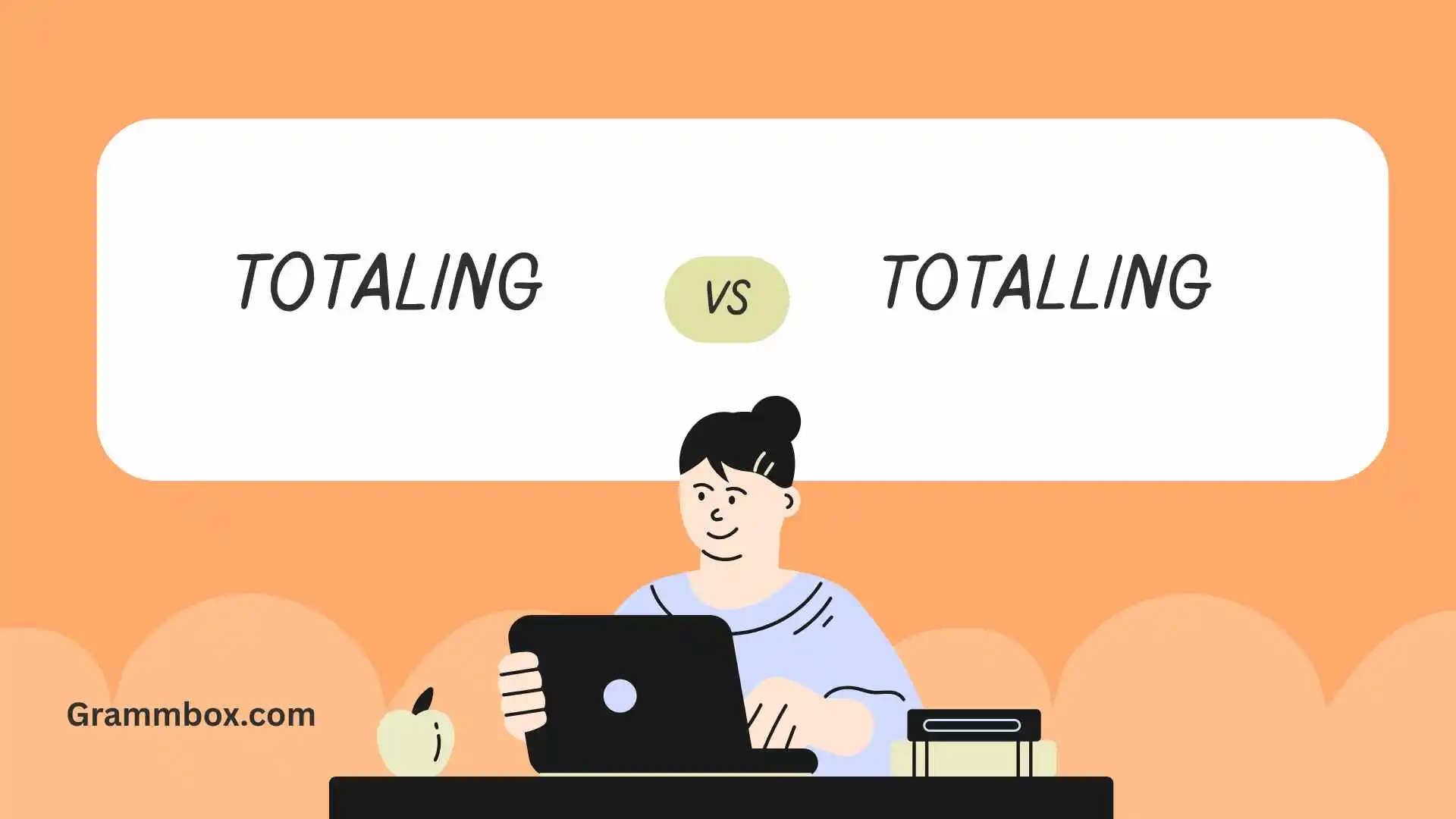
Many English learners and even native speakers often get confused between “totaling” and “totalling.” At first glance, both words look correct, and in fact, they are! However, the difference lies in where and how the English language is used.
This confusion usually comes from spelling variations between American English (US) and British English (UK). While both forms come from the same root word “total,” their spelling changes depending on regional rules for adding suffixes like -ing.
Understanding this difference is important, especially if you write for an international audience. Whether you’re preparing an academic paper, blog post, or business email, using the correct spelling helps maintain professionalism and clarity.
Quick Answer
Both “totaling” and “totalling” are correct spellings. The difference depends on the version of English you are using:
- “Totaling” is the correct spelling in American English (US)
- “Totalling” is the correct spelling in British English (UK)
So, neither is wrong—you simply need to choose the right one based on your audience.
Meaning of the Correct Form
The word “totaling” or “totalling” comes from the verb “to total,” which means:
- To add up numbers
- To reach a final amount
- To damage something beyond repair (especially used for cars)
Examples in American English (Totaling)
- She is totaling the expenses for the month.
- The bill is totaling $500.
- The accident ended up totaling his car.
Examples in British English (Totalling)
- She is totalling the expenses for the month.
- The bill is totalling £500.
- The accident resulted in totalling the vehicle.
👉 As you can see, the meaning stays exactly the same. Only the spelling changes.
Meaning of the Incorrect Form (If Any)
Technically, neither “totaling” nor “totalling” is incorrect. However, problems arise when you:
- Use American spelling in a British context
- Use British spelling in a US-based document
For example:
- Writing “totalling” in a US academic paper may be considered incorrect.
- Writing “totaling” in a UK exam may be marked wrong.
👉 So, the “incorrect” form depends on context, not grammar rules.
Keyword Comparison / Key Differences
Let’s break it down clearly:
| Feature | Totaling (US) | Totalling (UK) |
| Region | American English | British English |
| Spelling Rule | Single “l” | Double “l” |
| Usage | USA, Canada (sometimes) | UK, Australia, etc. |
| Meaning | Same | Same |
Why the Difference Exists
This difference comes from a spelling rule:
- In British English, when adding -ing, you often double the final “l”
- In American English, you usually do not double it
Examples of Similar Words
| US Spelling | UK Spelling |
| Traveling | Travelling |
| Canceling | Cancelling |
| Modeling | Modelling |
| Totaling | Totalling |
👉 Therefore, “totaling vs totalling” follows a common pattern in English spelling differences.
Common Mistakes People Make
Even though the rule is simple, many people still make mistakes. Let’s look at some common ones:
1. Mixing UK and US Spellings
❌ Incorrect:
- The report is totalling 300 words (in a US article)
✔ Correct:
- The report is totaling 300 words
2. Assuming One Is Always Wrong
Many learners think:
- “Totalling must be incorrect”
👉 This is not true. Both are correct depending on the region.
3. Inconsistent Writing
❌ Example:
- The cost is totaling $200, and expenses are totalling more daily.
✔ Correct:
- Stick to one style:
- US: totaling
- UK: totalling
4. Ignoring Audience
If you’re writing for:
- A US website → use totaling
- A UK audience → use totalling
Correct Usage in Sentences
Let’s look at more real-life examples to make things clearer.
American English (Totaling)
- The company is totaling its annual profits.
- The damages are totaling over $10,000.
- He spent the evening totaling his receipts.
- The crash ended up totaling the vehicle completely.
British English (Totalling)
- The company is totalling its annual profits.
- The damages are totalling over £10,000.
- He spent the evening totalling his receipts.
- The crash resulted in totalling the car.
Mixed Context Examples
- The expenses are totaling/totalling more than expected.
- She is totaling/totalling the final score.
👉 Simply choose the version that fits your region.
Tips to Remember the Correct Usage
Here are some simple tricks to help you remember:
1. Think “US = Shorter”
- American English prefers shorter spellings
- So: totaling (one “l”)
2. Think “UK = Double Letters”
- British English often doubles consonants
- So: totalling (two “l’s”)
3. Match Your Audience
Ask yourself:
- Who am I writing for?
👉 This instantly tells you which spelling to use.
4. Be Consistent
Once you choose a style:
- Stick with it throughout your writing
5. Use Tools
Spell-check tools like:
- Microsoft Word
- Grammarly
👉 These tools adjust spelling based on your selected language (US or UK).
FAQs
1. Is “totaling” correct?
Yes, “totaling” is correct in American English. It follows US spelling rules.
2. Is “totalling” correct?
Yes, “totalling” is correct in British English and other regions that follow UK spelling.
3. What is the main difference between totaling and totalling?
The only difference is spelling based on region:
- US → totaling
- UK → totalling
The meaning is exactly the same.
4. Which spelling should I use in international writing?
It depends on your audience. However:
- Use US English for global business or tech content
- Use UK English for British or European audiences
👉 Most importantly, stay consistent.
5. Why does British English double the “l”?
British English follows a rule where consonants are often doubled when adding suffixes like -ing or -ed.
6. Can I use both in the same document?
No, you should avoid mixing them. Choose one style and stick to it.
7. Is this difference important in exams?
Yes, especially in:
- IELTS (UK English preferred)
- TOEFL (US English preferred)
👉 Using the wrong version may affect your score.
Conclusion
In summary, the confusion between “totaling” and “totalling” is not about right or wrong it’s about regional spelling differences. Both words have the same meaning and function, but their usage depends on whether you are following American English or British English.
To make the right choice, always consider your audience and maintain consistency throughout your writing. Remember: US English prefers shorter forms (totaling), while UK English often doubles letters (totalling).
READ MORE ARTICLES..
saviour or savior: What’s the difference & usage? 2026
bachelor’s degree or bachelors degree: Usage & difference.
damnit or dammit: What’s the difference & usage? 2026
All of the Sudden or All of a Sudden: Difference & usage.