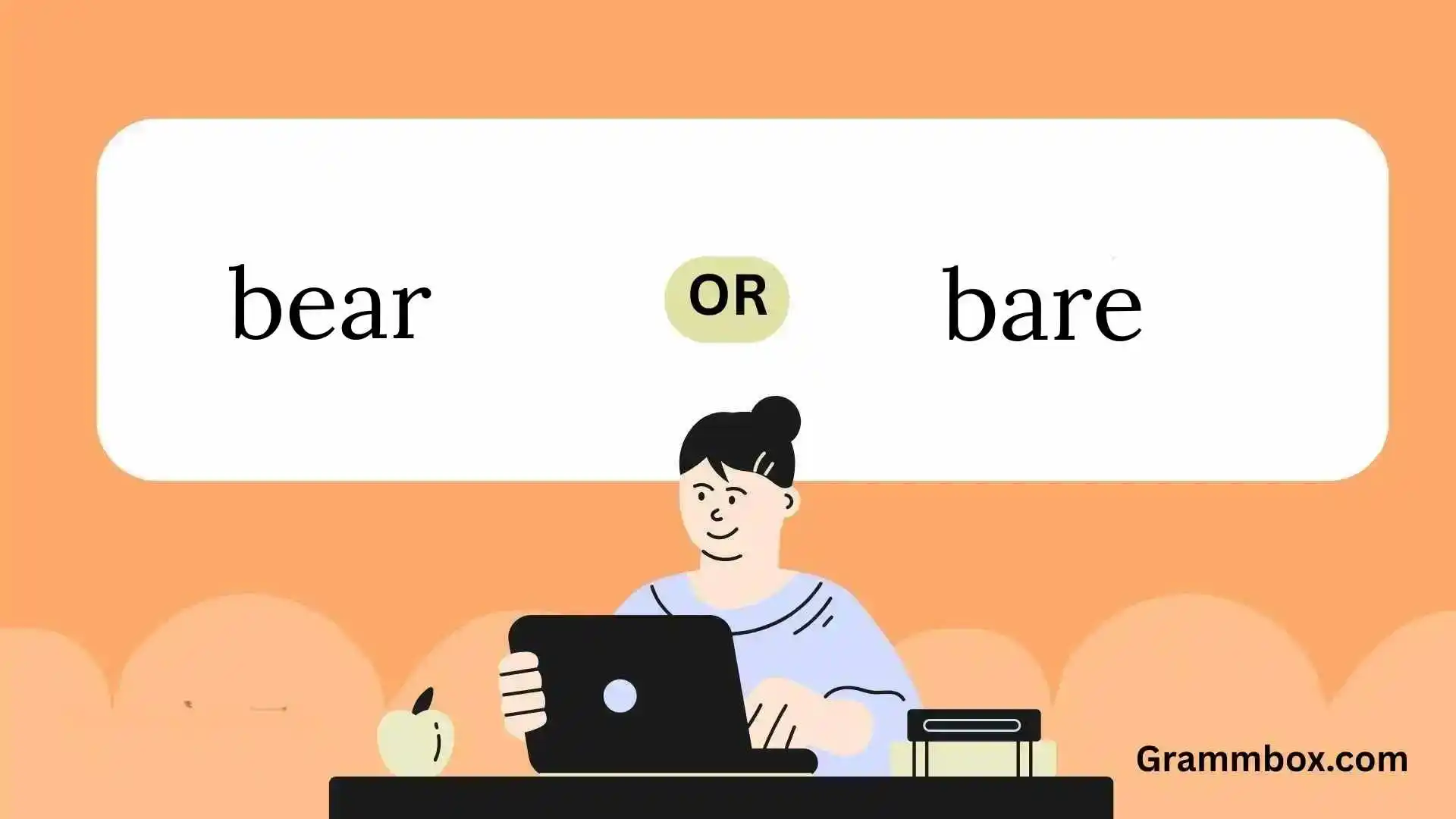
Many English learners and even native speakers often get confused between “bear” and “bare.” These two words sound exactly the same, which makes them classic examples of homophones in English. However, despite their similar pronunciation, their meanings and uses are completely different.
This confusion can lead to awkward or even embarrassing mistakes. For example, saying “bare with me” instead of “bear with me” is a very common error. While it may seem small, using the wrong word can affect clarity and professionalism, especially in writing.
Understanding the difference between bear and bare is important for both UK (British English) and US (American English) audiences. Fortunately, once you learn their meanings and see a few examples, the difference becomes very easy to remember.
Quick Answer
The difference between “bear” and “bare” is simple:
- Bear usually means to carry, tolerate, or endure.
- Bare means naked, uncovered, or exposed.
For example:
- ✅ Please bear with me while I check this.
- ❌ Please bare with me while I check this. (Incorrect)
- ✅ He walked on the bare ground.
- ❌ He walked on the bear ground. (Incorrect)
In short, bear = endure or carry, while bare = uncovered or exposed.
Meaning of the Correct Form
Both bear and bare are correct words but they are used in completely different contexts. Let’s break them down clearly.
Meaning of “Bear”
The word bear has several meanings, depending on how it is used.
1. To Carry or Support
- She bears the responsibility for the project.
- The bridge can bear heavy traffic.
👉 This usage is common in both UK and US English.
2. To Endure or Tolerate
- I can’t bear the noise anymore.
- Please bear with me for a moment.
👉 This is one of the most common uses in everyday communication.
3. To Give Birth (Formal Use)
- She bore a child last year.
👉 More formal and often used in literature or historical contexts.
4. As a Noun (Animal)
- The bear lives in the forest.
👉 This meaning is the same in both British and American English.
Verb Forms of “Bear”
- Present: bear
- Past: bore
- Past participle: borne / born
Examples:
- He has borne many hardships.
- She was born in London. (special form)
Meaning of “Bare”
The word bare is much simpler.
1. Uncovered or Naked
- He walked with bare feet.
- The walls were completely bare.
2. Exposed or Visible
- The truth was laid bare.
- The tree stood bare in winter.
3. Minimal or Basic
- We only have the bare essentials.
- The room had bare furniture.
👉 This meaning is commonly used in both UK and US English.
Meaning of the Incorrect Form (If Any)
Neither bear nor bare is incorrect they are both valid English words. The problem arises when people use one instead of the other.
Common Incorrect Usage:
- ❌ Bare with me → Incorrect
- ✅ Bear with me → Correct
Why? Because here, you are asking someone to be patient or tolerate a delay, not to become uncovered.
Keyword Comparison / Key Differences
Let’s clearly compare bear vs bare:
| Feature | Bear | Bare |
| Meaning | Carry, endure, tolerate | Naked, uncovered, exposed |
| Part of Speech | Verb / Noun | Adjective / Verb |
| Common Usage | Bear with me, bear weight | Bare feet, bare walls |
| UK vs US Usage | Same in both | Same in both |
| Example | I can’t bear the pain | The room is bare |
Key Difference in Simple Words
- Bear = Action (carry, tolerate)
- Bare = Description (uncovered, empty)
👉 This is the easiest way to remember.
Common Mistakes People Make
Even advanced English users sometimes mix these up. Let’s look at the most common mistakes.
1. “Bare with me”
❌ Incorrect: Bare with me
✅ Correct: Bear with me
👉 You are asking someone to be patient, not to become uncovered.
2. Confusing Meaning in Writing
❌ He couldn’t bare the pain.
✅ He couldn’t bear the pain.
3. Misusing “Bare” in Formal Writing
❌ She will bare the responsibility.
✅ She will bear the responsibility.
4. Mixing Up in Descriptions
❌ The bear walls looked empty.
✅ The bare walls looked empty.
UK vs US Context
Interestingly, these mistakes happen equally in both British English and American English. There is no spelling difference between UK and US for these words.
However:
- In informal UK writing, you might see more idiomatic uses like “I can’t bear it.”
- In US English, the phrase “bear with me” is extremely common in customer service and emails.
Correct Usage in Sentences
Here are clear, real-life examples for both UK and US audiences.
Using “Bear”
- Please bear with me while I find your file.
- I cannot bear this heat.
- She bears a strong resemblance to her mother.
- The company must bear the cost.
- He has borne many challenges.
Using “Bare”
- The child walked with bare feet.
- The room looked bare and empty.
- The tree was bare during winter.
- He revealed the bare truth.
- She had bare minimum resources.
Mixed Examples (Comparison)
- I can’t bear the cold.
- The ground is bare in winter.
- Please bear with us.
- The walls are bare.
Tips to Remember the Correct Usage
Here are some easy tricks to help you remember:
1. “Bear = Burden” Trick
Both words start with B:
- Bear = Burden (carry or تحمل)
👉 If it involves carrying or tolerating, use bear.
2. “Bare = Body” Trick
Both words start with B:
- Bare = Body (uncovered)
👉 If it means naked or exposed, use bare.
3. Think of “Barefoot”
- You say barefoot, not bearfoot.
👉 This reminds you that bare = uncovered.
4. Replace with “Tolerate”
If you can replace the word with “tolerate”, use bear.
- I can’t tolerate it → I can’t bear it
5. Visual Memory Trick
- Bear → Imagine a strong animal carrying weight
- Bare → Imagine something empty or uncovered
FAQs Section
1. Is it “bear with me” or “bare with me”?
✅ The correct phrase is “bear with me.”
It means please be patient.
2. What does “bare” mean in simple words?
Bare means uncovered, naked, or empty.
Example: bare feet, bare walls
3. Can “bear” be used as a noun?
Yes, bear can refer to an animal.
Example: The bear lives in the forest.
4. Are “bear” and “bare” used differently in UK and US English?
No, both words are used the same way in British and American English. There is no spelling difference.
5. Why do people confuse “bear” and “bare”?
Because they are homophones they sound the same but have different meanings and spellings.
6. What is the past tense of “bear”?
The past tense is “bore.”
Example: He bore the pain bravely.
7. How can I quickly remember the difference?
- Bear = tolerate or carry
- Bare = uncovered or empty
👉 Simple rule: Action = bear, Description = bare
Conclusion
Understanding the difference between bear and bare is easier than it first seems. Although they sound the same, their meanings are completely different.
- Bear is mainly about carrying, tolerating, or enduring.
- Bare is about being uncovered, exposed, or minimal.
READ MORE ARTICLES..
Bad Rap or Bad Rep: What’s the difference & usage? 2026
role call or roll call: What’s the difference & usage?
Afterall or After All: What’s the difference & usage? 2026
photoshoot or photo shoot: What’s the difference & usage?