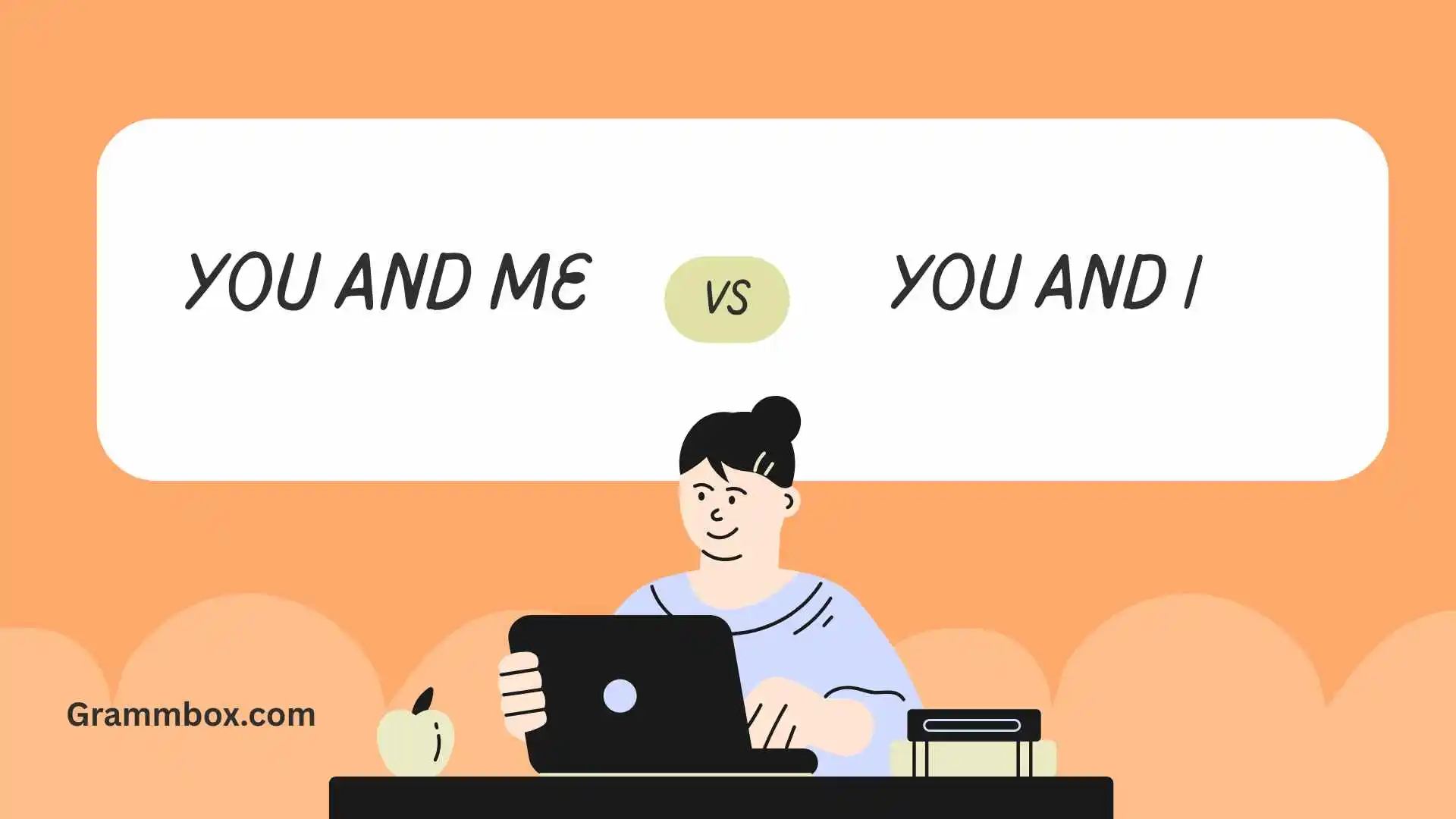
English learners and even native speakers often get confused between “you and me” and “you and I.” Both phrases are common in everyday conversation, but choosing the correct one depends on grammar rules, sentence structure, and context. This confusion exists in both British and American English, though the rules remain consistent, the application sometimes varies subtly in informal speech.
Understanding the difference is important. Using “you and I” incorrectly can make your speech or writing sound awkward or overly formal, while using “you and me”” incorrectly might seem grammatically careless. Clear knowledge ensures that your sentences sound natural and polished in both UK and US English.
For example, consider the sentence:
- “You and I are going to the park.”
- “You and me are going to the park.”
Which one is correct? Most native speakers instinctively know, but a clear understanding will make your writing and speaking error-free.
Quick Answer
The simple rule is:
- Use “you and I” when it is the subject of a sentence (the one doing the action).
- Use “you and me” when it is the object of a sentence (receiving the action).
Examples:
- Correct: “You and I will finish the project.” (subject)
- Correct: “He gave it to you and me.” (object)
Remember: if you are unsure, remove “you and” and see if “I” or “me” fits alone. For instance:
- “I will finish the project” ✅
- “Me will finish the project” ❌
Meaning of the Correct Form
You and I
“You and I” is always used as the subject of a sentence. The subject performs the action of the verb. This is standard in both British English and American English.
Examples:
- “You and I should call our parents tonight.”
- “You and I are responsible for cleaning the room.”
- UK Example: “You and I must complete the form before submitting it to the council.”
- US Example: “You and I can finish this report by Friday.”
Notice that in all these sentences, “you and I” are doing the action – they are the subject.
Meaning of the Incorrect Form
Many people mistakenly use “you and me” as a subject. This is incorrect because “me” cannot function as a subject in formal grammar.
Incorrect Examples:
- “You and me are going to the concert.” ❌
- “He and me should attend the meeting.” ❌
In casual speech, especially in American English, some native speakers may say “you and me” as a subject, but it is not grammatically correct in formal writing or speech.
Keyword Comparison / Key Differences
| Feature | You and I | You and Me |
| Function | Subject | Object |
| Usage Example | “You and I are friends.” | “He invited you and me to the party.” |
| Formality | Formal/Correct | Informal/Correct only as object |
| UK English | Correct in writing and speech | Correct only as object |
| US English | Correct in writing and speech | Often used informally as subject, but formally incorrect |
Key Difference: The role in the sentence (subject vs object) is what determines the correct usage.
Common Mistakes People Make
- Using “you and me” as a subject
- ❌ “You and me are going to the beach.”
- ✅ “You and I are going to the beach.”
- Using “you and I” as an object
- ❌ “He sent the invitation to you and I.”
- ✅ “He sent the invitation to you and me.”
- Ignoring sentence structure
- Many forget to check whether the pronoun is performing the action or receiving it.
- Confusion in compound sentences
- ❌ “She said that you and me should join.”
- ✅ “She said that you and I should join.”
- Overcorrecting in informal speech
- Sometimes people say “you and I” in casual conversation where “you and me” is natural.
- Example: “This is between you and I.” ❌ (should be “you and me”)
Correct Usage in Sentences
Subject Examples (You and I)
- “You and I are learning English together.”
- “You and I should go shopping tomorrow.”
- UK: “You and I must fill in the tax form before the deadline.”
- US: “You and I can meet at the cafe at noon.”
Object Examples (You and Me)
- “She gave the books to you and me.”
- “The teacher asked you and me to present the report.”
- UK: “The council provided documents to you and me.”
- US: “He sent the package to you and me.”
Tip: Test by removing “you and.” If “I” works alone, use “you and I.” If “me” works alone, use “you and me.”
Tips to Remember the Correct Usage
- The “remove ‘you and’ trick” – Always test your sentence by removing “you and.”
- Subject vs Object – Ask yourself: is this performing the action (subject) or receiving it (object)?
- Formal writing rule – In essays, emails, and reports, always use correct grammar: “you and I” as subject, “you and me” as object.
- Mnemonics:
- I = Subject, Me = Object (Remember: “I” stands tall, does the action; “Me” is passive, receives the action).
- Listen to examples in both UK & US English – British English tends to adhere more strictly to formal rules in casual speech, while American English can be more flexible in informal situations.
FAQs
1. Can I use “you and me” as a subject in casual conversation?
Yes, in casual American English, some speakers use it, but it is formally incorrect. Stick with “you and I” in formal writing.
2. Is “you and I” always correct?
No. Use “you and I” only as the subject. As an object, it is incorrect.
3. How do I know which to use in a sentence?
Remove “you and” and see which pronoun fits alone. “I” = subject, “me” = object.
4. Are there differences between UK and US English?
The grammatical rules are the same, but UK English tends to strictly follow formal grammar even in casual speech, whereas US English may bend rules in informal situations.
5. What about songs and informal writing?
Songs, poetry, and casual writing often bend grammar rules. You may see “you and me” used as a subject, but it is not standard grammar.
6. Can I say “between you and I”?
No. Correct usage is “between you and me” because “between” is a preposition, and prepositions take objects.
7. Why do native speakers make mistakes with this?
Many native speakers learn phrases by ear, not grammar rules, leading to informal usages like “you and me are going.”
Conclusion
Choosing between “you and me” and “you and I” comes down to understanding whether the phrase is the subject or object in a sentence.
- Use “you and I” as the subject – performing the action.
- Use “you and me” as the object – receiving the action.
- Always check by removing “you and” to see if “I” or “me” fits.
- Pay attention to UK and US differences: informal American English may be more flexible, but formal writing should always follow proper grammar.
Mastering this distinction will improve your spoken and written English, making it sound polished, professional, and natural. Next time you write or speak, pause and ask: “Am I the subject or object here?” Your sentences will thank you!
READ MORE ARTICLES..
modeled or modelled: What’s the difference & usage? 2026
humour or humor: What’s the difference & usage?
honor or honour: What’s the difference & usage? 2026
diner or dinner: What’s the difference & usage?